Volta Electric Inc. | Licensed Electrical Contractor Serving Northridge and Los Angeles County
Quick Answer
A 200-amp panel upgrade in Northridge can increase available electrical capacity, replace an outdated or damaged panel, and prepare a home for higher-demand equipment such as an EV charger, heat pump, electric range, or other new circuits.
But a 200-amp upgrade is not automatically required simply because a home is older or currently has a 100-amp panel. The correct service size depends on the home’s calculated electrical load, the equipment being added, the existing service infrastructure, and utility requirements.
Because Northridge is within the City of Los Angeles, electrical permitting is handled through the Los Angeles Department of Building and Safety (LADBS), while service and meter requirements are handled through the Los Angeles Department of Water and Power (LADWP) when the project affects the electric service. Los Angeles currently references the 2025 California Electrical Code, and LADWP’s current Electric Service Requirements are based on its 2025 edition.
Is a 200-Amp Panel Upgrade Right for Your Northridge Home?
There is no single age, appliance, or breaker symptom that automatically means a house needs 200-amp service. A qualified electrician should evaluate the complete electrical system and perform the appropriate load calculation before recommending an upgrade.
| Situation | What it may indicate | What to do |
| 60- or 100-amp service | Limited capacity for some modern loads | Have the service and load evaluated |
| Frequent breaker trips | Overload, a circuit problem, a failing breaker, or another electrical issue | Schedule troubleshooting |
| Flickering or dimming lights | Possible loose connection, overloaded circuit, voltage problem, or equipment issue | Arrange an electrical inspection |
| EV charger planned | Additional electrical load that may require capacity review | Perform a load calculation before installation |
| Electric range, heat pump, or other major appliance planned | Increased demand on the service | Evaluate total connected load |
| Solar or battery storage planned | Additional electrical equipment and interconnection requirements | Have the panel, busbar, service and interconnection design reviewed |
| ADU or major remodel planned | Additional circuits and electrical loads | Review the existing service before construction |
| Federal Pacific or Zinsco equipment | Older equipment with documented safety concerns | Have the panel evaluated by a qualified electrician |
| Corrosion, overheating, burning odor or visible damage | Potential electrical safety issue | Stop using the affected equipment and call a professional |
| Buying or selling a home | Electrical condition can affect inspection and disclosure considerations | Obtain a professional electrical evaluation when appropriate |
Important: An older panel is not automatically unsafe, and a 100-amp service is not automatically inadequate. The decision should be based on the condition of the equipment and the calculated electrical load.
What Does a 200-Amp Panel Upgrade Actually Mean?
One of the most common sources of confusion is the phrase “panel upgrade.”
A panel replacement means replacing the existing panel while potentially keeping the same service capacity.
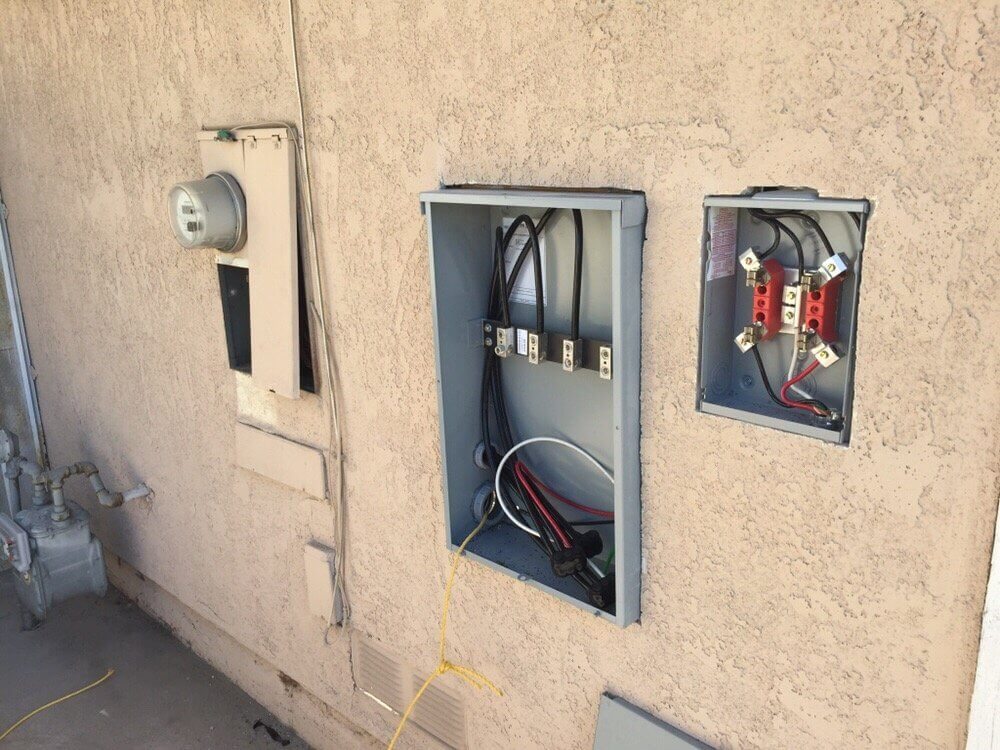
A service upgrade can involve increasing the electrical service capacity, for example, from 100 amps to 200 amps. That can involve more than installing a new breaker panel. Depending on the property, the work may also involve the meter equipment, service conductors, grounding and bonding, utility coordination, and other service-side requirements.
That distinction matters in Northridge because LADWP has specific requirements for residential service equipment and requires coordination for projects that affect the utility service. LADWP also states that a new residential service panel requires a meter spot, which verifies the proper panel location before installation.
A good electrical contractor should therefore determine what your home actually needs, rather than automatically selling a 200-amp electrical panel upgrade.
Why Northridge Homeowners Are Asking About Panel Upgrades
Northridge contains many established residential neighborhoods, and homeowners are increasingly adding electrical equipment that was not part of the original design of older homes.
Today’s electrical loads can include:
- Level 2 EV charging
- Heat-pump HVAC systems
- Heat-pump water heaters
- Electric ranges and ovens
- Pool equipment
- Home offices
- Additional air-conditioning equipment
- ADUs and garage conversions
- Solar PV systems
- Battery energy storage
The issue is not simply the number of appliances. Electrical service is evaluated based on the calculated load and applicable electrical requirements. The 2025 NEC framework includes Article 220 for branch-circuit, feeder and service-load calculations, while LADWP states that a material change in a customer’s electrical load can trigger additional utility review and potentially changes to existing service facilities.
Signs Your Electrical Panel May Need Attention
1. Your Breakers Trip Frequently
An occasional breaker trip can happen for many legitimate reasons. Repeated trips, however, deserve investigation.
The cause could be:
- An overloaded branch circuit
- A defective breaker
- A wiring problem
- A faulty appliance
- A larger service-capacity issue
Replacing the breaker without determining why it is tripping can leave the underlying problem unresolved.
2. Lights Flicker or Dim When Large Loads Start
Flickering lights can have several causes, including loose connections, voltage issues, overloaded circuits, or equipment problems.
This symptom does not automatically prove that a 100-amp service needs to become 200 amps. It is a reason to have the electrical system properly evaluated.
3. Your Panel Shows Heat, Burning, Corrosion or Physical Damage
Homeowners should never ignore:
- A burning or unusual electrical odor
- Discoloration around breakers
- Signs of melting
- Rust or corrosion
- Water intrusion
- Crackling or popping sounds
- A panel that feels unusually hot
These conditions can indicate an electrical fault or deteriorating equipment and warrant professional attention.
The City of Lawndale, for example, advises homeowners to have electrical panels professionally evaluated when they show signs such as rust, corrosion, melting, pest damage, poor access, nearby water or unusual electrical noises.
Federal Pacific and Zinsco Panels: What Northridge Homeowners Should Know
Older panel equipment deserves special attention when the manufacturer has a documented history of safety concerns.
Federal Pacific Electric Stab-Lok
Federal Pacific Electric (FPE) Stab-Lok equipment has been the subject of longstanding safety concerns involving breaker performance.
There is an important nuance here: the U.S. Consumer Product Safety Commission closed its investigation in 1983 without making a determination that FPE circuit breakers posed a serious risk to consumers. The CPSC later clarified that its closure should not be interpreted as a finding that the equipment was safe.
For homeowners who discover an FPE Stab-Lok panel, the sensible approach is to have the equipment evaluated by a qualified electrician and determine whether replacement is appropriate for the particular installation.
Zinsco and GTE-Sylvania-Zinsco
Zinsco equipment is another older panel family associated with documented safety concerns, including issues involving breakers and bus connections.
The City of Lawndale identifies Zinsco and GTE-Sylvania-Zinsco equipment among older electrical panels that may warrant replacement and recommends professional evaluation.
A panel should not be opened or dismantled by a homeowner attempting to identify these conditions. A qualified electrician can determine the manufacturer, model and condition safely.
Does an EV Charger Mean You Need a 200-Amp Panel?
Not necessarily.
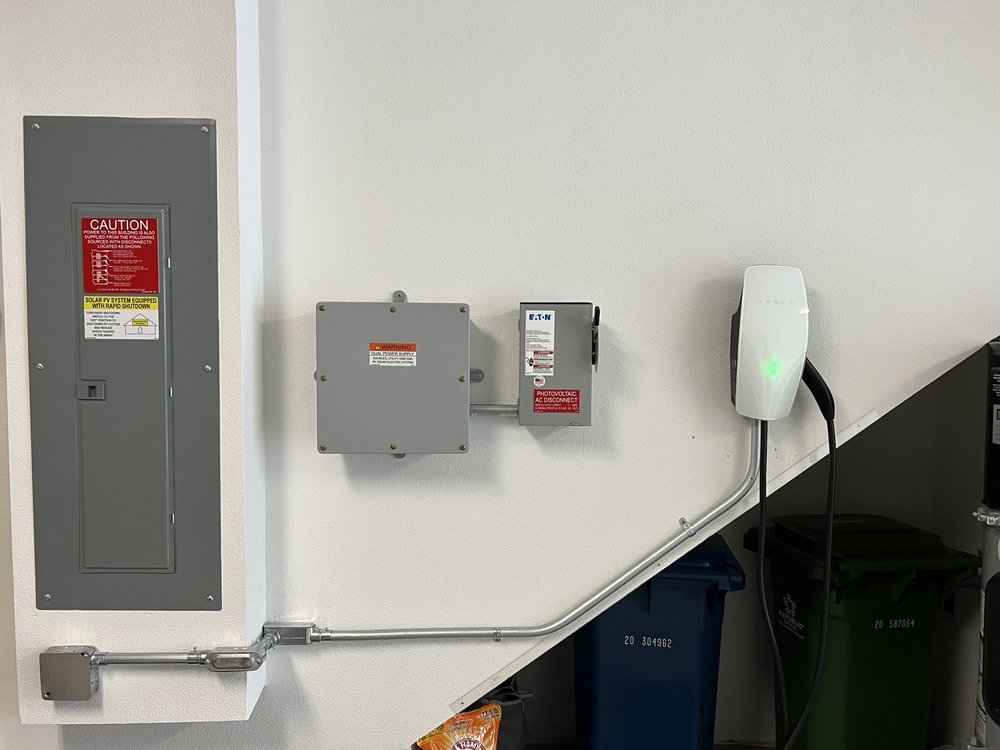
A Level 2 EV charger adds a significant electrical load, but charger ratings vary. California Energy Commission materials commonly reference Level 2 charging around the 40-amp, 240-volt range, while actual equipment can have different ratings. The appropriate solution depends on the charger, the existing service, other household loads, and the applicable load calculation.
Depending on the home’s existing capacity, the right solution could be:
- Installing the EV charger without a service upgrade
- Performing a panel upgrade
- Increasing the service size
- Using an approved load-management strategy
- Modifying other electrical loads as part of the project
This is why Volta Electric’s panel upgrade and EV charger installation services can be evaluated together when a Northridge homeowner is planning an EV installation. Volta’s panel-upgrade service specifically lists EV-charger and solar readiness among its residential panel services.
Does Solar Require a 200-Amp Electrical Service?
No. Not in every home.
This is one of the claims in the original article that should be removed.
Solar PV and battery projects have their own electrical and interconnection requirements. Whether a service upgrade is necessary depends on the existing service, panel and busbar ratings, the proposed system, interconnection method and applicable utility and electrical-code requirements.
Some California energy-code requirements do reference 200-amp busbar capacity for specific solar- or battery-ready scenarios, but that should not be turned into a blanket statement that every existing home needs 200-amp service before solar can be installed.
For a Northridge homeowner planning solar or battery storage, the right step is an electrical assessment that considers the proposed equipment and the actual service configuration.
What About an ADU or Garage Conversion?
An ADU can introduce substantial new electrical loads, including:
- Lighting
- General receptacles
- Heating and cooling
- Kitchen appliances
- Water heating
- Laundry equipment
- EV charging
- Other dedicated equipment
The existing main service may be able to support the additional load, or the project may require a subpanel, load-management solution, or service upgrade.
California’s 2025 Energy Code also contains specific battery-energy-storage-ready requirements for newly constructed residential buildings and ADUs. The California Energy Commission notes that a 200-amp panel can satisfy one of those requirements when the panel has the required 225-amp busbar rating and proper marking.
That example illustrates an important point: the rating printed on the main breaker is not the only specification that matters.
How a 200-Amp Panel Upgrade in Northridge Works
Every property is different, but a properly managed project commonly includes the following stages.
Step 1: Electrical Assessment
The electrician evaluates:
- Existing service size
- Panel manufacturer and condition
- Main disconnect
- Service conductors
- Meter equipment
- Grounding and bonding
- Existing branch circuits
- Available breaker spaces
- Current electrical loads
- Planned future loads
A load calculation is then used to determine whether the existing service is adequate or whether additional capacity is justified.
Step 2: Determine the Required Service Configuration
If a larger service is appropriate, the contractor determines what equipment and utility changes will be necessary.
This is where the difference between panel replacement and a genuine service upgrade becomes important.
Not every 200-amp panel installation requires the exact same work.
Step 3: LADWP Meter Spot and Utility Coordination
For a new residential service panel, LADWP requires a meter spot to verify the correct location of the new panel. LADWP says its Electric Service Representative schedules the site visit within approximately 5 to 15 business days for single-family residential meter-spot requests up to 320 amps.
Projects that affect service equipment may also require additional utility coordination based on the property’s configuration.
Step 4: LADBS Electrical Permit
Los Angeles requires a permit for electrical wiring installation, alteration, reconstruction or repair unless an applicable exemption applies. A service-panel upgrade is not something homeowners should assume is permit-exempt.
The applicable requirements are administered through the City of Los Angeles Department of Building and Safety.
Step 5: Utility Disconnect and Electrical Work
Where utility-side service work is required, the power must be safely disconnected according to the utility’s procedures before the existing service equipment can be removed or modified.
The electrician then installs the new equipment, reconnects circuits, completes grounding and bonding work, and addresses any code-required changes that apply to the project.
Step 6: Inspection
LADBS inspection confirms that the permitted electrical work meets applicable requirements.
Los Angeles currently references the 2025 California Electrical Code, together with Los Angeles amendments. The 2025 California Electrical Code became effective January 1, 2026 and is based on the 2023 National Electrical Code with California amendments.
Step 7: Utility Reconnection and Final Checks
When the required inspection and utility procedures are complete, the electrical service can be restored according to LADWP’s process.
The electrician should then verify circuit operation, breaker labeling and the condition of the completed installation.
Does a Panel Upgrade Automatically Bring the Entire House Up to the Latest Code?
No.
This is another point where the original article was too broad.
Electrical code requirements can apply differently depending on whether you are replacing equipment, modifying existing branch circuits, adding new circuits, renovating a particular area, or performing a larger alteration.
A panel replacement does not mean that every wire, receptacle, and electrical device throughout a decades-old home automatically has to be replaced. However, the scope of work may trigger specific requirements for the portions of the electrical system being altered.
For example, applicable AFCI and GFCI requirements depend on the circuits, locations, and type of work being performed. They should be determined from the current California Electrical Code and Los Angeles amendments rather than presented as a blanket “every circuit must be upgraded” rule.
200-Amp Panel Upgrade vs. Panel Replacement
These two projects are often confused.
Panel replacement
The existing service capacity remains the same, but the electrical panel itself is replaced.
This may make sense when a homeowner has an outdated or problematic panel, but the existing service capacity is adequate.
200-amp service upgrade
The project increases the available service capacity to 200 amps and may involve additional service equipment and utility coordination.
This may make sense when a load calculation demonstrates that additional capacity is needed and the utility and electrical infrastructure can support the requested service.
Important: Do not choose 200 amps simply because it is the common number. Choose a service size appropriate for the property’s calculated load and planned electrical equipment.
Will Upgrading to 200 Amps Increase Your Electricity Bill?
The panel upgrade itself does not make your home consume more electricity.
A 200-amp service provides greater available capacity; it does not force the home to use 200 amps.
Your electricity usage can increase after an upgrade because the upgrade may make it possible to add equipment such as an EV charger, electric water heater, or additional HVAC equipment. Any increase in the utility bill comes from the electricity those devices consume, not simply from changing the panel rating.
Why Hire a Licensed Electrical Contractor?
A service upgrade is more than swapping one metal enclosure for another.
The work can involve utility requirements, service conductors, grounding and bonding, panel configuration, breaker selection, load calculations, and permitting.
California’s C-10 Electrical Contractor classification covers electrical contractors who install, place, erect, or connect electrical wires, fixtures, appliances, apparatus, raceways, conduits, and related electrical equipment.
For Northridge projects, homeowners should also verify the contractor’s current CSLB license status and confirm that the project will be properly permitted and inspected.
Volta Electric Inc. lists C-10 license #1100197, and its website states that it is licensed, bonded, and insured and provides panel-upgrade services.
Why Northridge Homeowners Choose Volta Electric

Volta Electric Inc. provides electrical services throughout Los Angeles County and lists Northridge as a service location. Its residential panel-upgrade service includes panel replacements and upgrades, breaker replacement and labeling, subpanel installations, EV-charger and solar readiness, and grounding and bonding work.
For homeowners considering a panel upgrade, Volta’s process can begin with an assessment of the existing electrical system and the home’s current and planned electrical needs.
That lets the project be scoped to the actual property rather than a generic “200-amp upgrade” package.
Frequently Asked Questions
Not necessarily. The existing service should be evaluated using the home’s calculated electrical load and planned future loads. Some homes can remain on 100-amp service, while others need additional capacity.
No. The 200-amp rating refers to the service or equipment capacity. Individual branch circuits are protected and sized according to their specific loads and wiring requirements.
Not always. EV charger requirements vary, and the correct solution depends on the charger’s electrical rating, the home’s existing load and available service capacity. Load management may also be an option in some installations.
No universal rule requires every existing home to have 200-amp service before solar can be installed. Solar and battery projects must be evaluated according to the specific system design, service equipment, panel/busbar ratings and interconnection requirements.
Electrical work in the City of Los Angeles generally requires a permit unless an applicable exemption applies. Homeowners should confirm the exact permit scope with LADBS or their licensed electrical contractor.
Not because of an official CPSC recall—the CPSC’s investigation did not result in a determination that FPE breakers posed a serious consumer risk. However, FPE Stab-Lok equipment has longstanding documented safety concerns, so professional evaluation and replacement consideration are appropriate.
Volta Electric provides both panel upgrades and EV charger installation, making it possible to evaluate the electrical capacity for both projects together.
A professional assessment can determine whether the issue is the panel equipment itself, inadequate service capacity, insufficient breaker space, damaged components, or a combination of these conditions.
Get a 200-Amp Panel Upgrade Assessment in Northridge
If your Northridge home has an older electrical panel, frequently tripping breakers, plans for an EV charger or electric appliances, or an upcoming remodel or ADU project, the best first step is an electrical assessment.
Volta Electric Inc. provides residential electrical panel upgrades and related services throughout Northridge and Los Angeles County. The company lists C-10 electrical contractor license #1100197 and offers free estimates through its website.
Rather than assuming that every home needs a 200-amp upgrade, a qualified electrician in Northridge can determine the appropriate service size, identify any existing safety concerns, explain the permit and utility requirements, and recommend the work that actually fits the property.