Introduction
There is a particular kind of problem that makes homeowners deeply uncomfortable — not because it is immediately painful or disruptive, but because it is invisible. You cannot see it. You cannot hear it. You go about your daily life in a home that looks perfectly fine, that functions well enough, that has been standing for fifty or eighty or a hundred years, and somewhere behind the drywall, inside the ceiling, beneath the floors, something is wrong.
Aging electrical systems are exactly that kind of problem. In Los Angeles, Pasadena, Glendale, Burbank, and the older residential neighborhoods that stretch across this region, a significant portion of the housing stock was built during eras when electrical systems were designed for a fraction of the demand that a modern household places on them every single day. The wiring that was installed when those homes were built has been living quietly behind the walls ever since — degrading, overloading, drying out, and in some cases creating conditions that no homeowner would accept if they could see them.
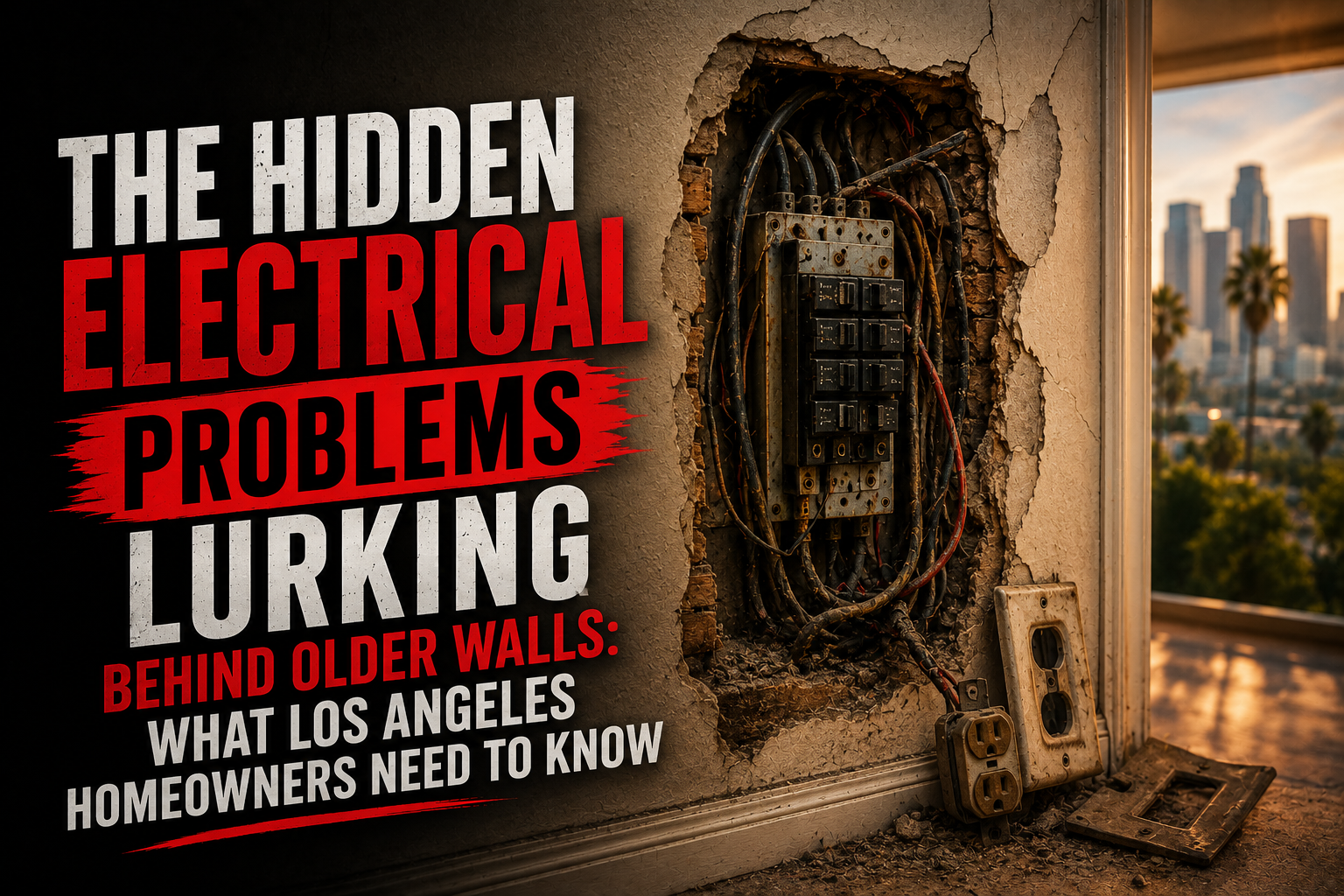
The challenge is that they cannot. Aging electrical problems are hidden by design — not intentionally, but structurally. They exist inside walls, inside panels, inside junction boxes buried under insulation and drywall. They produce symptoms that are easy to rationalize: a light that flickers occasionally, a breaker that trips now and then, an outlet that sometimes feels warm. These symptoms feel minor. They are often not minor at all.
For homeowners working with a licensed electrician in Los Angeles, identifying these hidden problems before they produce emergencies is one of the most valuable services electrical inspection and assessment can provide. This guide explains what those problems are, where they hide, what symptoms suggest they may be present, and what responsible remediation looks like.
Why Older Los Angeles Homes Carry Higher Electrical Risk
A Housing Stock Built for a Different Era
Los Angeles’s residential neighborhoods contain homes spanning more than a century of construction. The craftsman bungalows of Highland Park, Eagle Rock, and South Pasadena were built in the 1910s and 1920s. The Spanish Colonial Revival homes of Los Feliz, Silver Lake, and Hancock Park date primarily to the 1920s and 1930s. The postwar ranch homes of the San Fernando Valley, Torrance, and Culver City were built through the 1950s and 1960s. Even the tract development that expanded into Glendale, Burbank, and Pasadena through the 1970s now represents homes that are fifty years old.
Every one of these construction eras has its own electrical profile — its own common materials, installation practices, panel standards, and failure modes. A home that has passed through multiple owners over several decades has frequently been partially updated, with newer wiring running alongside original wiring, updated panels connected to original branch circuit runs, and modifications made by contractors whose work ranged from excellent to genuinely dangerous. The result is that many older Los Angeles homes have electrical systems that are not so much old as they are layered — accumulations of different generations of work that interact in ways that no single generation was designed to accommodate.
The Compounding Effect of Deferred Maintenance
Electrical systems in residential buildings receive far less routine attention than other mechanical systems. Homeowners service their HVAC systems annually, inspect roofs after storms, and repaint exterior surfaces on a regular schedule. Electrical systems, by contrast, tend to receive attention only when something fails visibly. The outlets work, the lights come on, the panel doesn’t trip unexpectedly — so the system is assumed to be fine.
This assumption is reasonable for newer construction with modern wiring and properly sized service. It is less reasonable for a 1940s home in Pasadena with its original wiring, a panel that was updated in the 1980s, and the accumulated modifications of four or five decades of ownership changes. The absence of visible symptoms does not mean the absence of developing hazards. In aging electrical systems, it often means only that the hazard has not yet reached the point where it produces a symptom dramatic enough to demand attention.
The Most Common Hidden Electrical Problems in Older Los Angeles Homes
Knob-and-Tube Wiring: The Original That Never Left
Knob-and-tube wiring was the standard residential electrical installation from roughly the 1880s through the late 1940s. It consists of single-conductor copper wires run through ceramic knobs that hold the wire away from framing members, and through ceramic tubes that protect the wire where it passes through framing. In its original installed condition, knob-and-tube wiring was a reasonable technology for the electrical loads of its era. The problem is that almost none of it exists today in its original installed condition.
Over decades, knob-and-tube wiring has been modified, extended, spliced into, covered, and subjected to loads it was never designed for. The insulation on original knob-and-tube wiring is typically a rubber compound covered by cloth or paper, and after eighty to a hundred years, that insulation has become brittle, cracked, or in many cases simply absent — worn away by time, heat cycling, rodent activity, and the physical contact of insulation materials that were blown or laid over wiring that was supposed to remain exposed to air for cooling.
The most critical issue with knob-and-tube wiring today is not the wire itself — the copper conductors in well-maintained knob-and-tube systems are often still in adequate condition — but the insulation degradation and the modifications. Splices made outside of junction boxes, connections to modern wiring made improperly, circuits that have been loaded far beyond their original design capacity — these are the conditions that produce the arcing faults, overheating events, and electrical fires that make knob-and-tube wiring a documented hazard in older Los Angeles homes.
Insurance implications are also real. Many California homeowners insurers either decline coverage or require significantly higher premiums for homes with active knob-and-tube wiring, and some policies contain exclusions for claims arising from known pre-existing conditions that were not disclosed at the time of application.
Aluminum Wiring: The 1960s Solution That Created New Problems
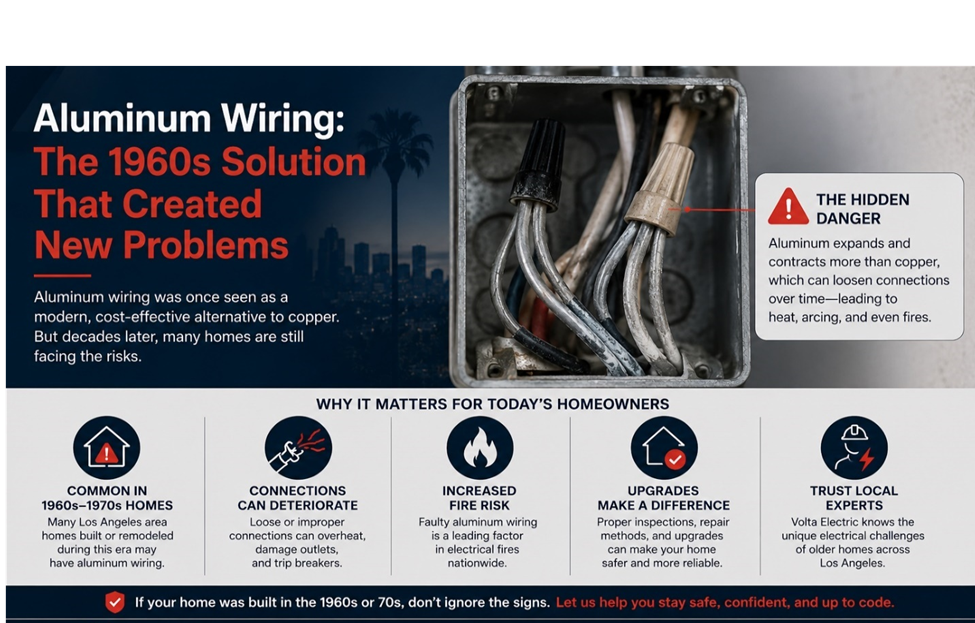
During a period of high copper prices in the mid-1960s through the mid-1970s, residential wiring was widely installed using aluminum conductors rather than copper. Aluminum wiring was used extensively in single-family homes, two-flats, and multi-unit buildings built during this period across Los Angeles, Glendale, Burbank, Long Beach, and the expanding suburban communities of the San Fernando Valley.
Aluminum wiring conducts electricity adequately, but it has physical properties that make it problematic at connection points. Aluminum expands and contracts with temperature changes more dramatically than copper, causing connections at outlets, switches, and fixtures to loosen over time. Aluminum also oxidizes at connection points, creating a layer of aluminum oxide that is a poor conductor and generates heat under load. The combination of loose connections and resistive oxidation produces exactly the conditions — heat generation at connection points, arcing, localized overheating — that create fire risk.
The National Electrical Code and California Electrical Code have specific requirements for how aluminum wiring must be handled at connection points: either through replacement of affected devices with aluminum-rated components, or through the use of copper pigtail connections at each device — a process called pig-tailing that, when correctly executed by a licensed electrician, effectively addresses the connection-point risk. The problem is that a great deal of aluminum wiring in Los Angeles homes has been partially addressed — some connections corrected, others overlooked — producing a patchwork of risk that requires systematic assessment to fully understand.
Deteriorated Wiring Insulation: The Silent Failure Mode
Even in homes without knob-and-tube or aluminum wiring, wiring insulation degrades over time. The thermoplastic insulation used in wiring installed from the 1950s onward has a finite service life, and in the thermal environment of a Los Angeles attic — where summer temperatures regularly exceed 130 degrees Fahrenheit — that service life is shortened considerably relative to what the ratings assume.
Wiring that has spent decades in a hot attic, in contact with insulation materials, or subject to mechanical stress from construction modifications develops insulation cracking, brittleness, and in advanced cases, the absence of any meaningful insulation at points where the wire has been bent, pinched, or abraded. Bare or compromised conductors in contact with wood framing, insulation batts, or each other are the direct precondition for arcing faults and electrical fires.
This type of degradation is invisible without inspection and is not typically accompanied by any symptom until a fault condition develops. Electrical inspection services that include attic wiring assessment are the only reliable way to identify deteriorated insulation before it produces a failure.
Federal Pacific Stab-Lok and Zinsco Panels: Known Hazards Still in Service
Two panel manufacturers whose products are now widely recognized as safety hazards remain in service in a substantial number of older Los Angeles homes. Federal Pacific Electric’s Stab-Lok breaker panels were installed extensively from the 1950s through the 1980s and have been the subject of extensive research and litigation documenting a failure rate in which circuit breakers do not trip as intended under overload conditions — allowing circuits to remain energized when they should be de-energized, generating heat in wiring that should be protected.
Zinsco panels, manufactured under several brand names including GTE-Sylvania, were installed during a similar period and share a comparable problem: breakers that can fail to trip, fuse to the bus bar making them impossible to turn off manually, and in some cases arc or burn inside the panel enclosure.
Both panel types are identifiable by their appearance and labeling. Both are considered by electrical safety authorities, insurance underwriters, and the electrical contracting industry to be beyond serviceable life and warranting replacement regardless of whether active symptoms have been observed. A licensed electrician can identify these panels immediately and advise on electrical panel replacement as a safety remediation — not merely a capacity upgrade.
Improperly Modified Circuits and DIY Electrical Work
Older homes have typically passed through multiple owners, and some of those owners — or contractors working for them — made electrical modifications that ranged from marginally acceptable to genuinely dangerous. The accumulation of DIY electrical work in older Los Angeles homes is one of the most frequently encountered sources of hidden hazards during electrical inspection.
Double-tapped breakers — where two circuits are connected to a single breaker terminal that is rated for one — are among the most common findings. They are also among the most straightforward to correct, but they represent a condition where two circuits share protection that was designed for one, meaning that the breaker protecting those circuits may not respond correctly to an overload on either one. Reversed polarity connections at outlets — hot and neutral wires connected to the wrong terminals — are common in older DIY work and can create shock hazards that are entirely invisible until someone contacts both the outlet shell and a grounded surface simultaneously. Junction boxes buried under drywall during renovation work — containing wire splices that were made during a previous modification and then sealed out of access — are a fire hazard that exists in more Los Angeles homes than most homeowners would be comfortable knowing.
These conditions share a common characteristic: they are invisible in ordinary use, produce no reliable symptom, and are found only by inspection.
Symptoms That Suggest Hidden Electrical Problems
Not all hidden electrical problems remain entirely hidden. Older electrical systems frequently produce symptoms that homeowners encounter but minimize — rationalizing them as minor inconveniences rather than recognizing them as indications of developing hazards.
Flickering lights that occur consistently when a large appliance cycles on suggest a voltage regulation problem consistent with either an overloaded circuit or a connection with elevated resistance. Lights that flicker without any apparent load relationship suggest a loose connection somewhere in the circuit — at the fixture, at a junction box, or at the panel itself. Either pattern warrants investigation, not observation.
Outlets or switches that feel warm to the touch indicate that the connection at that device is generating heat under load — a sign of a loose connection, a failing device, or a wiring condition that is building toward a fault. Outlets that spark when a device is plugged in, beyond the brief normal arc that can occur with resistive loads, indicate a connection condition or circuit loading problem that should be assessed.
A burning smell from any outlet, switch, or from the panel — particularly a smell that appears and then disappears — is perhaps the most serious symptom on this list. It indicates that insulation is burning somewhere in or near that device, and the fact that it disappears does not mean the problem resolved. It may mean that the burning stopped before it reached ignition temperature, but the condition that caused it remains. Any burning smell from an electrical component requires immediate attention from a licensed electrician and should not be monitored or deferred.
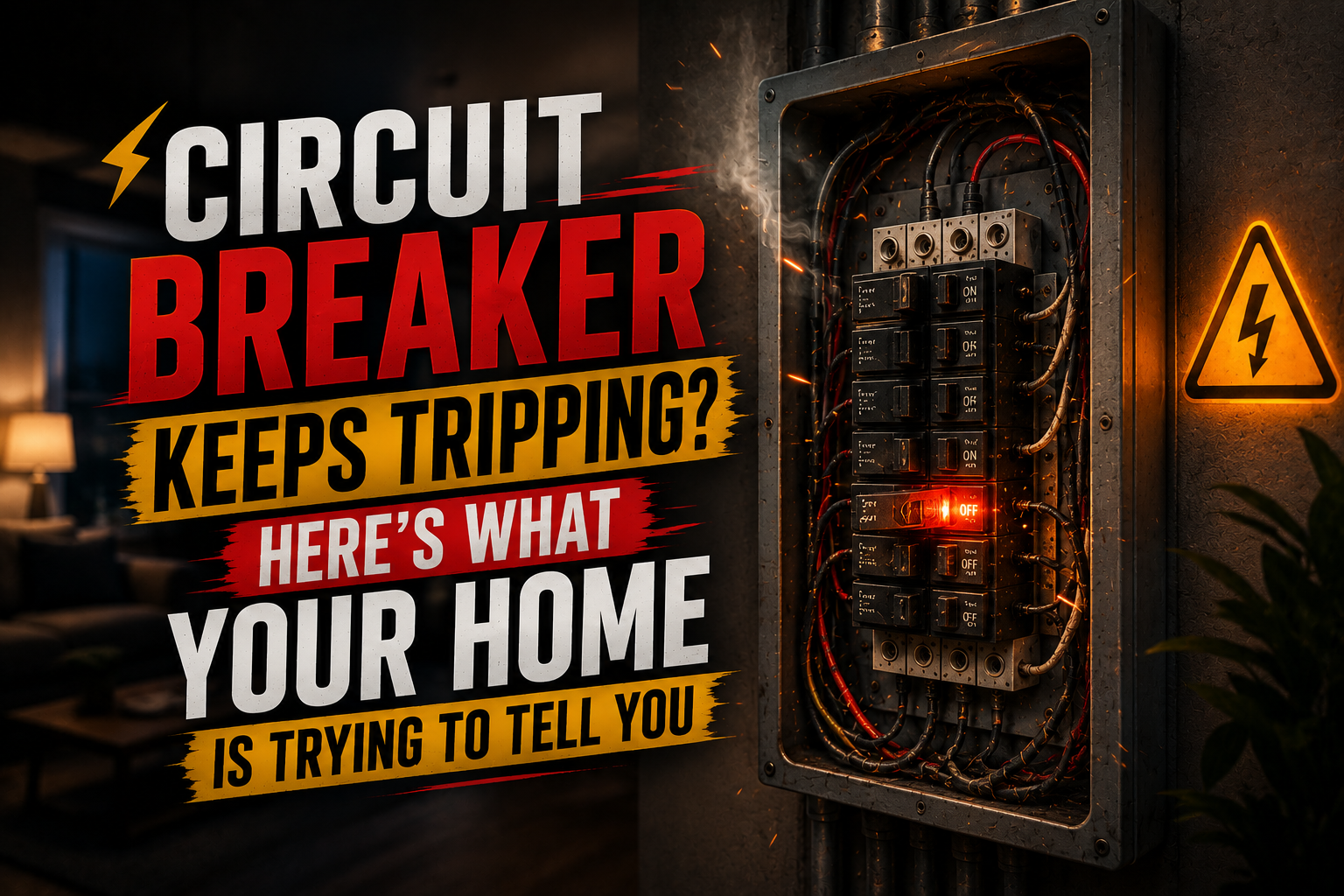
Circuit breakers that trip repeatedly under normal household loads indicate either a circuit that is genuinely overloaded relative to its rating, or a failing breaker. Both conditions require assessment — the overloaded circuit because it indicates that the original circuit design is inadequate for current use, and the failing breaker because a breaker that trips prematurely is almost as concerning as one that fails to trip at all.
What a Professional Electrical Inspection Covers in an Older Home
A thorough electrical inspection of an older Los Angeles home by a licensed electrical contractor is not the same as the cursory inspection performed by a home inspector during a real estate transaction. A professional electrical inspection examines the panel and service entrance, reviews the wiring types present in accessible areas, tests outlets for correct polarity and GFCI function, assesses the condition of visible wiring in the attic and crawl space, identifies improperly modified circuits, and evaluates the overall adequacy of the electrical system for the home’s current and anticipated use.
The output of this inspection is not a pass-fail verdict but a prioritized assessment: conditions that require immediate attention for safety reasons, conditions that should be addressed in the near term, and conditions that represent deferred maintenance that is worth planning for. This kind of assessment gives homeowners the information they need to make rational decisions about electrical repair services and remediation — rather than discovering problems sequentially as each one produces a failure.
For homes in Los Angeles that are being purchased, the professional electrical inspection is an investment that frequently surfaces conditions worth negotiating before close. For homes being retained long-term, it is the foundation of an electrical system maintenance strategy that reduces the probability of emergency situations substantially.
The Cost of Addressing Hidden Electrical Problems vs. the Cost of Not Addressing Them
Homeowners sometimes resist electrical assessment and remediation because the costs feel discretionary — the lights are on, the outlets work, so why spend money on something that isn’t broken yet? This framing underestimates both the probability and the severity of the outcomes that aging electrical systems produce.
The National Fire Protection Association attributes a significant percentage of residential structure fires to electrical distribution and lighting equipment. In California, where the housing stock is older and the climate accelerates insulation degradation, the risk profile is elevated relative to national averages. The cost of a house fire — in property loss, displacement, insurance implications, and the human dimensions that no dollar figure captures — is not a reasonable comparison point for the cost of electrical wiring repair or home rewiring services.
On a practical level, the cost of addressing common hidden electrical problems varies by scope. Replacing a Federal Pacific or Zinsco panel with a modern panel runs $2,500 to $4,500 in Los Angeles, with the exact cost depending on service amperage and any service entrance work required. Addressing aluminum wiring through systematic pig-tailing at all devices runs $1,500 to $4,000 for a typical single-family home. Partial rewiring of a specific area with deteriorated wiring — a attic run, a section of original knob-and-tube serving a kitchen or bathroom — runs $800 to $2,500 depending on scope and access conditions. Full house rewiring services for a comprehensive home rewiring project range from $8,000 to $20,000 or more for older Los Angeles homes, depending on size and complexity.
These are not trivial investments. They are, however, investments in the most fundamental safety system of the home — one that operates invisibly every hour of every day and whose failure mode is among the most catastrophic available to a residential structure.
When Partial Rewiring Makes Sense and When Full Rewiring Is the Right Answer
Not every older Los Angeles home requires complete residential rewiring, and recommending full rewiring when targeted repairs would adequately address the risk is not honest advice. The determination between partial and full rewiring depends on what the inspection actually finds.
Partial rewiring makes sense when the problems are localized — a specific area of knob-and-tube that serves kitchen circuits, a section of deteriorated attic wiring serving a bedroom wing, a few circuits where aluminum wiring connections need systematic correction. When the scope of the problem is limited and the rest of the system is in adequate condition, targeted electrical wiring repair addresses the risk without the expense and disruption of full replacement.
Full home rewiring services are indicated when the problems are systemic — when knob-and-tube or aluminum wiring is present throughout the home, when insulation degradation is widespread, when the cumulative modifications and partial updates have produced a system whose overall condition is genuinely uncertain. In these cases, trying to identify and correct individual problems within a system that is broadly compromised produces an ongoing series of repairs that collectively exceed the cost of starting fresh, without ever producing the certainty that a complete rewiring provides.
A licensed electrical contractor in Los Angeles with genuine experience in older home electrical systems can assess this distinction honestly — and any contractor who recommends full rewiring without being able to explain specifically why partial remediation would be inadequate should be asked to justify that recommendation in detail.
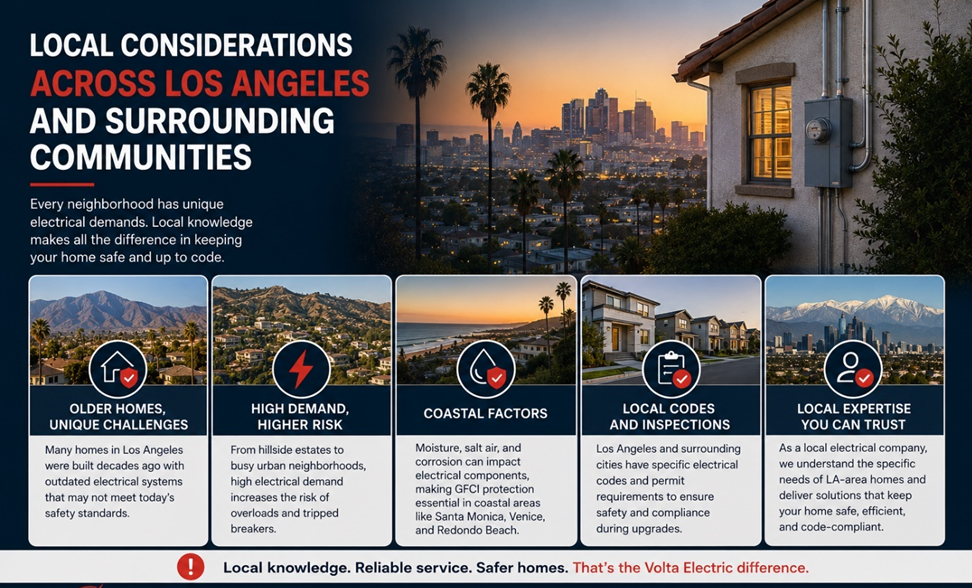
Local Considerations Across Los Angeles and Surrounding Communities
The specific electrical hazards in older Los Angeles homes vary somewhat by neighborhood and construction era, and understanding that variation helps homeowners know what to look for in their specific context.
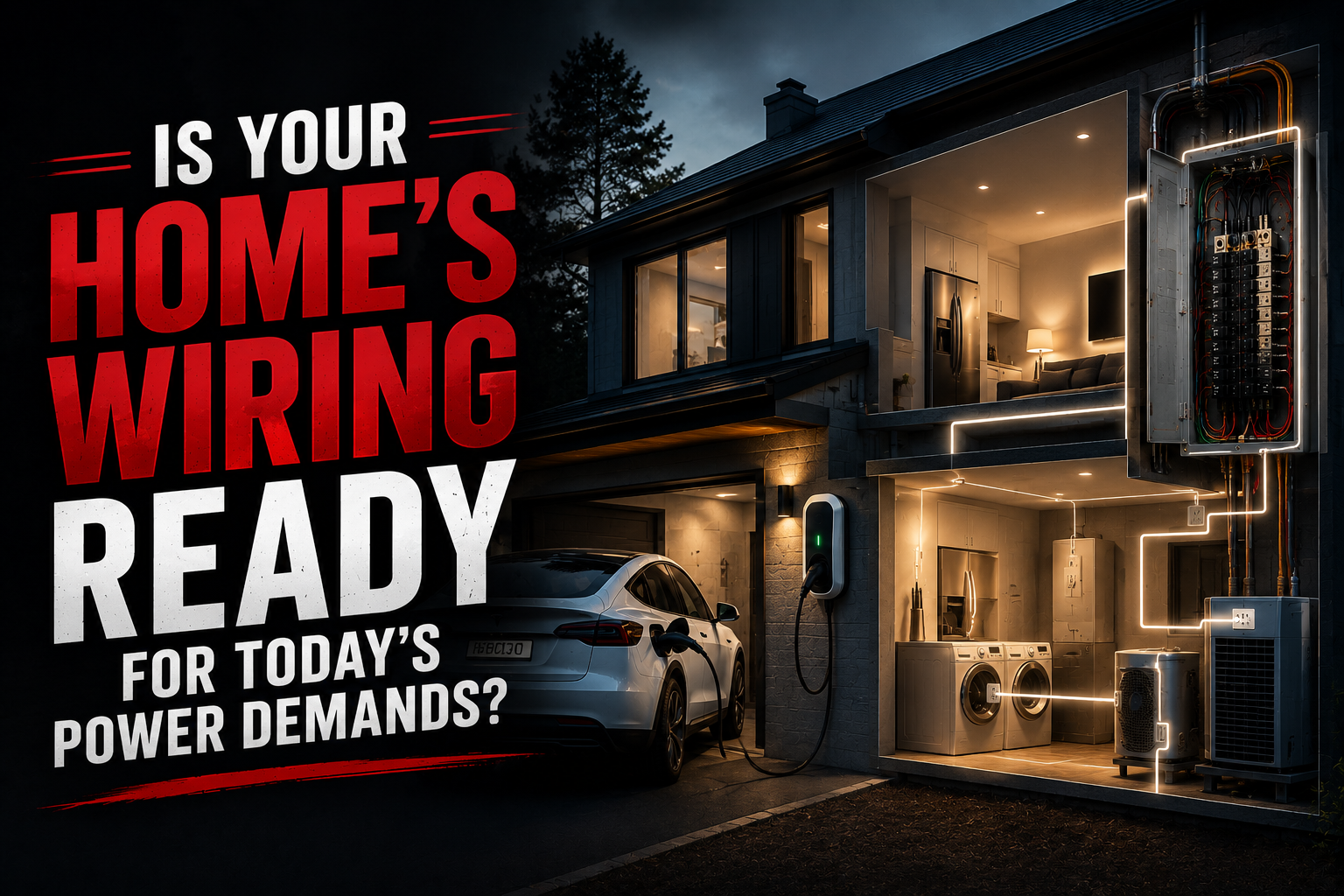
In the older neighborhoods of Pasadena, Glendale, and Burbank — where Craftsman, Tudor Revival, and Spanish Colonial homes from the 1920s through the 1940s are common — knob-and-tube wiring is the most frequently encountered legacy system. These homes were often built with genuine quality and have been well-maintained structurally, but their original electrical systems were designed for a world without air conditioning, without multiple refrigerators, and without the continuous draw of modern electronics. Electrical service upgrade and panel replacement are common needs in this housing segment.
In the postwar ranch homes and tract developments of Torrance, Culver City, the San Fernando Valley, and Long Beach, aluminum wiring is the most prevalent concern. These homes were built quickly during the construction boom of the 1960s and 1970s, and the aluminum wiring installed during that period is now fifty to sixty years old — old enough that connection degradation is well advanced in homes that have not had systematic remediation.
In Beverly Hills, Bel Air, and the larger custom homes of the Westside, the electrical concerns are more varied — some homes have been comprehensively updated, others have had cosmetic renovations without electrical system attention, and the high-end additions and remodels common in this market have sometimes introduced new high-draw loads onto systems that were not assessed for capacity before the work began. Electrical troubleshooting in these homes frequently uncovers the downstream effects of renovation work that was done without adequate electrical planning.
Frequently Asked Questions
How do I know if my older Los Angeles home has knob-and-tube wiring?
The most reliable way to confirm knob-and-tube wiring is a visual inspection of accessible attic and basement spaces by a licensed electrician. Knob-and-tube wiring is visually distinctive — single conductors running through or attached to ceramic insulators — and an experienced electrician can identify it immediately. Some older homes have had knob-and-tube partially replaced, leaving it active in some areas while modern wiring serves others, which is why a thorough inspection covers all accessible areas rather than concluding from a partial observation.
Is old wiring always dangerous, or only when it shows symptoms?
The absence of symptoms does not mean the absence of hazard. Many of the conditions that produce electrical fires — arcing at deteriorated insulation, overloaded conductors, resistive connections in aluminum wiring — develop and worsen over time before they produce any observable symptom. The symptom, when it finally appears, may be a fire rather than a warning. This is why professional electrical inspection services are the appropriate tool for older homes rather than symptom-monitoring.
What is the difference between electrical repair and home rewiring?
Electrical repair services address specific identified faults or failing components — replacing a breaker, correcting a connection, repairing a section of damaged wiring. Home rewiring services replace the branch circuit wiring throughout the home, typically because the existing wiring is too deteriorated, too extensively modified, or too inadequate for current use to be reliably repaired incrementally. A professional assessment determines which approach is appropriate for a specific home.
Can I get homeowner’s insurance with knob-and-tube wiring in Los Angeles?
Many insurers will offer coverage for homes with knob-and-tube wiring, but with higher premiums, limited coverage, or endorsements that exclude claims arising from the knob-and-tube system. Some insurers decline coverage entirely or require remediation before binding a policy. The insurance landscape for knob-and-tube wiring in California has become progressively less favorable as insurers have adjusted their risk models, and this trend is expected to continue. A licensed electrician can provide documentation of the system’s condition that some insurers require as part of their underwriting process.
How long does whole-house rewiring take in a typical Los Angeles home?
A complete residential rewiring project in a typical Los Angeles single-family home — 1,200 to 2,000 square feet — typically takes three to seven days for the electrical work, depending on the home’s size, construction, and the access conditions available. Attic access significantly reduces the time and disruption compared to homes where wiring must be fished through finished walls. The permit process and final inspection add time to the overall project completion, and drywall patching — where walls are opened for wiring runs — requires additional coordination with a finishing contractor.
Should I disclose old wiring when selling my Los Angeles home?
California requires sellers to disclose known material facts about a property’s condition, and known electrical defects — including the presence of knob-and-tube wiring, aluminum wiring, or identified panel hazards — are generally considered material facts that trigger disclosure obligations. Sellers who are uncertain about their disclosure obligations should consult a real estate attorney. As a practical matter, having a professional electrical inspection and addressing identified problems before listing produces a cleaner transaction than disclosing known problems and negotiating remediation credits.
What are GFCI outlets and why do older homes need them?
Ground Fault Circuit Interrupter outlets detect the tiny current imbalances that indicate electricity is finding an unintended path — potentially through a person — and interrupt the circuit within milliseconds. The National Electrical Code now requires GFCI protection in kitchens, bathrooms, garages, outdoor locations, and other specified areas. Older Los Angeles homes frequently lack GFCI outlet installation in these locations, and adding it is one of the most cost-effective safety improvements available — providing protection against shock hazards in the exact locations where they are most likely. GFCI outlet installation is also a prerequisite for compliance in many home sale and renovation contexts.
What is arc fault protection and do I need it in my older home?
Arc Fault Circuit Interrupter protection — AFCI — detects the electrical signature of arcing faults, which are among the primary ignition sources for electrical fires. Modern electrical code requires AFCI protection on most bedroom and living space circuits in new construction. In older homes, AFCI breakers can be installed at the panel to provide this protection on existing circuits — a meaningful safety upgrade that is particularly valuable in homes with aging wiring where connection degradation and insulation compromise create elevated arcing risk. An electrician performing a panel upgrade or breaker replacement in an older Los Angeles home should be discussing AFCI protection as part of that project.
Conclusion
The electrical systems behind the walls of older Los Angeles homes are, in most cases, doing their jobs well enough that nothing obviously alarming is happening. The lights work. The outlets function. The panel hasn’t tripped unexpectedly in months. This normalcy is comfortable and reassuring, and it is also, for homes with genuinely aging electrical infrastructure, potentially misleading.
The hazards that aging electrical systems create — deteriorated insulation, failing connections, panels that don’t protect as designed, wiring generations that interact in ways they were never meant to — do not announce themselves reliably before they produce serious consequences. They accumulate, develop, and wait. Professional electrical inspection by a licensed electrician in Los Angeles is the tool that finds them before they find you.
The investment in understanding what your home’s electrical system actually contains — and in addressing what that assessment reveals — is not an abstract safety expenditure. It is the maintenance of the system that runs continuously behind every wall in your home, every hour of every day, and whose failure mode is among the most consequential available to a residential structure. That system deserves the same attention as every other critical component of your home, and in many older Los Angeles homes, it has been waiting a long time for it.
Get an Honest Electrical Assessment From Volta Electric
Volta Electric Inc. is fully licensed, bonded, and insured, serving Los Angeles, Pasadena, Glendale, Burbank, Beverly Hills, Culver City, Long Beach, Torrance, and all of Los Angeles County with professional electrical inspection, electrical troubleshooting, wiring and rewiring services, panel upgrades, electrical panel replacement, GFCI outlet installation, and the complete range of residential and commercial electrical services.
We do not upsell work that is not needed. We explain what we find, show you the evidence, and give you a clear, prioritized picture of what your home’s electrical system requires. Then we give you an honest price and do the work correctly.
Free estimates are available on all projects. Same-day appointments are available for situations that require immediate attention.
Contact Volta Electric Inc. today to schedule your electrical inspection. The problems behind your walls are easier to solve before they become emergencies. voltaelectricinc.com/electrician-in-los-angeles/
Volta Electric Inc. | Licensed Electrical Contractor | C-10 License | Serving Los Angeles, Pasadena, Glendale, Burbank, Beverly Hills, Santa Monica, Culver City, Long Beach, Torrance & All of Los Angeles County | Free Estimates | Same-Day Appointments Available