Introduction
There is a moment that too many Los Angeles homeowners have experienced — standing in their garage next to a brand-new electric vehicle, waiting on an electrician who is delivering news they weren’t prepared for. The charger installation that was supposed to take a few hours and cost under a thousand dollars has just become a multi-week, multi-thousand-dollar project. A panel upgrade is required. The conduit run is more complex than anyone anticipated. The permit process has added weeks to the timeline. And the car sitting in the driveway can only be trickle-charged on a standard outlet until everything gets sorted.
EV charger installation is one of the most requested electrical services across Los Angeles, Westlake Village, Beverly Hills, Pasadena, Glendale, and every other community in the region where electric vehicle adoption has outpaced the national average. And it is one of the services where the gap between homeowner expectations and installation reality generates the most expensive surprises. Not because the technology is complicated. Not because licensed electricians are hard to find. But because homeowners routinely make a handful of avoidable decisions — before, during, and after the project — that drive costs up, delay timelines, and sometimes compromise the safety and performance of the finished installation.
Mistake One: Assuming the Panel Is Ready Without Verification
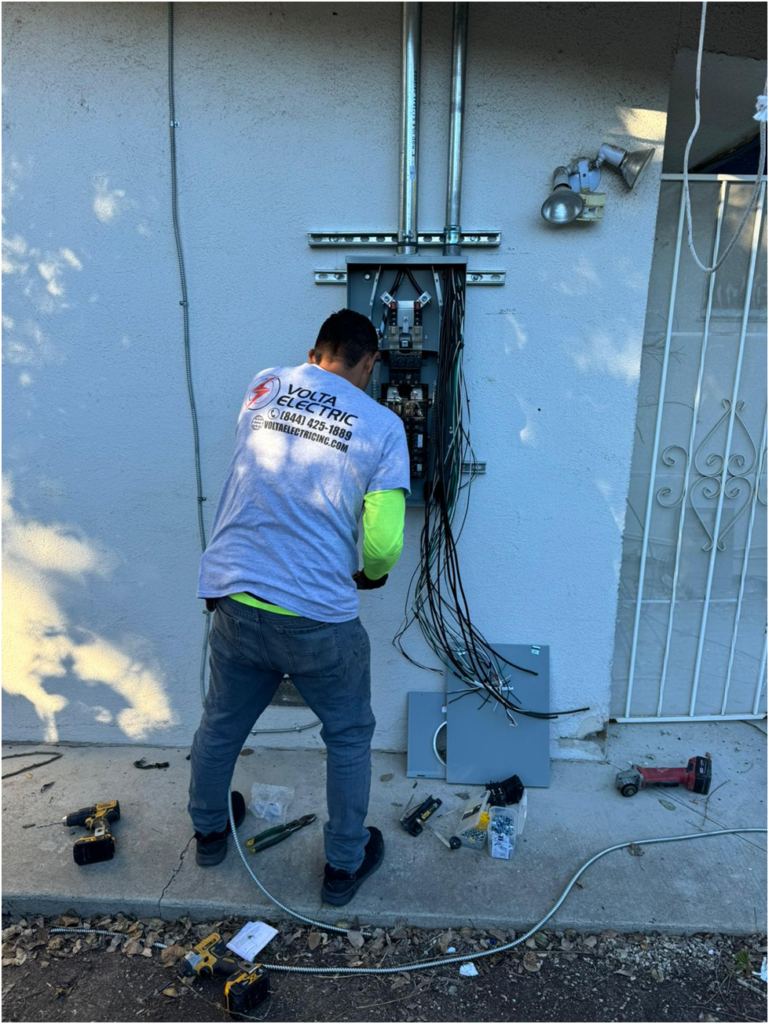
The most expensive mistake on this list is also the most common. Homeowners in Santa Monica, Burbank, Torrance, and throughout the Los Angeles area contact an EV charger installer, describe their situation over the phone, receive a rough price estimate, and proceed to schedule installation — all without anyone having looked at the actual electrical panel.
A Level 2 EV charger requires a dedicated 240-volt circuit drawing 32 to 50 amps continuously during a charge session. That is a substantial electrical load by any residential standard. Whether your panel can accommodate it safely depends on your service amperage, your existing load profile, the number of available breaker slots, and the age and condition of the equipment — none of which can be assessed accurately without a licensed electrician physically inspecting the panel.
The 100-Amp Service Problem
Homes throughout Culver City, Glendale, and older neighborhoods across Los Angeles were built with 100-amp electrical service — a standard that was entirely adequate for mid-century residential loads but that has not kept pace with modern electrical demand. A 100-amp panel serving a home with central air conditioning, an electric range, a dryer, and typical household appliances is already operating with limited headroom. Adding a 40-amp EV charger circuit to that load picture frequently requires a service upgrade to 200 amps before installation can proceed safely.
The 200-amp service upgrade involves replacing the panel, upgrading the service entrance conductors, and coordinating with the utility for meter and service drop changes. It is a legitimate project with a legitimate cost — typically $2,000 to $4,500 in the Los Angeles market depending on service entrance complexity. But discovering this requirement after scheduling the charger installation, rather than before, means the project timeline and budget both expand unexpectedly at the worst possible moment.
The Full Panel Problem
Even a home with 200-amp service can present a roadblock if the breaker box is fully occupied. A Level 2 charger requires a dedicated double-pole breaker occupying two adjacent slots. If your panel has no available slots, options include tandem breakers on compatible circuits, a sub-panel installation in the garage, or a full panel replacement with a larger unit. All of these options involve additional cost and lead time that homeowners don’t anticipate when they assume the installation is plug-and-play.
The fix: Schedule a site assessment with a licensed electrician before committing to any installation timeline or budget. The assessment identifies panel issues, load concerns, and routing complexity before they become surprises. Any electrician who quotes EV charger installation without performing or requiring this assessment is setting you up for the problem this article is warning you about.
Mistake Two: Choosing the Wrong Charger for the Vehicle and Home
Not all Level 2 EV chargers are the same, and selecting the wrong unit — based on price, a friend’s recommendation, or an online review that doesn’t account for your specific situation — is a mistake that affects both daily usability and long-term value.
Mismatching Charger Output to Vehicle Capability
Every electric vehicle has a maximum AC charging rate — the fastest rate at which its onboard charger can accept power from a Level 2 source. This rate is a vehicle specification, not a charger specification, and it varies considerably across models. Some vehicles accept up to 48 amps; others cap out at 32 amps regardless of what the charger can deliver.
Installing a 48-amp charger for a vehicle that accepts only 32 amps adds circuit cost without adding charging speed. You pay for heavier wire, a higher-rated breaker, and potentially more complex installation — none of which translates into a faster charge. Conversely, installing an underpowered charger for a vehicle capable of accepting higher current means you’re leaving charging speed on the table every single night.
The correct starting point for charger selection is your vehicle’s maximum AC charge acceptance rate. Build the charger and circuit selection around that number, with consideration for whether you anticipate purchasing a different or additional vehicle within the next five years.
Ignoring Smart Charging Features
Southern California Edison and LADWP both operate time-of-use rate structures that charge premium prices during on-peak hours — typically 4 PM to 9 PM on weekdays. A homeowner who plugs in their car immediately after the commute home and charges without schedule management is paying the highest possible rate for every kilowatt-hour the vehicle consumes.
A smart Level 2 charger with built-in scheduling allows charging to be programmed for off-peak hours — beginning at 9 PM or midnight and completing before morning departure. Over a year of daily charging, the difference between on-peak and off-peak rates in the SCE and LADWP territories represents a meaningful sum. Homeowners in Westlake Village, Pasadena, Long Beach, and other communities with significant daily commutes will feel this difference in their monthly bills from the first month.
For homes that have already invested in solar panels or are pairing EV charging with a battery backup system or hybrid solar inverter, smart charging integration with the home’s energy management platform extends the return on both investments simultaneously. A charger that can communicate with your solar generation data and prioritize charging during peak production hours effectively fuels your vehicle with solar energy rather than grid power.
Mistake Three: Underestimating Permitting Requirements
Homeowners consistently underestimate the role that permits play in EV charger installation — both in terms of what the requirements are and what happens when those requirements are ignored.
EV charger installation requires a permit in virtually every jurisdiction across Los Angeles County. This includes the City of Los Angeles, Beverly Hills, Santa Monica, Glendale, Burbank, and every other municipality in the region. The permit process exists because a dedicated high-current circuit is a significant addition to a home’s electrical system, and the inspection that follows permit issuance provides independent verification that the installation meets safety standards.
The Risk of Unpermitted Work
Homeowners occasionally receive proposals from contractors who offer to skip the permit process in exchange for a lower price or faster timeline. This offer should be declined without exception.
Unpermitted electrical work creates a chain of liability that most homeowners don’t fully appreciate until it matters. Homeowner’s insurance policies typically exclude coverage for damage arising from unpermitted work. When a property is sold, the disclosure obligation falls on the seller, and unpermitted work discovered during inspection routinely becomes a negotiation point that costs more to resolve than the permit would have. If an unpermitted installation contributes to a fire or other safety incident, the homeowner carries exposure that a permitted, inspected installation would not.
Any licensed electrical contractor in California pulls permits for work that requires them. A contractor who proposes to skip permitting is either unlicensed, underinsured, or simply willing to transfer legal and safety risk onto the homeowner in exchange for their own convenience. None of those are attributes you want in the person installing a high-current electrical circuit in your home.
Permit Timelines Vary by City
A related and less appreciated aspect of permitting is that timelines vary significantly across the Los Angeles area. Some municipalities process EV charger installation permits over the counter or through expedited online portals in a matter of days. Others have longer review queues, particularly during periods of high construction activity. Torrance, Pasadena, and Burbank each have their own processes and timelines that differ from the City of Los Angeles.
Homeowners who need the installation completed by a specific date — to coincide with vehicle delivery, for example — should factor realistic permit timelines into their scheduling rather than assuming permits are instantaneous. A licensed electrician familiar with local requirements will provide accurate timeline expectations and, in some jurisdictions, can access expedited review processes that are not available to homeowners pulling their own permits.
Mistake Four: Hiring Based on Price Alone
Cost is a legitimate consideration in any home improvement project. But EV charger installation is a category where the lowest bid reliably reflects something other than the best outcome — and where the difference between a quality installation and a rushed one shows up in ways that matter.
Unlicensed Work in the Los Angeles Market
The Los Angeles market has a well-documented presence of unlicensed electrical contractors. Homeowners in search of the cheapest possible quote sometimes encounter proposals from individuals or companies that cannot produce a valid California electrical contractor’s license. The consequences of hiring an unlicensed contractor for electrical work range from failed permit inspections — because the work wasn’t to code — to genuine safety hazards that pose fire and shock risks.
Verifying a contractor’s license takes less than five minutes through the California Contractors State License Board’s online verification tool. A valid license number, a current license status, and no disciplinary history are the baseline requirements. Any contractor who is unwilling to provide their license number in writing should not be hired for electrical work.
What a Low Bid Usually Means
When one EV charger installation proposal is significantly less expensive than others for the same described scope, the difference typically traces to one of a few explanations: the contractor intends to skip permits, the proposal excludes work that will become necessary during installation and will be billed as an add-on, or the contractor lacks the experience to identify problems in advance that more experienced professionals would have anticipated and included in their scope.
The add-on billing problem is particularly frustrating for homeowners. A contractor who discovers during installation that the panel needs work they didn’t scope — and who then presents a change order for that work — has effectively delivered a bait-and-switch on the project price. A thorough pre-installation assessment by an experienced electrician identifies these issues in advance and includes them in the original proposal, eliminating the mid-project surprise.
Mistake Five: Ignoring the Garage-to-Panel Distance
The physical route between your electrical panel and your intended charger location is one of the most consequential factors in EV charger installation cost and complexity — and one that homeowners frequently don’t think about until the project is underway.
Wire gauge requirements increase with circuit length to maintain voltage quality under the sustained high-current load of EV charging. A longer run requires heavier wire throughout, which adds material cost proportionally. The routing path matters as much as the distance: a run that travels through finished walls, across ceilings, or under a concrete slab requires more labor than a straightforward surface-mounted conduit run in an unfinished garage.
Detached Garages and Remote Parking Areas
Homes throughout the Los Angeles area — particularly in older neighborhoods where detached garages are common, and in communities like Westlake Village where properties have separated garages or gated parking areas — often involve charger installation scenarios that are considerably more complex than the attached-garage standard.
A detached garage installation typically requires running a feeder from the main panel to a sub-panel in the detached structure, then running the charger circuit from that sub-panel. If no underground conduit already connects the structures, trenching and conduit installation add significant cost and require additional permits. The total project cost for a detached garage EV charger installation can run two to four times what the same project costs in an attached garage scenario.
Homeowners who mention their parking situation to a phone-based quote service without this context receiving an accurate price should not be surprised when the in-person assessment reveals that the actual scope is considerably larger. The honest approach — describing your parking situation in detail when requesting quotes and insisting on an in-person assessment before agreeing to any price — protects you from this category of surprise.
Mistake Six: Not Thinking About Future Needs
An EV charger installation is an opportunity to plan electrical infrastructure for the next ten to fifteen years, not just for the car you’re buying today. Homeowners who install only what they need in the immediate term often find themselves reopening the project within a few years as their needs evolve.
The most common version of this mistake is installing a charger and circuit sized for a single vehicle when a second EV purchase is a realistic near-term possibility. Running conduit, pulling wire, and installing a breaker for a second circuit at the same time as the first costs a fraction of what it costs to mobilize the project again separately. If a second vehicle is anywhere in your planning horizon, discussing dual-circuit installation with your electrician at the outset is worth the conversation.
Similarly, homeowners who are considering a solar installation, a battery storage system, or an electrical panel upgrade in the next few years should discuss those plans during the EV charger scoping. The optimal panel configuration for a home that will eventually have solar, batteries, and two EVs is different from the configuration appropriate for a home with only an EV charger. Making those decisions in sequence rather than in coordination means paying multiple rounds of mobilization costs and potentially undoing work that could have been done correctly the first time.
What a Quality EV Charger Installation Looks Like
Understanding the common mistakes is most useful when paired with a clear picture of what a professional installation actually involves. The elements of a quality installation are specific enough that homeowners can use them as a checklist when evaluating proposals and contractors.
A complete, professional EV charger installation in Los Angeles includes a pre-installation site assessment covering panel capacity, load calculation, and conduit routing. It includes a permit pulled before work begins. The circuit is wired with appropriate gauge conductors for the run length and charger amperage, with proper conduit protection in the garage and along any exposed routing. The charger is mounted at a height and position that allows the cable to reach the vehicle’s charge port without straining. The circuit and charger are commissioned and tested before the installer leaves. And the permit inspection is scheduled and completed — with the homeowner receiving documentation of the passed inspection.
Any proposal that omits any of these elements is omitting something that belongs in the scope. Installation cost varies by project complexity, but the Los Angeles market range for a properly permitted, professionally installed Level 2 charger on a panel-ready home is $800 to $2,000 for installation labor, plus charger hardware and permit fees. Projects requiring panel work, sub-panel installation, or complex conduit runs carry proportionally higher costs that a thorough assessment will identify and quantify in advance.
How This Connects to Broader Home Electrification
EV charger installation rarely happens in isolation for Los Angeles homeowners who are thinking seriously about energy costs and independence. The same household that is adding EV charging is often also evaluating solar panels, a battery backup system, a panel upgrade, or some combination of these investments.
Understanding how these systems interact — and how the electrical infrastructure decisions made during an EV charger installation affect the feasibility and cost of future additions — is part of what distinguishes a contractor who is genuinely serving your long-term interests from one who is simply completing the immediate task.
A home that installs a 200-amp panel upgrade for EV charging has already done infrastructure work that simplifies future solar interconnection, battery storage integration, and appliance electrification. A home that selects a smart EV charger compatible with a home energy management system can integrate that charger with a future hybrid solar inverter or battery backup system without replacing the charging hardware. These are the kinds of forward-looking details that an experienced residential electrician should be surfacing during the scoping conversation — not as an upsell, but as genuine planning guidance.
For homeowners who are building toward a fully electrified home — solar generation, battery storage, EV charging, and efficient appliances all working together — the electrical panel and the EV charger installation are the foundation. Getting those foundational decisions right is what makes everything that follows simpler and less expensive.
Local Considerations Across Los Angeles
The Los Angeles region’s housing diversity creates installation scenarios that vary significantly by community, and homeowners benefit from working with electricians who know their specific jurisdiction’s permitting requirements, utility incentive programs, and housing stock characteristics.
In Westlake Village and similar master-planned communities, homeowners often have newer panels and attached garages, making straightforward installations more common — but also larger properties where panel-to-charger distances can be longer than in denser neighborhoods. In Beverly Hills and the older portions of Pasadena, homes with original electrical service from the mid-twentieth century require panel assessment as a consistent preliminary step. In Long Beach and Torrance, the mix of single-family homes and multifamily properties creates installation variety that requires jurisdictional knowledge to navigate correctly.
Southern California Edison customers should also be aware of the utility’s EV-specific rate plans and incentive programs, which can meaningfully affect the financial return on a home charging installation. The TOU-D-PRIME rate plan, designed specifically for EV owners, offers significantly lower off-peak rates in exchange for higher on-peak rates — a structure that works in favor of homeowners who charge their vehicles overnight. An electrician familiar with SCE’s EV programs can help homeowners understand how to configure their installation and charging schedule to maximize those benefits.
Frequently Asked Questions
What is the most common reason an EV charger installation costs more than the initial estimate?
The most common reason is panel issues discovered during or after installation that weren’t identified during upfront assessment. This includes insufficient service amperage, full breaker boxes, and aging equipment that requires upgrade or replacement. A thorough pre-installation site assessment by a licensed electrician eliminates most of these surprises by identifying them before the project begins.
How do I know if my Los Angeles home needs a panel upgrade before EV charger installation?
Check the amperage rating on your main breaker. If it says 100 amps or less, a service upgrade is likely required. If it says 200 amps, have a licensed electrician perform a load calculation to confirm adequate headroom for the charger circuit. Homes with full breaker boxes — regardless of service amperage — may also need panel work before installation can proceed.
Does EV charger installation qualify for any California incentives or rebates?
The federal Alternative Fuel Vehicle Refueling Property Credit provides a 30% tax credit on EV charger equipment and installation costs. SCE and LADWP both offer programs that may provide rebates or bill credits related to EV charging infrastructure. Program availability and eligibility criteria vary — your electrician should be familiar with current offerings in your utility territory.
How long does a permitted EV charger installation take from start to finish in Los Angeles?
For a panel-ready home with a straightforward installation, the physical work typically takes a few hours once permits are obtained. Permit processing times vary by city — from same-day or next-day in some jurisdictions to two to four weeks in others during busy periods. For homes requiring panel work, add time for that project scope and any utility coordination it requires.
What happens if I use a Tesla charger? Does that change the installation?
Tesla’s Wall Connector is a proprietary Level 2 charger designed primarily for Tesla vehicles, though newer versions include a J1772 adapter for other EVs. The electrical installation requirements — dedicated 240-volt circuit, appropriate breaker size, permit — are the same as for any Level 2 charger. A licensed electrician installs the circuit; the charger hardware brand doesn’t meaningfully change the electrical work involved.
Can I install an EV charger in a multifamily building or HOA community?
California law (AB 1738 and related statutes) gives residents of common interest developments the right to request EV charging installation in their assigned parking space, with the HOA generally prohibited from unreasonably denying such requests. The process involves written request, insurance documentation, and agreement on installation standards. An electrician experienced with multifamily installations can help navigate the requirements.
What is a Level 2 charger, and why is it better than using a regular outlet?
A Level 2 charger operates at 240 volts and delivers 20 to 30 miles of range per hour of charging. A standard 120-volt outlet provides only 3 to 5 miles per hour. For most EV owners, Level 1 charging is too slow for daily use — a fully depleted battery might require 36 hours to recharge, compared to 6 to 10 hours on Level 2. Level 2 home charging makes the EV ownership experience genuinely practical.
How should I evaluate competing EV charger installation proposals?
Verify each contractor’s California license through the CSLB online portal. Confirm that each proposal includes permit pull and inspection as part of the scope. Compare proposals based on what is included in the scope, not just the bottom-line price. Ask each contractor what they found during their assessment of your panel and installation location — if they haven’t performed an assessment, that’s a gap. Request references from comparable projects completed within the past two years.
Conclusion
EV charger installation is not inherently complicated, but it is a project where the decisions made before the work begins determine whether the outcome is a smooth installation or an expensive lesson. The homeowners who avoid the mistakes covered in this article share a common approach: they ask the right questions early, insist on a site assessment before agreeing to any price, verify contractor credentials, and understand that permits and inspections are protections for them — not bureaucratic overhead.
Across Los Angeles, Westlake Village, Beverly Hills, Santa Monica, Pasadena, Glendale, Burbank, Culver City, Long Beach, and Torrance, the same fundamentals apply. The quality of the assessment determines the quality of the proposal. The quality of the proposal determines whether the final project matches expectations. And the licensed electrician who treats your installation as infrastructure for the next fifteen years — not just the task in front of them today — is the one who delivers the outcome that holds up over time.
Getting EV charger installation right the first time is not complicated. It just requires choosing the right partner and asking the right questions before the work begins.
Volta Electric: EV Charger Installation Done Right Across Los Angeles
Volta Electric provides professional EV charger installation throughout Los Angeles, Westlake Village, Beverly Hills, Santa Monica, Pasadena, Glendale, Burbank, Culver City, Long Beach, and Torrance. Every project starts with a thorough site assessment, a complete load calculation, and a proposal that reflects actual project scope — not a phone estimate built on unverified assumptions.
We pull permits, complete inspections, and install charging infrastructure designed for your home’s current and future electrical needs. No surprises mid-project. No unpermitted shortcuts. No proposals that exclude the work your installation actually requires.
If you’re ready to install your EV charger correctly the first time, contact Volta Electric to schedule your assessment.
Contact Volta Electric today to get your EV charger installation done right.