By Volta Electric Inc. | Your Licensed Electrical Contractor Serving San Fernando, CA
Your 1950s Panel Has No Idea What Year It Is — And That’s a Problem
Somewhere in your San Fernando home, tucked into a garage wall, a hallway closet, or a utility room, there is a metal box that was installed when Eisenhower was president, television was black and white, and the most power-hungry device in the average American household was a refrigerator.
That box — your electrical panel — was engineered for a world that no longer exists.
In 1955, the average American home used roughly 2,000 to 3,000 kilowatt-hours of electricity per year. Today, that figure has more than quadrupled. Modern homes run smart appliances, multiple large-screen televisions, home office equipment, high-efficiency HVAC systems, whole-home Wi-Fi networks, induction cooktops, and increasingly — electric vehicles that need to charge overnight.
The electrical appetite of a 2026 household is categorically different from anything a mid-century panel was designed to handle.
And yet, thousands of San Fernando homes are still running on that original infrastructure. Some on fuse boxes. Some on early-generation breaker panels with known safety histories. Many on 60-amp or 100-amp service that was considered more than adequate in 1958 and is dangerously undersized today.
This guide is for every San Fernando homeowner who has ever wondered why breakers keep tripping, why certain rooms feel electrically unreliable, or why their electrician mentioned a panel upgrade and they weren’t sure whether to take it seriously.
The short answer: you should. Here’s everything you need to know.
Understanding What Your Electrical Panel Actually Does
Before diving into why upgrades matter, it helps to understand what your electrical panel is responsible for — because it’s doing more than most homeowners realize.
Your electrical panel, also called a breaker box or load center, is the central distribution hub for every circuit in your home. Electricity arrives from the utility company through a service entrance and lands at your panel, where it gets divided and routed outward through individual circuits to every outlet, fixture, appliance, and system in your home.
Each circuit is protected by either a fuse or a circuit breaker — a safety device designed to interrupt the flow of electricity if a circuit draws more current than it was designed to handle. This interruption prevents wires from overheating, which is the primary electrical cause of residential fires.
In a fuse-based system, a fuse contains a thin metal strip that physically melts and breaks the circuit when overloaded. Once blown, the fuse must be replaced. In a breaker-based system, a mechanical switch trips and can be reset by hand after the overload condition is resolved.
The panel also has a capacity rating — measured in amps — that defines the total amount of electrical current it can safely receive and distribute. A 60-amp panel can handle 60 amps of total simultaneous load. A 100-amp panel handles 100. A modern 200-amp panel handles 200 — and for many contemporary homes with EV charging, 400-amp service is increasingly the recommended standard.
When your home’s electrical demand begins to approach or exceed what your panel was designed to handle, the system doesn’t fail dramatically or all at once. It fails slowly, in ways that are easy to dismiss — until they aren’t.
The Warning Signs: How an Overloaded Panel Communicates With You
San Fernando homes with aging electrical panels tend to show consistent patterns of stress before anything goes seriously wrong. These are the signals most commonly reported by homeowners who come to us for panel assessments.
Breakers That Trip Frequently
A breaker that trips occasionally under genuine overload conditions is doing exactly what it was designed to do.
A breaker that trips repeatedly under normal use — running the microwave and the toaster at the same time, for instance — is telling you that circuit is undersized for how you actually live.
Multiple circuits doing this simultaneously is a panel-level message, not an appliance problem.
Lights That Dim When Appliances Kick On
If your lights flicker or dim noticeably when the air conditioner starts, when the refrigerator compressor cycles, or when any large appliance activates, your panel is struggling to distribute available power without voltage drops across circuits.
This is a classic sign of a panel operating near its capacity ceiling.
A Fuse Box Still in Service
If your home still uses screw-in fuses rather than circuit breakers, you are operating on infrastructure that is not only outdated but potentially dangerous.
Fuse boxes were not designed for modern electrical loads, and they carry an additional risk: homeowners who replace blown fuses with the wrong amperage rating — a very common workaround — create a circuit with no effective overcurrent protection at all.
Breakers That Feel Warm or Won’t Stay Reset
A breaker that is warm to the touch or that trips again immediately after being reset is not just faulty — it may indicate a wiring problem, a failing breaker, or chronic overload on that circuit.
Any of these conditions warrants prompt professional attention.
Burning Smell or Discoloration Around the Panel
This is the warning sign that requires an immediate call.
Any burning odor, scorch marks, or discoloration on or around your electrical panel indicates a serious fault condition. Do not delay and do not ignore it.
Your Home Is More Than 40 Years Old and the Panel Has Never Been Replaced
In San Fernando’s housing stock — which includes a substantial number of homes built in the postwar decades — an original, never-upgraded panel is both statistically common and worth having professionally assessed regardless of whether you’re experiencing obvious symptoms.
Fuse Boxes: Why They’re Not Just Outdated, But Actively Problematic
There’s a tendency to think of fuse boxes as simply old-fashioned — a quirk of an older home rather than a genuine concern.
That framing understates the problem considerably.
Fuse boxes present several specific issues that go beyond aesthetics or inconvenience.
They Weren’t Designed for Today’s Load
A standard residential fuse box from the 1950s was typically rated for 60 amps of service — enough for the lighting, a refrigerator, and a few small appliances of that era.
Running a modern kitchen, a home office, an HVAC system, and an EV charger on 60-amp service is not a matter of pushing limits slightly. It is a category mismatch.
Overcurrent Protection Is Easily Defeated
When a fuse blows, it needs to be replaced. The correct replacement fuse matches the amperage rating of the circuit it protects.
But over-fusing — installing a 30-amp fuse in a circuit rated for 15 amps because the 15-amp fuse keeps blowing — is extremely common in homes where fuse boxes have never been replaced.
An over-fused circuit has no meaningful overcurrent protection. The wire will overheat long before the fuse blows.
They’re Incompatible With Modern Safety Devices
AFCI (Arc Fault Circuit Interrupter) breakers, which are now required by the NEC in many residential circuits and provide critical protection against arc faults — a leading cause of electrical fires — cannot be installed in a fuse box.
If your home has a fuse box, it cannot be brought to current safety standards without replacing the panel entirely.
Insurance Implications
Many homeowners insurance providers in California either charge higher premiums for homes with fuse boxes or decline to cover them at all.
If you’re unsure how your current panel affects your coverage, it’s worth a direct conversation with your insurer.
Early Breaker Panels: When “Upgraded” Still Isn’t Safe
Some San Fernando homeowners assume that because their home has breakers rather than fuses, they’re in reasonable shape.
This may or may not be true — because not all early breaker panels were created equal.
Federal Pacific Electric (FPE) Stab-Lok Panels
Federal Pacific Electric (FPE) Stab-Lok panels were installed in millions of American homes from the 1950s through the 1980s.
Extensive investigation and litigation have established that FPE Stab-Lok breakers have a documented failure rate — they fail to trip under overload conditions at a significantly higher rate than they should.
A breaker that doesn’t trip when it’s supposed to provides no overcurrent protection.
If your home has an FPE panel, replacement is the recommended course of action.
Zinsco Panels
Zinsco panels, similarly common in homes of the same era, have a documented tendency for breakers to fuse to the bus bar over time — meaning they can no longer be switched off, even by the breaker mechanism or manually.
This creates a condition where the circuit has no functional means of interruption.
Neither of these panels is necessarily visibly defective. They may appear to be functioning normally while carrying these inherent failure risks.
A licensed electrician can identify these panels and advise you on replacement priority.
What a Modern 200-Amp Panel Upgrade Actually Involves
When Volta Electric Inc. performs a panel upgrade in San Fernando, the process is thorough, permitted, and done to current code.
Assessment and Planning
Before any work begins, we evaluate your current service entrance, panel location, grounding system, and existing circuit configuration.
We identify whether a straight panel replacement is appropriate or whether the service entrance conductors also need upgrading — which is common when moving from 60-amp or 100-amp to 200-amp service.
Utility Coordination
Upgrading to 200-amp service typically requires coordination with Southern California Edison, which supplies power to San Fernando.
The utility must disconnect service at the meter while the new panel is installed and the service entrance is updated.
We manage this coordination as part of the job.
Permit and Inspection
Panel upgrades in San Fernando require a permit from the City of San Fernando’s Building and Safety Division.
We pull the permit on your behalf, and the work is inspected by a city inspector before the job is considered complete.
This is not optional, and any contractor who suggests skipping the permit process is exposing you to serious liability — particularly at the point of home sale, insurance claims, or future electrical work.
Installation
The new 200-amp panel is installed, circuits are transferred from the old panel, and all connections are made to current NEC standards.
Where existing branch circuit wiring is in good condition, it is reconnected to the new panel.
Where the assessment reveals concerns — outdated wiring, improper connections, circuits that don’t meet current code — we identify and address those issues as part of the project.
Grounding and Bonding
Modern panels require a compliant grounding electrode system.
In older San Fernando homes, this often needs to be updated as part of the upgrade — particularly in homes that relied on water pipe grounding alone, which is no longer NEC-compliant as a sole grounding electrode.
Final Inspection and Closeout
Once the inspection passes, the permit is closed and you have a documented record of the work — which is valuable for insurance purposes, future electrical projects, and home resale.
Panel Upgrades and the EV Charging Connection
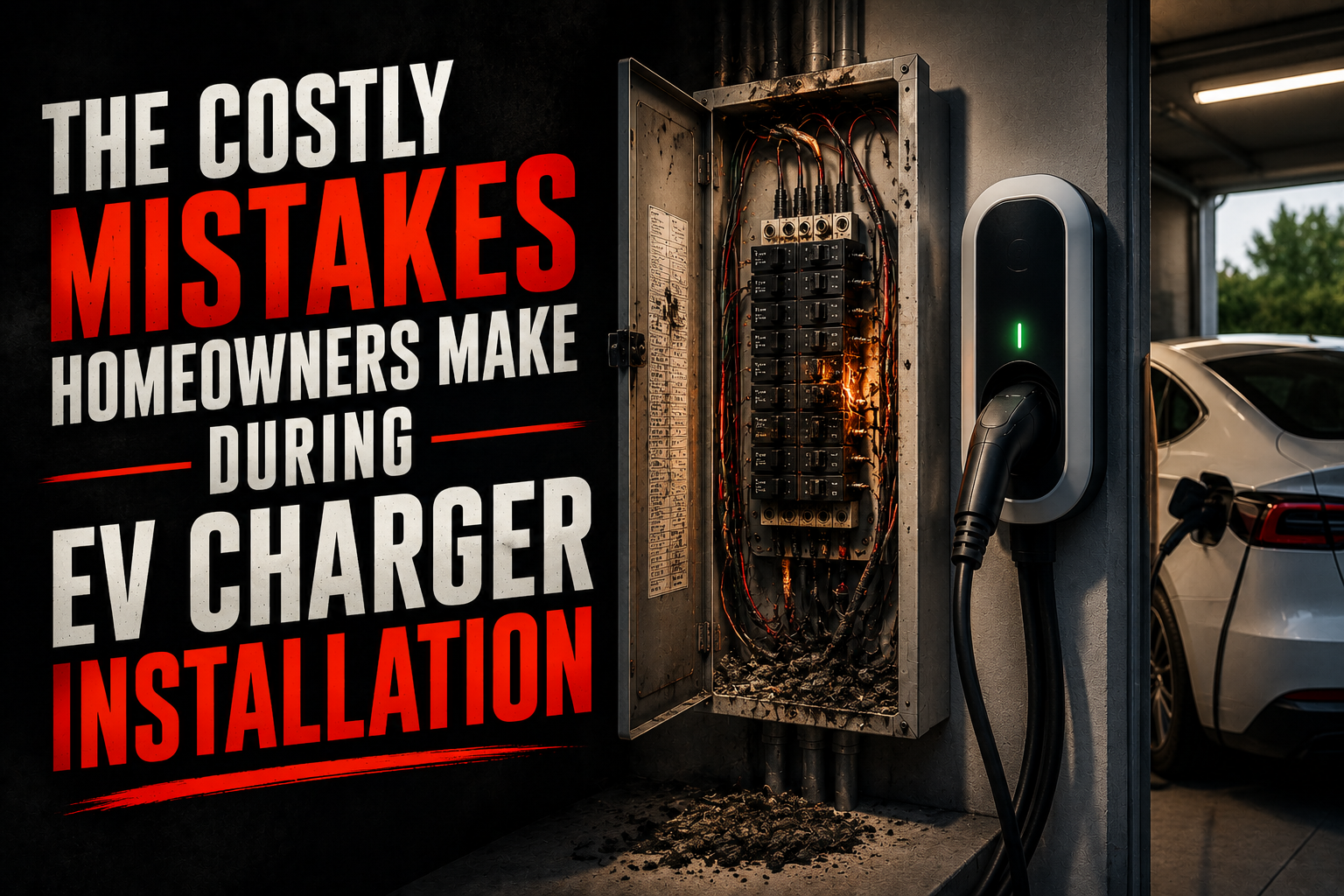
This is the conversation happening in San Fernando homes with increasing frequency: a homeowner gets an electric vehicle, calls about a Level 2 home charger installation, and discovers that their existing panel — or their existing service — can’t support it without an upgrade first.
A Level 2 EV charger typically operates on a dedicated 240-volt circuit rated for 50 to 60 amps.
On a 100-amp panel that’s already running an HVAC system, a water heater, a kitchen, and the rest of a modern home’s load, adding a 50-amp dedicated circuit often isn’t feasible without first upgrading the panel and potentially the service entrance.
This is not a reason to delay your EV charger installation — it’s a reason to have the full conversation upfront.
At Volta Electric Inc., we assess your complete electrical situation before recommending a charger installation path.
In many cases, a panel upgrade and charger installation can be planned and executed together, minimizing disruption and ensuring the result supports not just today’s vehicle but whatever comes next.
San Fernando-Specific Considerations
San Fernando is a small, historically rich city with its own municipal government, its own building department, and its own permitting and inspection process — separate from the broader Los Angeles County system that governs surrounding unincorporated areas.
This matters practically.
Electrical permits in San Fernando are issued through the City of San Fernando’s Community Development Department.
Inspections are scheduled through that department.
An electrician who primarily works in other parts of Los Angeles County and is unfamiliar with San Fernando’s specific process may encounter delays, documentation issues, or inspection complications that a locally experienced contractor avoids.
Volta Electric Inc. serves San Fernando directly and is familiar with the permitting and inspection processes that apply to electrical work in the city.
When we take on a panel upgrade in San Fernando, we handle the permit process efficiently — because we’ve done it before, in the same jurisdiction, under the same requirements.
The Cost of Waiting
There’s a natural human tendency to defer infrastructure decisions that don’t feel immediately urgent.
The panel works, mostly. The breakers trip sometimes, but you’ve learned which combinations of appliances to avoid. The fuse box has been there for 70 years and nothing catastrophic has happened.
This reasoning is understandable and also genuinely dangerous when applied to electrical infrastructure.
The risk of an aging, undersized, or defective panel is not theoretical.
Electrical fires caused by arc faults, overloaded circuits, and failed overcurrent protection devices are real, they are statistically significant, and they are almost entirely preventable with appropriate infrastructure.
The cost of a panel upgrade is a known, finite number. The cost of an electrical fire — in property damage, displacement, and human risk — is not.
Beyond safety, there is the practical dimension: an undersized or aging panel limits what you can do with your home.
It makes EV charging impractical. It makes kitchen renovations complicated. It reduces your home’s appeal and value at the point of sale, where buyers and their inspectors will flag an outdated panel as a condition of purchase.
The right time to upgrade is before you need it urgently.
If you’re already experiencing warning signs, that time is now.
Why San Fernando Residents Trust Volta Electric Inc.
Volta Electric Inc. is a fully licensed, bonded, and insured electrical contracting firm serving San Fernando and all of Los Angeles County.
We specialize in exactly the kind of work this guide covers — panel upgrades, service upgrades, EV charger installations, and the full range of electrical improvements that bring mid-century homes into safe, functional alignment with 21st-century electrical demands.
We offer free estimates, same-day appointments for urgent situations, and the kind of transparent, permitted, inspected work that protects you — not just today, but for every year you own your home.
Schedule your free panel assessment today: voltaelectricinc.com/electrician-in-san-fernando/
Volta Electric Inc. | Licensed Electrical Contractor | Serving San Fernando, Arcadia, Santa Clarita, Westlake Village & All of Los Angeles County | Free Estimates | Same-Day Appointments Available