Power outages can be more than an inconvenience in Calabasas. Wildfire-related shutoffs, damaged utility equipment, extreme weather, and other grid disruptions can interrupt electricity for hours or longer. A properly designed standby generator can help keep essential electrical systems operating when utility power is unavailable.
For homeowners considering generator installation in Calabasas, the key decisions go beyond which generator to buy. Generator size, fuel source, transfer equipment, placement, permitting, and the property’s electrical capacity all need to be evaluated together.
Quick Answer: Do I Need a Generator in Calabasas?
A generator can be a practical backup-power option for Calabasas homeowners who need electricity during utility outages or wildfire-related Public Safety Power Shutoffs (PSPS). Southern California Edison says it may shut off power when there is a high risk of wind-driven wildfire and inspects its lines before restoring service.
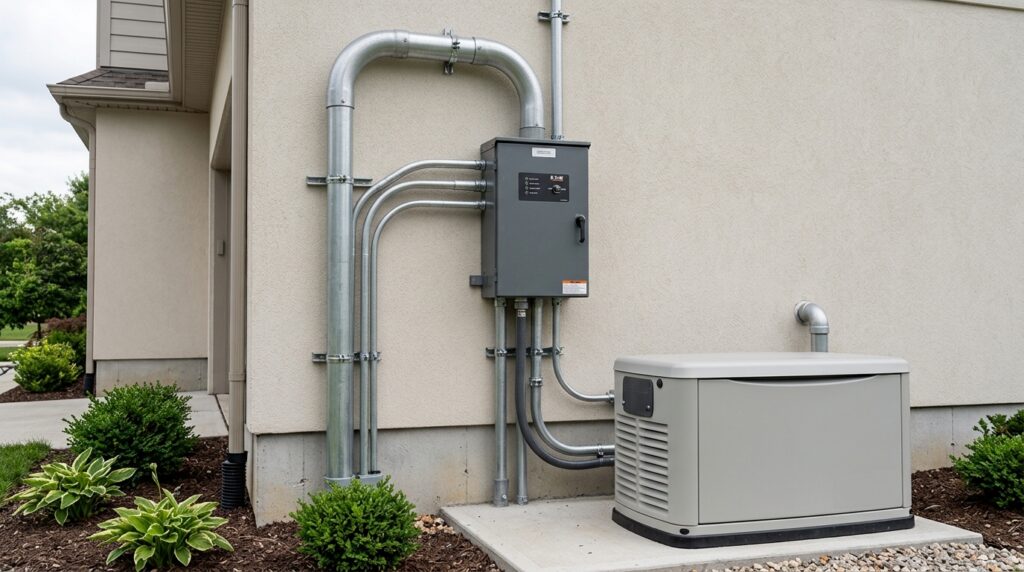
A standby generator is permanently installed and connected to the home’s electrical system through transfer equipment. When properly configured, it can detect a utility outage, start automatically, and supply the circuits it was designed to support.
However, a generator should be viewed as backup power—not wildfire protection or a substitute for evacuation. Calabasas maintains emergency evacuation zones and public-safety resources because wildfire preparedness and evacuation planning remain essential.
Why Backup Power Matters in Calabasas
Calabasas is located in an area with significant wildfire exposure. The City of Calabasas says CAL FIRE published its latest Fire Hazard Severity Zone map on March 24, 2025, and properties in high or very high hazard zones may be subject to additional building and defensible-space requirements.
The region has also experienced major wildfire events. CAL FIRE reports that the 2018 Woolsey Fire burned 96,949 acres and destroyed 1,643 structures across Los Angeles and Ventura counties. A City of Calabasas report states that nine single-family homes were destroyed and six other residential and non-residential structures were damaged.
Power interruptions can create secondary problems even when a property itself is not directly threatened by fire. During an outage, refrigeration, HVAC systems, internet equipment, security systems, medical devices, garage doors, sump pumps, and other electrically powered equipment may stop operating.
For homeowners who depend on these systems, backup power can provide additional continuity while utility service is being restored.
What Is a Standby Generator?
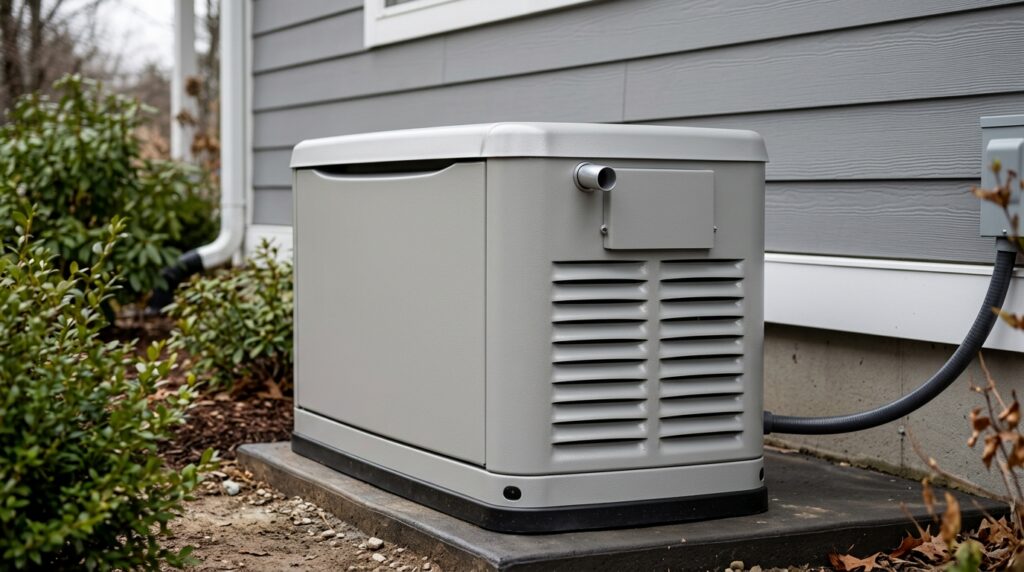
A standby generator is a permanently installed backup-power system designed to operate when normal utility power is lost.
Unlike a portable generator, a residential standby system generally includes:
- A permanently installed generator
- An automatic transfer switch or other approved transfer equipment
- Electrical wiring connecting the equipment
- A fuel supply, such as natural gas or propane
- A properly prepared mounting surface
- Required controls, protection, and testing
The transfer equipment is especially important because it must connect the generator safely without creating dangerous backfeed onto utility lines. California law specifically addresses generator connections and requires permanent generator connections to use appropriate isolation equipment.
Modern standby systems can start automatically, often within seconds, although the exact startup and transfer timing depends on the specific equipment and installation. For example, Generac’s transfer-switch documentation specifies factory timing for generator start and transfer functions rather than one universal response time for every system.
Portable vs. Standby vs. Battery Backup
There is no single backup-power system that is right for every Calabasas property.
Portable Generators
Portable generators generally cost less and can provide temporary power for selected equipment or circuits. They require manual setup and fuel management unless they are integrated into an appropriate transfer arrangement.
Safety is critical. The U.S. Consumer Product Safety Commission says portable generators should be operated outdoors at least 20 feet from the home, with exhaust directed away from the building. Never use them in a garage, basement, shed, or other enclosed space—even with doors or windows open.
Standby Generators
Standby generators are permanently installed and can automatically provide backup power when utility service is interrupted. They are commonly used for homes where automatic operation and longer-duration backup are important.
Depending on the system design, a standby generator may power selected essential circuits or a much larger portion of the property.
Battery Backup Systems
Home battery systems store electrical energy and supply it during an outage. They can be particularly useful when paired with solar, and they operate without the engine noise and on-site fuel combustion associated with conventional generators.
Battery capacity varies by system. For example, Tesla’s Powerwall 3 has 13.5 kWh of nominal energy capacity and up to 11.5 kW of continuous output, depending on the system configuration.
Battery systems can be an excellent fit for some homes, but available energy depends on battery capacity and household demand. A professional assessment should determine whether one battery, multiple batteries, or a hybrid battery-and-generator system makes sense.
What Size Generator Does a Calabasas Home Need?
There is no reliable generator size based solely on square footage.
A 4,000-square-foot home, for example, could have very different electrical requirements depending on its HVAC equipment, pool equipment, appliances, EV chargers, electric cooking equipment, pumps, and other loads.
Generator sizing should instead be based on the electrical loads the system is expected to serve. An electrician may evaluate:
- Existing electrical-service capacity
- HVAC equipment and motor-starting requirements
- Refrigeration and kitchen appliances
- Pool and spa equipment
- EV charging
- Lighting and receptacle circuits
- Medical equipment
- Security and communication systems
- Other large electrical loads
A load calculation also helps determine whether load management, selective circuit coverage, or an electrical panel upgrade is appropriate.
Natural Gas or Propane: Which Fuel Is Better?
Residential standby generators commonly use natural gas or liquid propane.
Natural Gas
Natural gas can be convenient for a property that already has suitable gas service. It eliminates the need to store and regularly refill portable gasoline containers and can support extended generator operation.
However, fuel availability and gas-line capacity still need to be evaluated for the specific installation. A generator must receive sufficient fuel flow at the required pressure to operate correctly.
Propane
Propane can be useful for homes without an appropriate natural-gas connection. Because propane is stored onsite, the available runtime depends on tank capacity and the generator’s fuel consumption.
A qualified installer should evaluate the proposed generator, fuel supply, property layout, and local requirements before recommending a fuel configuration.
Does Generator Installation in Calabasas Require a Permit?
Yes, generator projects in Calabasas require permitting and plan review based on the scope of the installation.
The City of Calabasas specifically lists generators among larger residential projects that require formal review. Its current residential generator submittal requirements call for items including a building project identification form, an electrical permit application, a plumbing permit application, a site plan, and applicable code information. Additional planning, fire, zoning, or structural approvals can apply depending on the project.
Because requirements can vary by equipment and property conditions, homeowners should confirm the current requirements with the City of Calabasas Building & Safety Division before installation.
Where Can a Generator Be Installed?
Generator placement is not simply a matter of finding an empty space beside the house.
The installation location must account for manufacturer clearance requirements, exhaust, ventilation, access for maintenance, electrical connections, fuel-line routing, property conditions, and applicable local requirements.
For properties in wildfire-prone areas, placement and project-specific fire requirements deserve particular attention. The City of Calabasas’ generator submittal requirements also identify circumstances that may require additional fire, planning, zoning, or structural review.
The exact placement should therefore be determined during a site assessment rather than using a generic distance stated in a blog post.
What Does Professional Generator Installation Include?
A typical generator project can include the following stages:
1. Site Assessment
An electrician evaluates the electrical panel, available capacity, desired backup circuits, fuel source, generator location, and property conditions.
2. Load Calculation and System Selection
The installer determines the required generator capacity and whether load management or electrical upgrades are necessary.
3. Permit and Plan Coordination
Required applications and documentation are prepared for the applicable local authorities.
4. Site Preparation
The generator is installed on an approved pad or other manufacturer-approved mounting system, according to the project requirements.
5. Electrical and Fuel Connections
The generator and transfer equipment are connected to the home’s electrical system, while the fuel supply is installed or coordinated as required.
6. Testing and Commissioning
The completed system is tested to confirm startup, transfer operation, electrical performance, and safe operation.
Generator Safety During a Power Outage
Backup power is only useful when the equipment is installed and operated safely.
For portable generators, the CPSC recommends keeping the generator outdoors and at least 20 feet away from the home, directing exhaust away from windows, doors, and vents. Carbon monoxide can build up rapidly and cannot be detected by smell or sight.
Permanent systems also require proper installation, transfer equipment, grounding, clearances, fuel connections, and maintenance.
Most importantly, never assume a generator makes a property safe during an active wildfire or evacuation order. Follow instructions from local emergency officials and leave when evacuation is ordered.
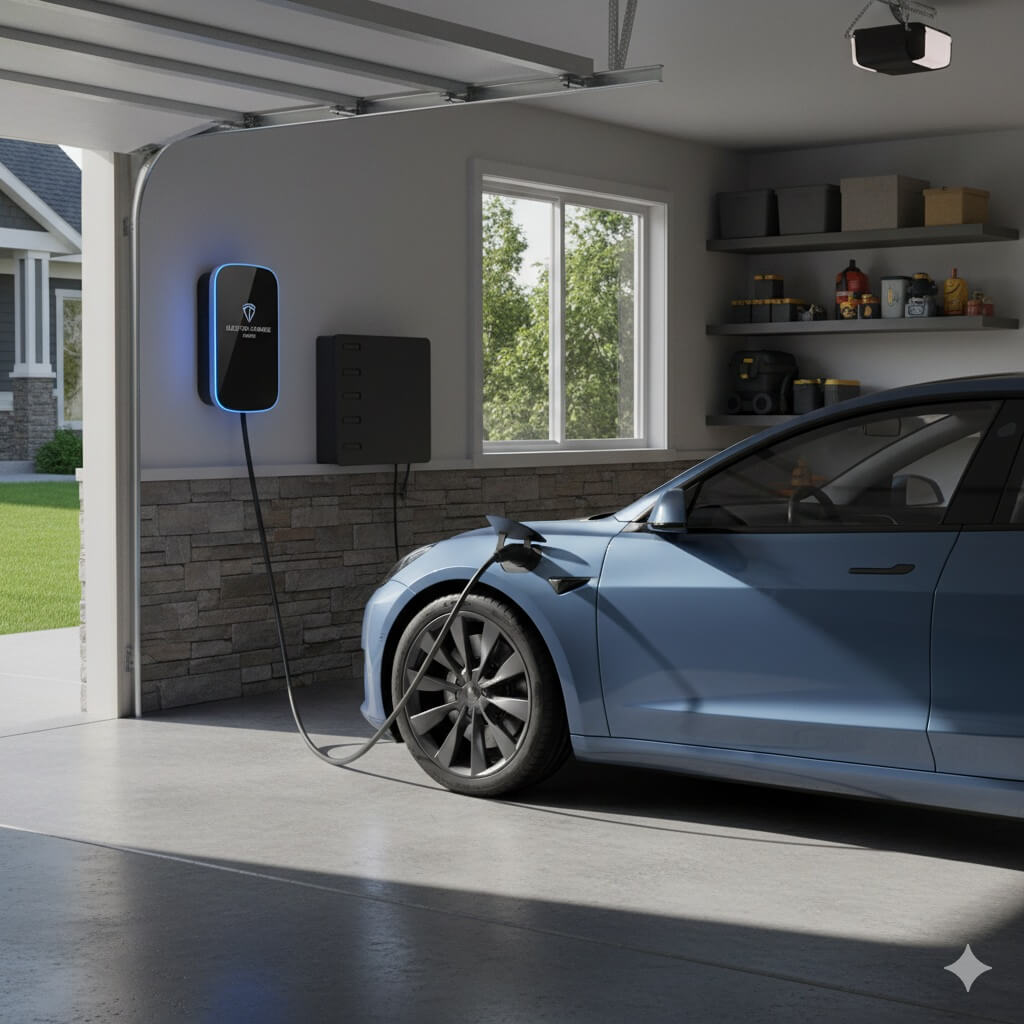
Can a Generator Also Support EV Charging?
Potentially, yes.
EV charging can be a substantial electrical load, so include it in the generator load assessment rather than adding it later without considering the system’s capacity.
For some properties, the appropriate solution may be a larger generator, managed EV charging, load-shedding equipment, or a combination of backup technologies.
Volta Electric also provides EV charger installation, so homeowners planning both projects can have the electrical capacity evaluated together.
Commercial Generator Installation in Calabasas
Businesses can face significant disruption when electrical service is interrupted.
Restaurants may need refrigeration and food-service equipment. Offices may depend on computers, networking, lighting, and HVAC. Medical and professional facilities can have additional operational requirements.
Commercial generator installations typically require a more detailed assessment of electrical demand, transfer equipment, load management, fuel infrastructure, and local permitting.
Volta Electric provides commercial and residential generator installation and states that its commercial projects include offices, restaurants, medical facilities, multi-tenant properties, warehouses, and other commercial applications.
Frequently Asked Questions
There is no meaningful single price because installation cost depends on generator capacity, fuel source, electrical upgrades, gas-line work, transfer equipment, permitting, and property-specific installation conditions. A site assessment and itemized estimate provide a more useful number than a generic price range.
A straightforward project may require only a limited amount of onsite installation work, while projects involving permits, panel upgrades, longer electrical or gas runs, structural requirements, or site preparation can take longer. The timeline should be confirmed after the property and permit requirements are reviewed.
No. Some homeowners only need essential circuits such as refrigeration, selected HVAC equipment, lighting, communications, or medical equipment. Others may want broader coverage. The correct approach depends on the home’s loads, priorities, and budget.
A standby generator can be designed for extended operation, but runtime depends on the generator, its fuel source, fuel availability, load, maintenance condition, and installation. Natural-gas and propane systems have different operating characteristics, so the actual expected runtime should be discussed with the installer.
No. A generator provides electrical backup; it does not prevent or protect against wildfire. Calabasas residents should continue to follow local evacuation information and wildfire-preparedness guidance.
Generator Installation in Calabasas from Volta Electric
Choosing a generator is only part of the project. The system needs to be correctly sized, safely connected, properly placed, permitted, tested, and suitable for the property’s actual electrical requirements.
Volta Electric Inc. provides standby and whole-house generator installation for residential and commercial properties in Southern California, including system sizing, permit coordination, electrical installation, fuel-line coordination, testing, and related electrical services. Volta Electric has California contractor license #1100197 and offers free estimates.
For homeowners considering generator installation in Calabasas, CA, a professional site assessment is the best starting point. It can determine how much power your home actually needs, what type of generator is appropriate, whether your existing electrical system can support it, and what local permitting requirements apply.