Volta Electric Inc. | Licensed Electrical Contractor Serving Calabasas & Los Angeles County
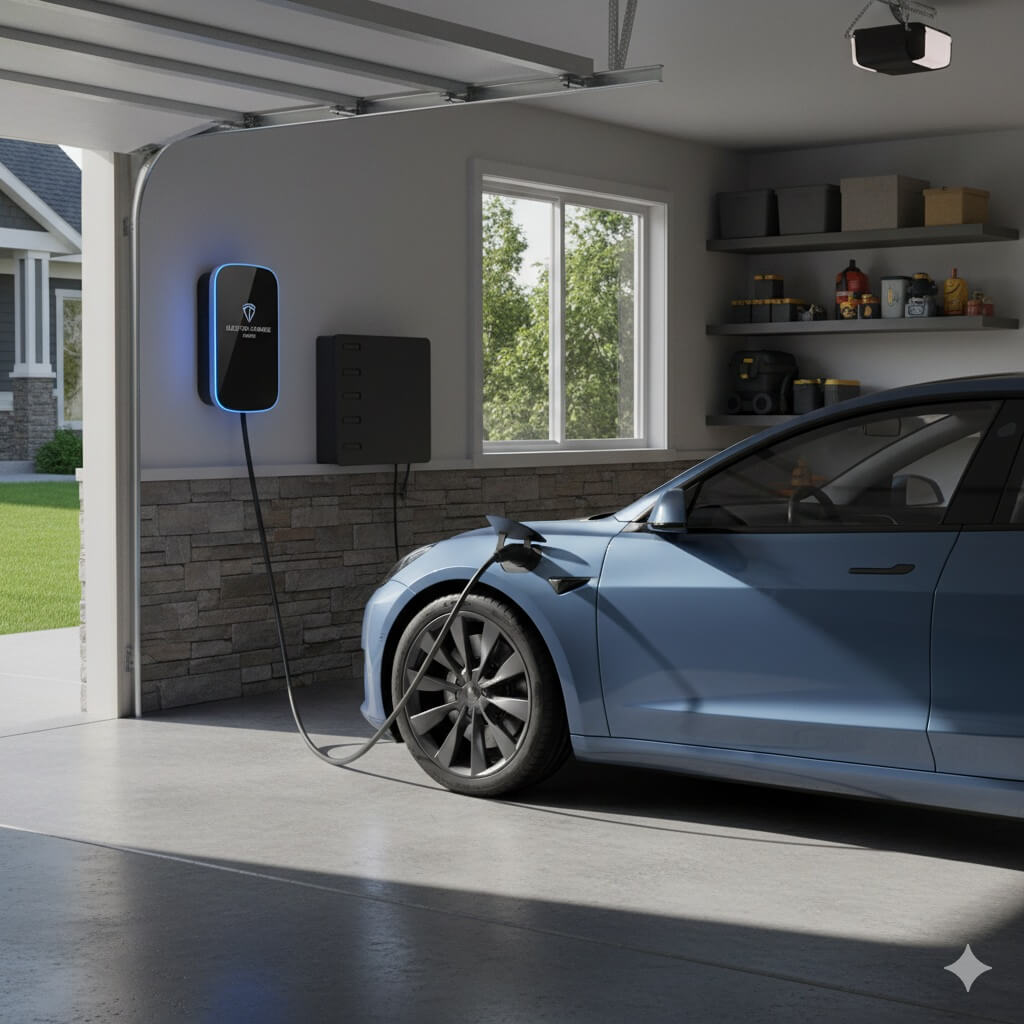
For many Calabasas homeowners, a Level 2 EV charger is the practical upgrade from a standard 120-volt charging setup. Level 1 charging typically adds about 2 to 5 miles of range per hour, while Level 2 charging typically adds about 10 to 30 miles per hour, depending on the vehicle, charger, and electrical configuration.
Installing a Level 2 charger is more than mounting the charging equipment on a wall. The project may involve evaluating the existing electrical service, calculating available load, installing a properly sized circuit, routing conductors or conduit, obtaining the required City of Calabasas permit, and completing the required inspection. The City of Calabasas specifically requires an electrical load calculation for EV charging projects submitted through its expedited EV charging permitting program.
A 200-amp service does not automatically mean a home can support any charger configuration, and a home with 100-amp service does not automatically need a service upgrade. The appropriate solution depends on the property’s existing electrical demand, charger rating, vehicle requirements, and the electrical capacity available for the new load.
Why EV Charger Installation in Calabasas Requires More Than a Wall-Mounted Charger
Every residential EV charger installation has to fit the electrical system and physical layout of the property.
That becomes especially important on larger properties where the preferred charging location may be some distance from the main panel, where a garage is detached from the home, or where equipment must be installed outside.
A charger located close to the electrical panel may require a relatively straightforward circuit installation. A charger in a detached garage, motor court, or other remote location can require a longer wiring route, additional conduit, trenching, or other site-specific work.
The installation should therefore answer four basic questions:
Where will the vehicle actually charge?
How much power does the charger require?
Does the home’s electrical system have enough capacity?
What permits, approvals, and installation requirements apply to the property?
That assessment is more useful than choosing a charger first and figuring out the electrical system afterward.
Calabasas Homes, Hillside Lots and Longer Charging Runs
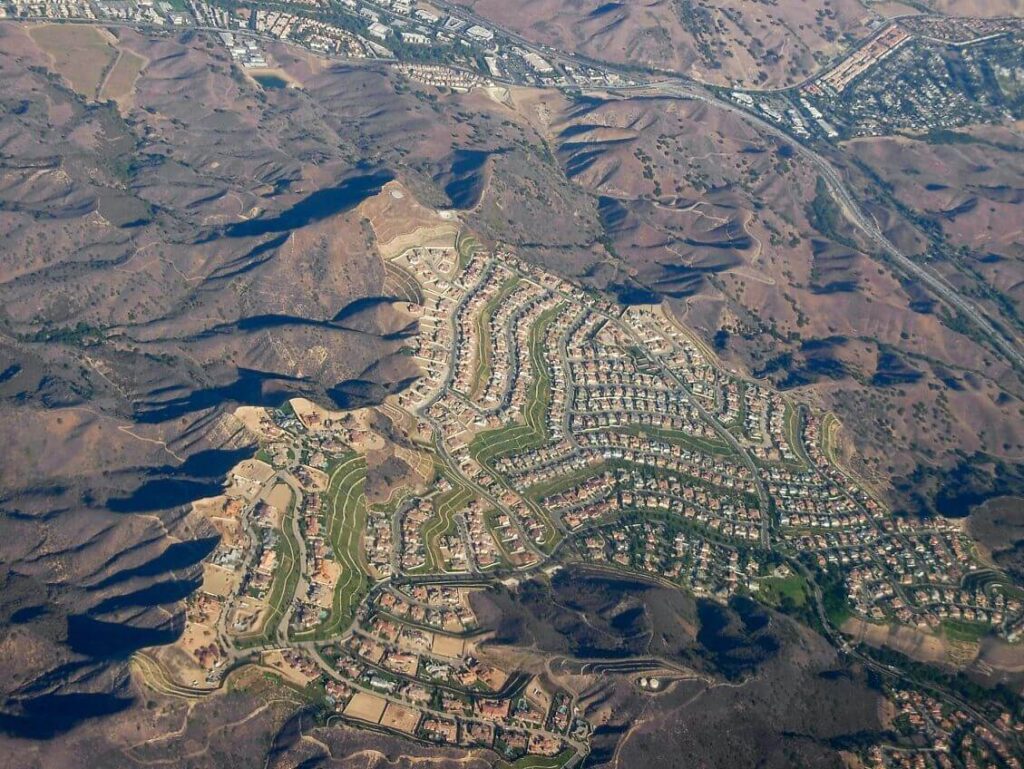
Calabasas has a mixture of residential configurations, including homes in HOA-governed communities, hillside properties, and larger lots. The City’s regional hazard planning documents identify numerous homeowners associations and residential communities in the Calabasas area, and City planning records specifically reference The Oaks of Calabasas HOA.
For some properties, the charging location may be straightforward. For others, the electrical panel and desired charging location may be separated by finished walls, landscaping, driveways, or detached structures.
That can affect:
- Conduit routing
- Conductor length
- Installation labor
- Trenching requirements
- Equipment location
- Voltage drop considerations
- Weather exposure
- Surface-finish considerations
Determine the right installation path based on the actual property, rather than assuming every Calabasas home has the same electrical layout.
HOA and Architectural Approval for EV Chargers in Calabasas
Some Calabasas properties are located in common-interest developments governed by homeowners associations.
California Civil Code §4745 generally protects the installation and use of an EV charging station within an owner’s unit or designated parking space when the property is subject to the statute. An HOA provision that effectively prohibits or unreasonably restricts a qualifying EV charging installation is void and unenforceable. At the same time, the law allows reasonable restrictions and requires compliance with applicable health, safety, zoning, land-use, and permit requirements.
When HOA approval is required, the application is processed the same way as an architectural modification. The association must issue approval or denial in writing, and an application not denied in writing within 60 days is generally deemed approved unless the delay results from a reasonable request for additional information.
For installations involving common areas or exclusive-use common areas, additional statutory requirements may apply, including licensed-contractor installation, insurance documentation, and owner responsibility for installation, electricity, maintenance, and damage-related costs.
Important 2026 update
California amended Civil Code §4745 through SB 770, effective January 1, 2026. Among other changes, the statute no longer requires the homeowner’s insurance policy to name the association as an additional insured. The underlying insurance obligation remains in the statute.
Practical takeaway: Before installation begins, homeowners in an HOA-governed community should review the association’s current architectural-review requirements and coordinate the electrical permit and installation requirements at the same time.
Calabasas Fire Conditions and SCE Power Shutoffs
Calabasas has significant wildfire-related considerations. The City’s latest Fire Hazard Severity Zone information states that CAL FIRE published the latest Calabasas map on March 24, 2025, and properties in high or very high fire hazard zones may be subject to additional California Building Code and defensible-space requirements.
The City also maintains specific information regarding Southern California Edison Public Safety Power Shutoffs (PSPS) and directs residents to SCE for outage and shutoff information.
That matters for EV owners because an EV charger cannot operate during a utility outage unless it is connected to a properly designed backup-power system.
A generator or battery system may allow selected loads, potentially including EV charging, to remain powered during an outage, but that depends on:
- The generator or battery’s capacity
- Transfer equipment
- Which circuits are backed up
- The charger’s electrical demand
- The overall load-management strategy
- The applicable installation requirements
A backup generator therefore should not automatically be presented as a guaranteed EV-charging solution during every PSPS event.
Level 1 vs. Level 2 EV Charging
Level 1 Charging
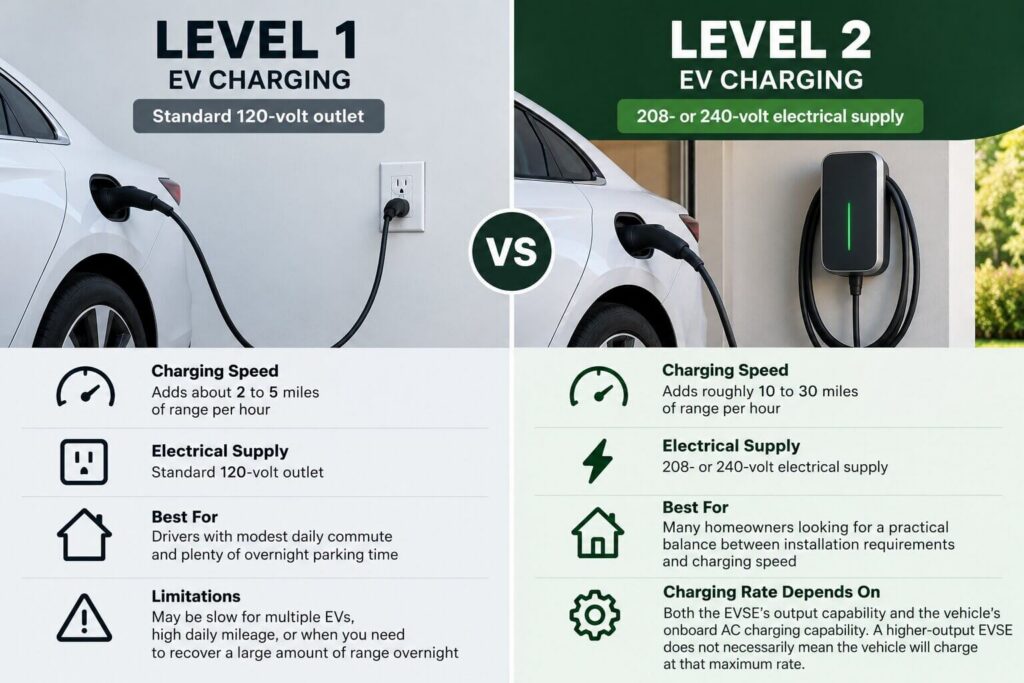
Level 1 charging uses a standard 120-volt connection and generally adds around 2 to 5 miles of range per hour.
For a driver with a modest daily commute and plenty of overnight parking time, Level 1 can sometimes be sufficient.
The limitation becomes more obvious when a household has multiple EVs, drives substantial daily mileage, or needs to recover a large amount of range overnight.
The key question is not whether Level 1 charging works technically. It is whether it provides enough energy within the time the vehicle is normally parked.
Level 2 Charging
Level 2 EV charging typically uses a 208- or 240-volt electrical supply and can add roughly 10 to 30 miles of range per hour, depending on the charger and vehicle.
For many homeowners, Level 2 offers a much more practical balance between installation requirements and charging speed.
The actual charging rate depends on both sides of the system:
The EVSE’s output capability
and
the vehicle’s onboard AC charging capability.
Installing a higher-output EVSE does not necessarily mean the vehicle will charge at that maximum rate.
How Much Power Does a Level 2 Charger Use?
One of the easiest ways to understand an EV charging installation is to look at amperage and power.
| Charger Output | Approx. Power at 240V | Typical Circuit Rating* |
| 16A | 3.84 kW | 20A |
| 24A | 5.76 kW | 30A |
| 32A | 7.68 kW | 40A |
| 40A | 9.60 kW | 50A |
| 48A | 11.52 kW | 60A |
| 50A | 12.00 kW | 70A/80A |
Actual circuit, conductor, and overcurrent-protection requirements must be determined from the specific EVSE, manufacturer instructions, and applicable code.
Three EVs Can Create a Significant Electrical Load
This is where multi-EV households need to think beyond the charger itself.
Three 32-amp chargers operating simultaneously at 240 volts represent approximately:
3 × 32A × 240V = 23.04 kW
Three 40-amp chargers represent:
3 × 40A × 240V = 28.8 kW
Three 48-amp chargers represent:
3 × 48A × 240V = 34.56 kW
That does not mean a homeowner automatically needs a massive service upgrade.
It means you need to consider the charging load alongside the rest of the property’s electrical demand.
This is precisely why the City of Calabasas requires a residential electrical load calculation as part of its EV charging permitting process.
Does a Calabasas Home Need a 200-Amp Panel for an EV Charger?
Not necessarily.
A 200-amp service provides more capacity than a smaller service, but the main breaker rating alone doesn’t tell you how much capacity is available for an additional EV charging load.
The home’s existing demand matters.
A property might already have significant electrical loads from:
- Multiple HVAC systems
- Pool or spa equipment
- Electric water heating
- Electric cooking
- Laundry equipment
- Heat pumps
- Solar or battery equipment
- Workshop equipment
- Other large appliances
A qualified electrician should evaluate the existing system and perform the required load calculation before deciding whether the home needs:
- An EV charger using existing capacity
- A lower charger output
- A load-management solution
- A panel or service upgrade
or some combination of those options. There is no responsible universal rule that says “EV charger = 200-amp panel.”
Load Management for Multiple EV Chargers
Energy-management technology can help when multiple EV chargers must operate within a limited electrical capacity.
Under the current NEC framework adopted by California, EV charging loads are treated as continuous loads, and the code permits certain energy-management approaches for EV charging installations.
In practical terms, a properly designed system can limit total charging demand so that multiple vehicles share available electrical capacity rather than every charger operating at maximum output simultaneously.
For example, a three-EV household might have enough capacity to charge overnight but not enough to support three 48-amp chargers continuously at full output while the rest of the house operates normally.
A load-management strategy can potentially make that installation workable without immediately jumping to a service upgrade.
Whether it will work depends on the actual load calculation and the equipment being installed.
Dedicated Circuit Requirements
A typical Level 2 EV charger installation uses an individual branch circuit.
The current NEC language in Section 625.40 states that an outlet supplying EVSE above the specified threshold must be supplied by an individual branch circuit, with specific exceptions for installations using permitted energy-management systems.
EV charging loads are also treated as continuous loads, so overcurrent protection has to be sized appropriately. Section 625.41 establishes a minimum 125% relationship to the equipment’s maximum load for covered EVSE circuits.
That is why a common configuration might look like:
32-amp EVSE → 40-amp circuit
48-amp EVSE → 60-amp circuit
The exact conductor size should not be promised generically. It depends on the complete installation, including conductor type, insulation rating, terminals, installation method, ambient conditions, and applicable code requirements.
Conduit and Wiring for Calabasas EV Charger Installations
The visible charger is only one part of the installation. The wiring route can be equally important. Depending on the property, the installation may require:
- Conduit from the electrical panel to the charger
- Interior wall routing
- Surface-mounted conduit
- Underground conduit between buildings
- Trenching
- Weather-resistant equipment
- Properly located disconnecting means where required
- Panel modifications or additional electrical equipment
For a luxury property, the installation should be planned around both electrical requirements and the physical characteristics of the site.
A clean conduit route is not merely cosmetic. Proper support, protection, weather exposure, conductor protection, and installation methods are part of a code-compliant electrical installation.
Outdoor and Detached-Garage EV Charger Installation

A detached garage or outdoor charging location can make an otherwise straightforward installation considerably more involved.
The electrician should determine whether the detached structure already has adequate electrical service or needs additional infrastructure.
Outdoor installations also require equipment and wiring methods appropriate to the location and environmental exposure. Where receptacles are used, current California Electrical Code requirements for ground-fault protection must also be considered. Calabasas’s current standard electrical notes incorporate the 2025 CEC requirements.
The actual solution may involve:
An existing feeder
A new feeder
A subpanel
Underground raceway
A hardwired EVSE
or
A receptacle-based installation
The best option depends on the property.
Hardwired Charger vs. NEMA 14-50 Outlet
Homeowners often have to choose between a hardwired EV charger and a charger connected through a 240-volt receptacle.
Neither option is universally better.
A hardwired installation can be attractive when:
- The charger will remain permanently installed
- Higher charging output is desired
- The installation is outdoors
- The manufacturer recommends or requires hardwiring
- The homeowner wants a clean permanent installation
A receptacle installation can be useful when:
- The charger supports a plug connection
- The homeowner wants easier future replacement
- The electrical design supports the receptacle configuration
- The manufacturer’s instructions allow it
The final choice should follow the charger’s listing, manufacturer requirements, electrical code, and the property’s installation conditions.
Smart EV Charger Features Worth Considering
Modern EV chargers can offer much more than basic charging. Depending on the model, useful features may include:
Charging schedules
Scheduling lets a vehicle charge during selected periods rather than immediately when it is plugged in.
Power sharing
Some systems can coordinate multiple chargers and limit their combined electrical demand.
Energy monitoring
Some connected chargers can show charging activity and energy use through an app.
Remote controls
Depending on the manufacturer, users may be able to start, stop, or configure charging remotely.
Solar and home-energy integration
Certain systems can coordinate with solar, batteries, or broader home-energy-management equipment.
Compatibility is highly model-specific, so homeowners should choose the charger and smart-home platform together rather than assuming every EVSE supports every ecosystem.
EV Charging and Southern California Edison Time-of-Use Rates
Time-of-use charging can be useful, but older EV articles often oversimplify the schedule by saying “charge overnight because overnight is always cheapest.”
That is not universally accurate.
SCE currently offers residential EV-related rate options, including TOU-D-PRIME. Its current rate information identifies the highest-priced period as 4 p.m. to 9 p.m., while lower-priced periods occur outside that window, with seasonal differences.
SCE also advises EV owners to consider time-of-use rates and charging schedules when managing charging costs.
One additional Calabasas-specific point is that many customers receive electricity generation through the Clean Power Alliance, while SCE continues to deliver the electricity, maintain the distribution system, and issue the utility bill. Customers can also choose to opt out and receive generation from SCE.
Because rates and utility programs can change, homeowners should verify the current rate plan and applicable terms before assuming a particular charging schedule will always produce the lowest cost.
Does Calabasas Require a Permit for EV Charger Installation?
Yes, electrical permitting is part of the City’s EV charging process.
The City of Calabasas maintains an Expedited EV Charging Station Permitting Program for eligible residential, multifamily, and non-residential projects. The City’s program requires an electrical permit application and an electrical load calculation. It also requires inspection before final approval of the EV charging installation.
The City’s current permit materials also specifically list an Electric Vehicle Charging System as an electrical permit item.
The City advises homeowners to obtain required permits before performing work. Its current guidance states that electrical additions or changes to existing systems may require an electrical permit.
Important distinction
An EV charger project and a larger electrical service upgrade are not necessarily the same project.
- A charger may be installed using existing service capacity.
- A different project may require panel modifications.
- Another may require a service upgrade and additional coordination.
- The permit scope should match the actual electrical work being performed.
What Electrical Code Applies in Calabasas?
For projects currently submitted in Calabasas, the City has adopted the 2025 California Building Standards Code with local amendments.
The City’s current code page identifies the 2025 California Electrical Code, Title 24, Part 3, and notes that the 2025 CEC is based on the 2020 National Electrical Code.
The City also maintains current electrical and EV-charger forms and handouts for applicants.
That makes it important to use current Calabasas documentation rather than relying on an older article written under an earlier code cycle.
What the Calabasas EV Charger Installation Process Looks Like
Although every project is different, a typical installation can involve the following steps.
1. Property and Electrical Assessment
The electrician evaluates:
- Existing service rating
- Main panel
- Available spaces
- Existing electrical loads
- Desired charger location
- Wiring route
- Garage configuration
- Outdoor exposure
- Detached structures
- Future electrical loads
2. Load Calculation
The electrical load calculation determines whether the existing electrical system can support the planned charger and what configuration is appropriate.
This is also a required part of the City’s EV charging permit process.
3. Charger Selection
The appropriate charger is selected based on:
- Vehicle compatibility
- Desired charging speed
- Electrical capacity
- Hardwire vs. receptacle configuration
- Indoor vs. outdoor location
- Smart features
- Multi-EV charging requirements
4. Permit Application
The applicable electrical permit is submitted through the City of Calabasas process.
5. Installation
The electrician installs the circuit, wiring, raceway, protective equipment, and EVSE according to the approved scope and applicable requirements.
6. Inspection
The City requires inspection of the completed EV charging installation before final approval.
7. Commissioning and Testing
After installation, the charger should be configured and tested according to the manufacturer’s instructions and project requirements.
Choosing an EV Charger for Your Calabasas Home
Rather than asking only, “Which charger is the best?”, homeowners should start with the charging requirement.
Consider:
- How many EVs do you own?
- How many miles do you normally drive each day?
- How long are the vehicles parked at home?
- Where do you want the chargers installed?
- What is the existing electrical service?
- How much electrical capacity is actually available?
- Do you want charging schedules or load sharing?
- Are you planning additional electrical upgrades later?
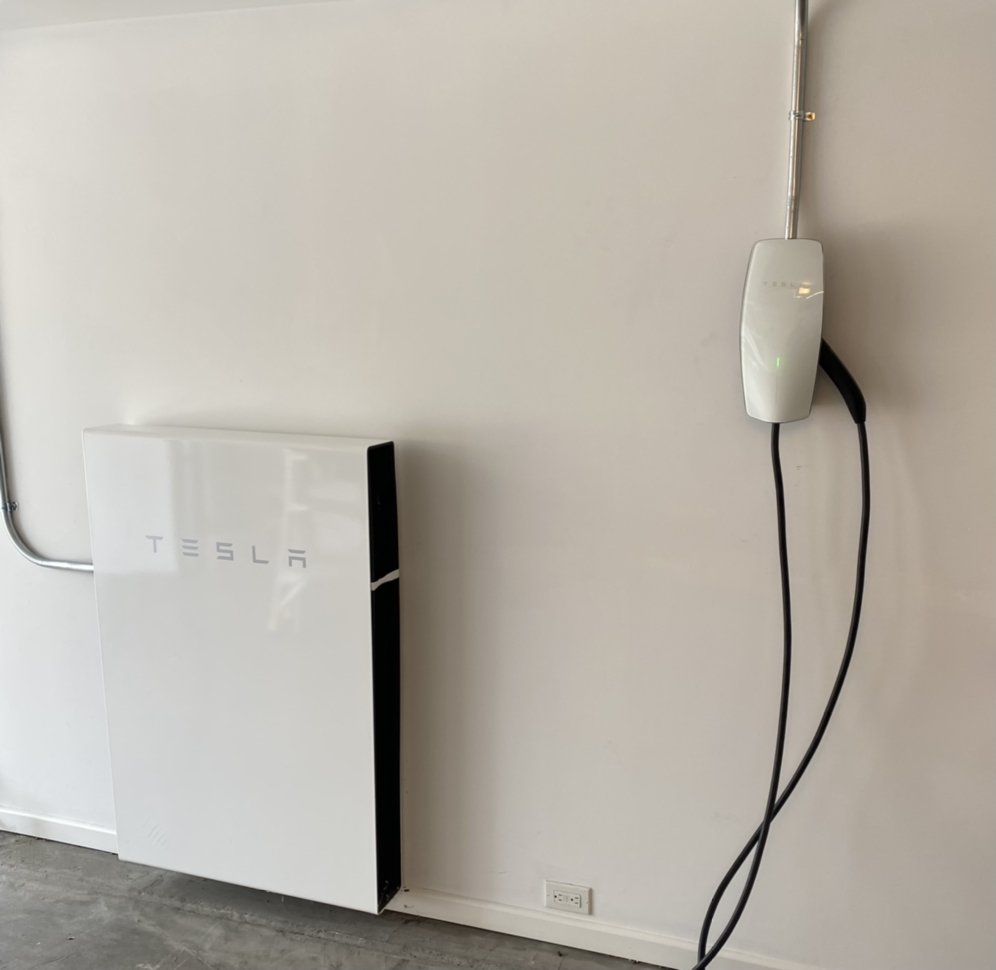
Current residential products from manufacturers such as Tesla, ChargePoint, and Wallbox offer different charging outputs and installation configurations, so the right product depends on the vehicle and electrical system rather than a universal “luxury home” recommendation.
Commercial EV Charger Installation in Calabasas
Commercial installations require more planning than a typical single-home charger.
A commercial project may involve:
- Multiple charging ports
- Larger electrical services
- Load management
- Parking-lot or garage layouts
- Utility coordination
- Dedicated electrical distribution
- Networked charging
- User access and payment systems
- Site-specific permitting
The City of Calabasas provides separate permitting guidance for non-residential EV charging stations and requires project-specific drawings and load calculations for those installations.
For businesses, property owners, and multifamily operators, charger capacity should also be considered in the context of future electrical demand rather than designing only for today’s vehicles.
How to Choose an Electrical Contractor for EV Charger Installation
An EV charger installation involves electrical work that should be performed by an appropriately qualified contractor.
California’s Contractors State License Board provides an official online license-verification tool that homeowners can use to check contractor license information before hiring.
Volta Electric’s website identifies the company as a licensed electrical contractor with California license #1100197, and its Calabasas page lists EV charger installation, panel upgrades, wiring, and permitting/inspection support among its services.
Frequently Asked Questions
There is no universal number. The answer depends on the home’s existing electrical demand, service capacity, charger output, and whether an approved load-management strategy is used. A load calculation is the appropriate starting point.
Not necessarily. A 200-amp service may be appropriate for some properties, but the actual requirement depends on the existing load and the planned charging equipment.
Yes. The City of Calabasas has a dedicated EV charging permitting process and requires an electrical permit application and load calculation for the relevant EV charging projects.
It depends on the property and location, but California Civil Code §4745 generally protects qualifying EV charging installations in an owner’s unit or designated parking space while allowing reasonable restrictions and requiring compliance with applicable safety and local requirements.
There is no reliable one-size-fits-all timeframe. A straightforward installation can be much simpler than a project involving a long wiring route, detached garage, trenching, panel modifications or service upgrades. A site assessment provides a more useful timeline than a generic number.
Sometimes. Multiple chargers can sometimes be coordinated using load-management technology, but the answer depends on the property’s calculated electrical load and the capabilities of the selected EVSE.
Not on utility power while the property is de-energized. Charging may remain possible during an outage when the charger is intentionally included in a properly designed backup-power system with enough capacity.
Usually, the two decisions should be evaluated together. If a panel upgrade is already being considered, designing the EV charging requirements at the same time can avoid doing electrical work twice.
Choose based on vehicle compatibility, charging output, electrical capacity, installation method, software features, and long-term support. There is no single charger that is best for every Calabasas home.
Get Your EV Charger Installation Estimate in Calabasas
Home EV charging should be convenient, but convenience starts with a properly designed electrical system.
Whether you are installing your first Level 2 charger, preparing a garage for multiple EVs, charging an EV at a detached structure, or evaluating whether your existing panel has enough capacity, the right starting point is an electrical assessment and load calculation.
Volta Electric Inc. provides EV charger installation and related electrical services in Calabasas, including dedicated circuits, wiring, and panel upgrades, with permitting and inspection support. The company lists California contractor license #1100197 and offers free estimates.