Introduction
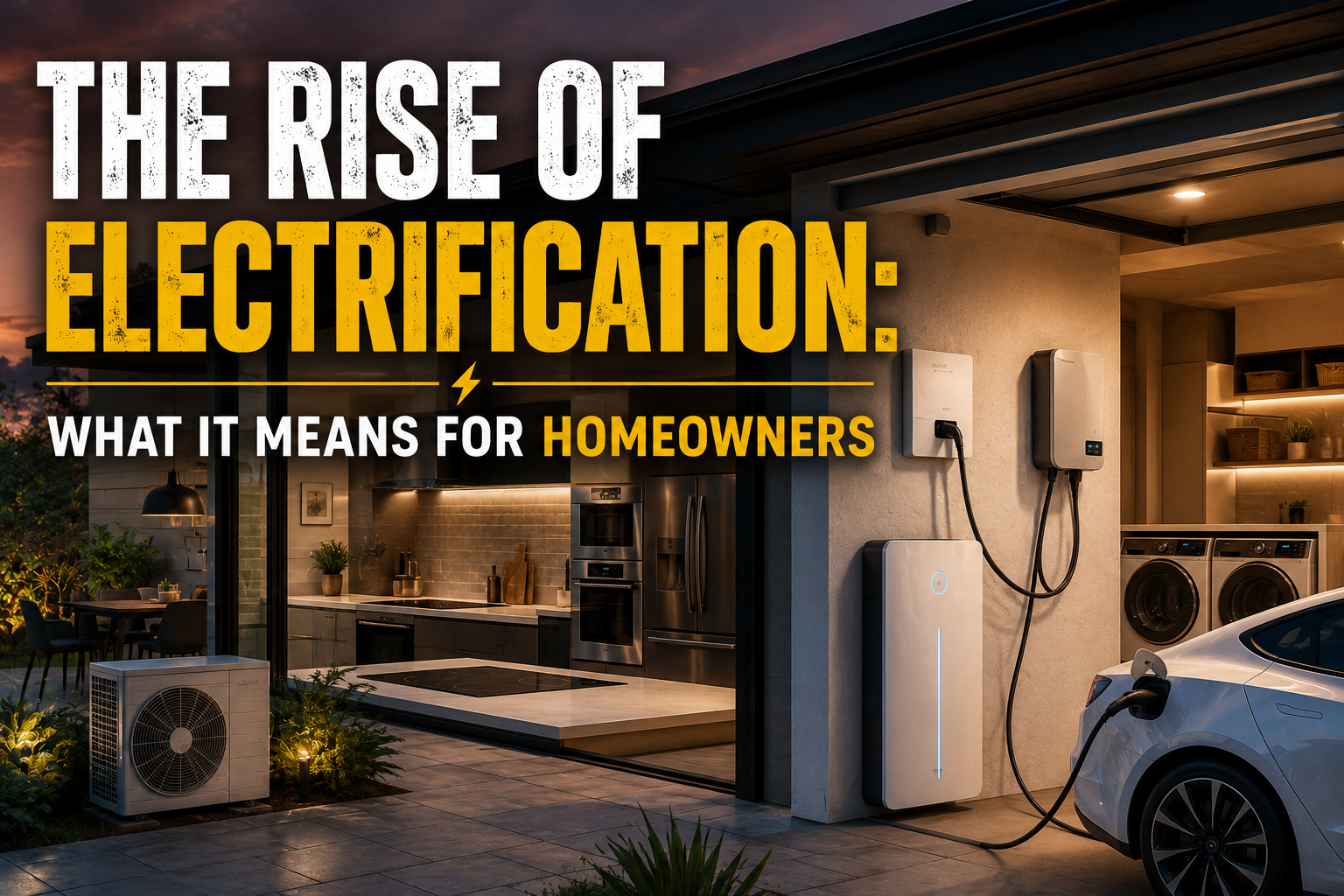
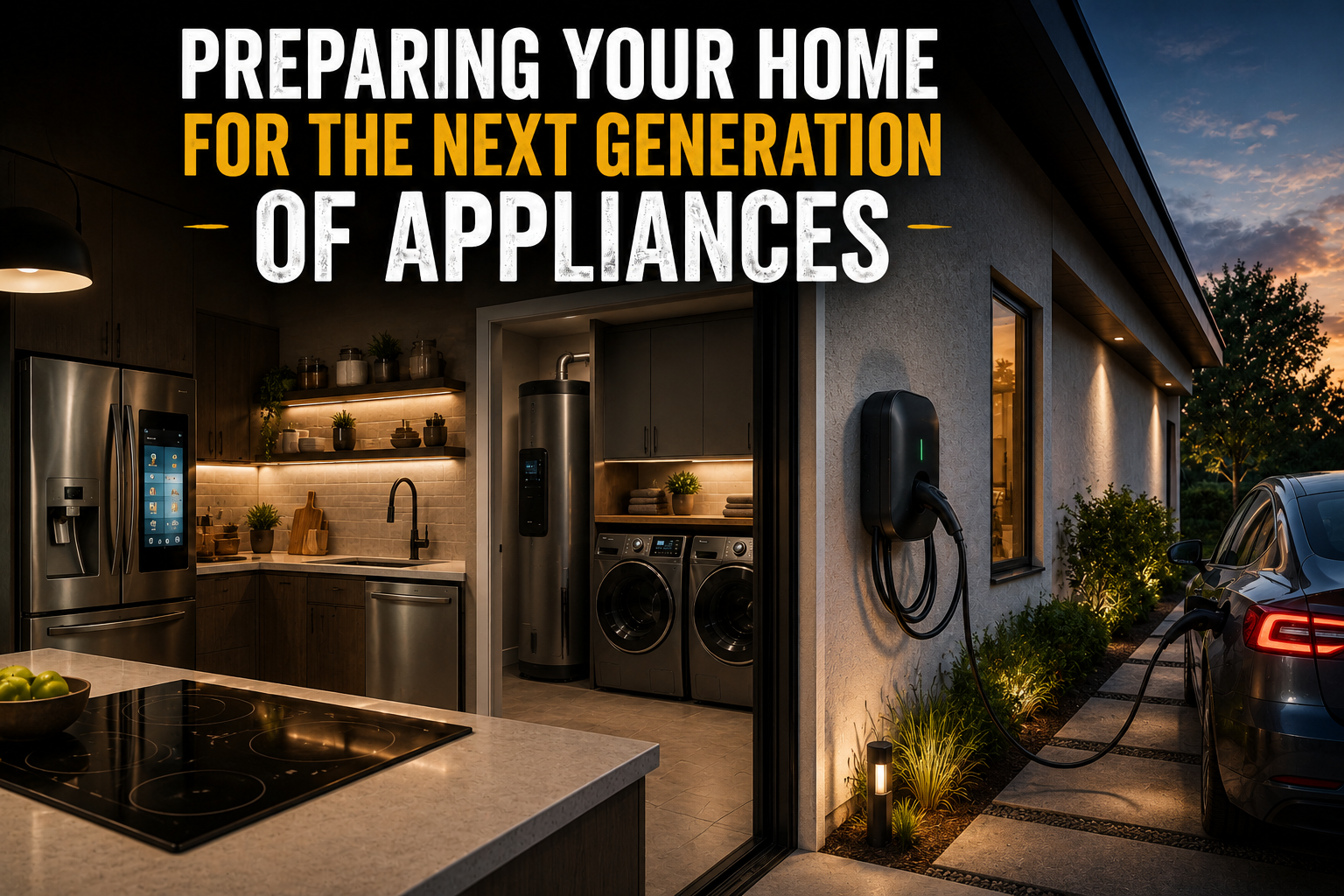
The appliances filling Los Angeles homes today draw far more power, and in far more complex ways, than the appliances they replaced. Induction cooktops, heat pump water heaters, electric vehicle chargers, battery backup systems, and smart home ecosystems with dozens of connected devices are becoming standard rather than exceptional, and they are arriving in homes whose electrical systems were designed decades before any of this technology existed. Future technology requires future-ready electrical systems, and the gap between what a home’s panel can deliver and what modern appliances demand is quickly becoming one of the more consequential issues homeowners face, whether they realize it yet or not.
An electrical service upgrade is no longer a project reserved for homeowners tackling a major renovation. It has become a practical necessity for anyone planning to adopt the next wave of home technology, from electrification of heating and cooking to EV ownership and home battery storage. This article explains what a service upgrade actually involves, why aging Los Angeles homes are particularly exposed to this gap, and how to plan for a system that will still be adequate five or ten years from now rather than immediately maxed out.
What “Electrical Service Upgrade” Actually Means
An electrical service upgrade refers to increasing the capacity of the connection between the utility’s power line and your home’s main panel, along with the panel itself. Most older Los Angeles homes were built with 60 or 100-amp electrical service, capacities that were entirely adequate for the appliance loads of their era but that leave very little headroom for the layered demands of a modern household. A service upgrade typically moves a home to 150 or 200 amps, and in some larger properties or homes anticipating significant electrification, even higher.
This is distinct from, though often paired with, a straightforward panel upgrade. A panel upgrade can sometimes mean replacing an aging or unreliable panel with a new one of similar capacity, while a full electrical service upgrade increases the actual amount of power available to the home, requiring coordination with the utility company for the service line and meter, in addition to the panel itself. Understanding this distinction matters because homeowners sometimes assume a new panel automatically means more capacity, when in fact the two need to be evaluated and planned together.
Why Today’s Appliances Demand More From Your Electrical System
Electrification of Heating, Cooling, and Cooking
Homes across Los Angeles are steadily shifting away from gas appliances toward electric alternatives, driven by both regulatory changes and homeowner preference. Induction cooktops draw significantly more current than traditional electric coil ranges and require a dedicated, properly sized circuit to perform as intended. Heat pump water heaters and heat pump HVAC systems, while far more energy efficient over time than the equipment they replace, also carry electrical demands that many existing panels were never sized to accommodate alongside everything else already running in the home.
This shift is not a distant, hypothetical trend. It is already underway, and homeowners renovating a kitchen or replacing an aging water heater are increasingly choosing electric options for efficiency and long-term cost reasons, only to discover during the project that their existing panel cannot support the new equipment without an upgrade.
Electric Vehicle Charging
EV charger installation has moved from a rare request to a near-standard expectation for homeowners purchasing an electric vehicle, and Los Angeles has one of the highest EV adoption rates in the country. A home EV charger installation typically requires a dedicated 240-volt circuit capable of delivering substantial continuous current, and in a home already operating near its panel’s capacity, adding this circuit safely often requires a panel upgrade first. Homeowners who wait until the vehicle is already sitting in the driveway to think about electrical capacity frequently find themselves facing a more compressed timeline and fewer options than those who plan ahead.
Multi-vehicle households add another layer to this calculation, since two EV chargers operating on the same panel require considerably more planning than a single charger, and commercial EV charger installation for multi-unit residential buildings or workplaces introduces load management considerations that go well beyond a single-family home’s needs.
Home Battery Backup and Energy Storage
As California experiences more frequent public safety power shutoffs and grid strain during peak demand, home battery backup systems have become an increasingly common addition, often paired with solar. Integrating Lithium Batteries or a broader Energy Storage Systems setup properly requires panel-level planning to ensure the system can seamlessly manage backup loads during an outage, prioritizing critical circuits like refrigeration, medical equipment, and essential lighting. This integration is far more effective when planned as part of a coordinated service upgrade rather than retrofitted awkwardly onto an existing panel that was never designed with backup power management in mind.
Homes with existing or planned Solar Inverters or Hybrid Solar Inverters benefit particularly from this kind of coordinated planning, since a hybrid inverter setup paired with battery storage functions most effectively when the panel and service capacity were sized with that integration in mind from the outset.
Smart Home Technology and Distributed Load
The steady proliferation of smart home devices, from networked lighting and thermostats to security systems, video doorbells, and voice-activated hubs, adds a distributed load across a home that is easy to underestimate because no single device draws much current on its own. Collectively, though, dozens of always-on smart devices, combined with the home office equipment and entertainment systems that have become standard in most households, add up to a meaningful and continuous baseline load that many older panels were never designed to carry alongside everything else.
An interactive tool can help clarify how these cumulative appliances affect your home’s total electrical capacity:
Signs Your Home Needs an Electrical Service Upgrade
A handful of recurring symptoms suggest a home is already at or near its electrical capacity limit. Breakers that trip when multiple appliances run simultaneously, such as a microwave and a hair dryer operating at the same time, indicate the panel or circuits involved are already stretched thin. Lights that dim noticeably when a large appliance like an air conditioner or an electric range starts up point to a similar issue, often compounded by aging wiring that adds resistance on top of an already marginal capacity situation.
Homeowners planning any of the additions discussed above, whether that is an EV charger, an induction range, a heat pump system, or a home battery, should treat that plan itself as a signal to have their electrical service assessed before committing to a purchase or installation date. Waiting until after the appliance arrives often means a rushed upgrade under time pressure, rather than a well-planned project completed on a comfortable timeline.
Benefits of a Proactive Electrical Service Upgrade
Upgrading electrical service capacity ahead of need, rather than reactively after a specific appliance purchase forces the issue, delivers several distinct advantages. The most immediate is flexibility. A home with adequate capacity can add an EV charger, a heat pump water heater, or a home battery system without each addition becoming its own electrical project requiring a fresh assessment and potential panel work.
Reliability improves as well, since a properly sized service eliminates the nuisance trips and voltage sag that occur when a panel is asked to do more than it was designed for. This translates into fewer disruptions to daily life and less wear on the electrical system itself, since consistently overloaded circuits degrade faster than those operating comfortably within their rated capacity.
There is also a meaningful financial dimension. Homes with modern, adequately sized electrical service are better positioned to take advantage of time-of-use utility rates, solar integration, and battery storage strategies that can meaningfully reduce long-term utility costs, particularly as electricity rates in California continue to trend upward. Finally, resale value benefits from this kind of forward planning, since buyers increasingly view electrical capacity as a practical necessity rather than a luxury, and a documented service upgrade removes a common point of negotiation during a home sale.
Common Problems and Solutions
Homeowners considering a service upgrade often encounter a few recurring questions and obstacles worth addressing directly. A frequent concern is whether the existing service line from the utility can support a higher amperage without replacement, which is not always the case and sometimes requires coordination with the utility company beyond the panel work itself. A qualified electrical contractor handles this coordination as part of the overall project rather than leaving the homeowner to navigate utility requirements independently.
Another common issue arises when a homeowner upgrades a panel without also planning for future additions, resulting in a panel that is adequate for today’s needs but immediately maxed out the moment an EV charger or battery system is added a year or two later. The solution here is straightforward: any service upgrade project should include a conversation about realistic future plans, even tentative ones, so the new system is sized with appropriate headroom rather than exactly matching current demand with no margin.
Homeowners sometimes also discover during a service upgrade project that existing wiring or grounding does not meet current standards, since a comprehensive electrical assessment often surfaces issues unrelated to capacity that had gone unnoticed previously. Addressing these findings as part of the same project is almost always more efficient than treating them as separate, future concerns.
Cost and Investment Considerations
The cost of an electrical service upgrade depends on several factors, including the home’s current service size, the target capacity, whether utility coordination and a new service line are required, and whether the project is paired with additional work like EV charger installation or panel-level battery integration. Homeowners should think of a service upgrade less as a single expense and more as an investment in the home’s capacity to support the next decade of electrical technology, much the way a homeowner might think about a roof replacement in terms of the years of protection it provides rather than simply its immediate cost.
Bundling projects tends to produce better value than addressing them one at a time. A service upgrade planned alongside an EV charger installation, for example, avoids the redundant labor and assessment costs of two separate projects, since the electrician is already on site and has already evaluated the home’s overall capacity needs. Homeowners planning solar or battery storage additions in the near future should have that conversation with their electrician before finalizing a service upgrade, since sizing the new service appropriately from the start avoids a second, more disruptive upgrade later.
Expert Recommendations
The most effective approach for homeowners considering a service upgrade is to start with a comprehensive electrical assessment that accounts not just for current appliances and usage, but for realistic plans over the next five to ten years. This includes any anticipated EV purchase, kitchen or water heater electrification, home battery interest, or significant additions like a home office or an expanded living space that will add meaningful load to the system.
Homeowners should work with a licensed electrical contractor who can explain capacity requirements in plain terms and who coordinates directly with the utility company when a new service line is needed, rather than leaving that coordination to the homeowner. Permits should be pulled for any service upgrade project, both because it is required and because documented, permitted work protects the homeowner’s investment and supports insurance and resale considerations down the line.
It is also worth having a candid conversation about sizing appropriately rather than minimally. A service upgrade sized exactly to today’s known needs, with no margin for future additions, often requires revisiting within a few years as household technology continues to evolve, while a modestly larger upgrade completed once tends to be more cost-effective over the long run than two smaller upgrades completed in sequence.
Local Relevance for Los Angeles
Los Angeles homeowners face a particular version of this challenge given the city’s combination of older housing stock and strong adoption of the very technologies driving increased electrical demand. Neighborhoods with a high concentration of pre-1970s construction commonly still operate on 60 or 100-amp service, even in homes that have otherwise been well maintained and updated cosmetically over the years, which means an electrical service upgrade Los Angeles homeowner in these areas need is often more urgent than they initially realize.
This pattern extends across the broader region as well. Pasadena and Glendale, with substantial mid-century housing stock, frequently need service upgrades for the same underlying reasons, particularly as EV adoption continues rising in these communities. Santa Monica homeowners pursuing EV charger installation in increasing numbers are finding that older coastal properties often need service capacity addressed before charging equipment can be added safely. Torrance and Long Beach, with a broad mix of construction eras, see similarly varied service capacity situations property by property, and Westlake Village’s mix of newer and older construction means service adequacy cannot be assumed based on general neighborhood age alone.
Across all of these markets, the practical reality is the same: homeowners planning to adopt any of the next generation of electric appliances and systems should treat an electrical capacity assessment as a starting point, not an afterthought, regardless of which part of the region they call home.
Future Trends and Industry Insights
The trajectory of home electrification shows no signs of slowing, and homeowners who plan for future capacity now will be considerably better positioned than those who address each new appliance reactively as it arrives. Heat pump technology continues improving in efficiency and is increasingly favored for both heating and water heating applications, and induction cooking continues gaining ground for its speed and precision alongside its efficiency benefits, both trends that will continue pushing electrical demand upward across residential properties.
Home battery storage is likely to become considerably more common over the next several years, particularly as utility rate structures increasingly reward homeowners who can shift consumption away from peak demand periods. Homes already equipped with adequate service capacity, Solar Inverters or Hybrid Solar Inverters, and supporting infrastructure are far better positioned to adopt battery storage without a disruptive additional upgrade when the time comes. Larger properties are also increasingly incorporating supporting electrical infrastructure like Solar Water Pumps for irrigation and Solar Street Lights for outdoor areas, both of which benefit from being planned alongside a broader service capacity assessment rather than treated as isolated additions.
Smart panel technology, offering circuit-level monitoring and automated load management, is also becoming more accessible and is likely to become a standard feature of service upgrade projects going forward, giving homeowners real visibility into how their capacity is actually being used and where additional headroom may or may not be needed.
Frequently Asked Questions
How do I know if my home needs an electrical service upgrade?
Frequent breaker trips, dimming lights when appliances start, or plans to add an EV charger, induction range, or home battery system are all strong indicators that a professional capacity assessment is worthwhile.
What is the difference between a panel upgrade and a service upgrade?
A panel upgrade replaces the panel itself, sometimes at similar capacity, while a full electrical service upgrade increases the actual power available to the home, often requiring utility coordination for the service line as well.
Do I need a service upgrade before installing an EV charger?
Many older homes do, particularly those still operating on 60 or 100-amp service, since a dedicated 240-volt EV circuit adds meaningful load that marginal-capacity panels cannot safely accommodate alongside existing usage.
How much capacity do I actually need for future appliances?
This depends on your specific plans, but a licensed electrician can help estimate realistic future loads based on anticipated additions like EV charging, electrification of heating and cooking, or home battery storage.
Can I add a home battery system without a service upgrade?
It depends on the home’s existing capacity and the battery system’s design, but many installations benefit from a coordinated panel and service assessment to ensure backup loads are properly prioritized during an outage.
Is an electrical service upgrade disruptive to my home?
The project typically involves a limited period without power during the panel and service line work, and a licensed contractor will coordinate scheduling and utility involvement to minimize disruption as much as possible.
Will a service upgrade increase my home’s resale value?
It can support a smoother resale process, since buyers increasingly view adequate electrical capacity as a practical necessity rather than a luxury, particularly in a market where EV ownership and home electrification continue rising.
How long does an electrical service upgrade typically take?
Timelines vary based on utility coordination requirements and the scope of panel work involved, and a licensed electrical contractor can provide a realistic schedule after an initial assessment.
Conclusion
Future technology requires future-ready electrical systems, and the appliances defining the next decade of home living, from induction cooking and heat pump systems to EV charging and home battery storage, all demand more from a home’s electrical service than the generation of appliances they are replacing. An electrical service upgrade is the foundation that makes adopting these technologies possible without constant, piecemeal electrical projects each time a new appliance arrives. Homeowners across Los Angeles who plan proactively, rather than waiting for a specific appliance purchase to force the issue, consistently end up with more reliable, more flexible, and more cost-effective electrical systems over the years that follow.
Work With Volta Electric to Future-Proof Your Home
If you are planning to add an EV charger, electrify your kitchen or water heating, or install a home battery system anywhere in the Los Angeles area, Volta Electric can assess your home’s current capacity and design an electrical service upgrade that supports both your immediate plans and your home’s needs for years to come. Contact Volta Electric today to schedule a comprehensive capacity assessment and get a clear, permitted plan for a future-ready electrical system.