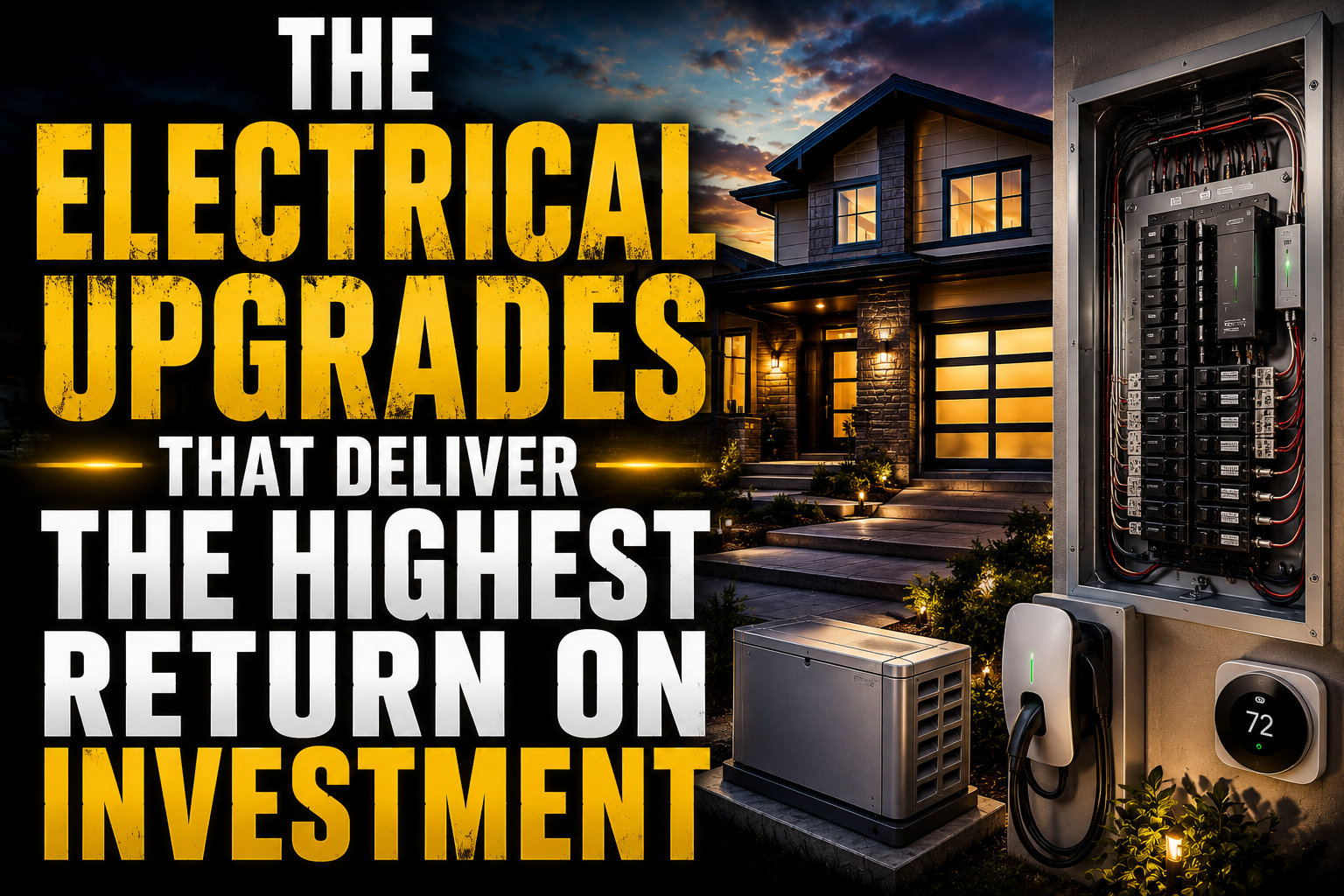
Introduction
Every homeowner in Beverly Hills eventually reaches the same realization: the house looks stunning on the outside, but the electrical system quietly humming behind the walls was built for a different era. As an experienced electrician Los Angeles residents call on for panel upgrades, EV charger installations, and complex rewiring projects, Volta Electric has walked into more than a few beautiful homes with outdated 60-amp panels trying to support a modern kitchen, a home theater, two electric vehicles, and a smart thermostat system all at once. It rarely ends well, and it almost never ends without a service call.
The truth is simple. Smart homes need smarter electrical systems. You cannot layer advanced technology on top of infrastructure that was designed decades ago and expect it to keep pace. This article walks through why electrical upgrades matter so much right now, what Beverly Hills homeowners specifically need to know, and how a licensed electrician Los Angeles trusts can help you future-proof your property instead of patching problems one repair at a time.

Why Older Electrical Systems Can’t Keep Up With Modern Homes
Most homes in and around Beverly Hills were built with electrical demands that look nothing like today’s reality. A home constructed in the 1960s or 1970s was designed around a handful of appliances, some lighting circuits, and maybe a window air conditioner. Fast forward to today, and that same home might be running a wine refrigerator, a home office with multiple monitors, smart lighting throughout every room, a security system, and an EV charger in the garage.
This is where an electrical contractor Los Angeles homeowners depend on becomes essential, not optional. The gap between what a home was built to handle and what it’s actually being asked to handle grows every year as new devices enter the picture. Smart thermostats, voice-activated assistants, automated window shades, whole-home audio, and networked security cameras all draw power continuously, not just when you flip a switch.
The result is a system under constant, low-grade stress. Breakers trip more often. Lights flicker when the HVAC kicks on. Outlets feel warm to the touch. None of these are minor annoyances. They are early warning signs that the electrical infrastructure is being asked to do more than it was ever designed to do.
The Hidden Cost of Ignoring an Aging Panel
Homeowners often delay a panel upgrade because the lights still turn on and nothing has caught fire yet. That mindset is understandable, but it’s also risky. An overloaded panel doesn’t fail gracefully. It fails when you least expect it, often during a dinner party, a heat wave, or the exact week you’re trying to sell the house and an inspector flags it.
Beyond the risk of failure, there’s a real financial cost to running an inefficient system. Older panels and wiring create resistance, which generates heat and wastes energy. Over the course of a year, that inefficiency shows up on utility bills in ways most people never connect back to their panel. An electrical panel upgrade isn’t just a safety measure. It’s an investment that pays for itself through better performance and lower long-term costs.
What “Smart Home Ready” Actually Means Electrically
There’s a lot of marketing language around smart homes, but very little of it addresses the wiring underneath. A smart home that’s genuinely ready for modern technology needs three things: sufficient amperage, dedicated circuits for high-draw devices, and clean, low-noise power delivery that won’t interfere with sensitive electronics.
Amperage and Capacity
Most homes built before the 1990s were wired with 100-amp service, and many older Beverly Hills properties still run on even less. A modern home with central air conditioning, an EV charger, a pool system, and a full suite of smart devices typically needs 200 amps at minimum, and larger estates often benefit from 400-amp service split across sub-panels.
When Volta Electric evaluates a home for an upgrade, we’re not just counting outlets. We’re calculating total electrical load across every major system, including future additions the homeowner is already planning. This is the difference between a licensed electrician Los Angeles homeowners can trust for long-term planning and a quick-fix repair service that solves today’s problem while ignoring tomorrow’s.
Dedicated Circuits for High-Draw Equipment
EV chargers, induction cooktops, and home theater systems all pull significant current, and running them on shared circuits with other household devices is a recipe for nuisance tripping. A proper home EV charger installation, for example, requires its own dedicated 240-volt circuit sized correctly for the charger’s output, not a circuit borrowed from the garage lighting.
The same logic applies to home offices packed with computer equipment, kitchens with multiple high-wattage appliances running simultaneously, and outdoor living spaces with heaters, lighting, and audio systems. Each of these deserves its own circuit, properly sized and properly protected.
Clean Power for Sensitive Electronics
Smart home hubs, networking equipment, and home automation systems are sensitive to voltage fluctuations in ways that a refrigerator or a washing machine simply aren’t. Voltage sags and surges can cause smart devices to reboot randomly, lose their network connection, or degrade faster than they should. A properly upgraded electrical system includes surge protection at the panel level, which shields every connected device in the home rather than relying on individual power strips scattered around the house.
Common Electrical Problems in Beverly Hills Homes and Their Solutions
Every neighborhood has its own electrical personality, shaped by the age of construction, the architectural style, and the way homes have been renovated over the decades. Beverly Hills is a mix of mid-century estates, Spanish revival homes, and newer luxury construction, and each brings its own set of quirks to the table.
Flickering Lights and Circuit Overloads
This is the most common call we receive, and it almost always points to one of two issues: a loose connection somewhere in the circuit, or a panel that’s carrying more load than it was designed for. Our electrical troubleshooting process starts at the panel and works outward, checking connections, testing voltage at problem outlets, and identifying whether the fix is a simple repair or a sign that a broader upgrade is needed.
Outdated Aluminum Wiring
Homes built in certain eras used aluminum wiring instead of copper, and aluminum expands and contracts more than copper does with temperature changes. Over time, this creates loose connections at outlets and switches, which generates heat and, in worst cases, becomes a fire hazard. Wiring and rewiring services to replace aluminum wiring with copper, or to properly retrofit connections with approved connectors, is one of the most important safety upgrades an older home can receive.
Insufficient Outlets in Renovated Spaces
Kitchen and bathroom remodels are common in Beverly Hills, and they frequently reveal how few outlets the original construction included. Modern kitchens need outlets near every counter section, and bathrooms require GFCI outlet installation near any water source to meet code and protect against shock hazards. When we handle electrical outlet installation as part of a renovation, we plan for how the space will actually be used, not just the minimum code requirement.
Aging Panels Near End of Life
Certain panel brands and models manufactured decades ago have known failure patterns, including breakers that don’t trip properly during an overload. If your panel is one of these models, no amount of troubleshooting solves the underlying problem. Electrical panel replacement is the only real fix, and it’s one of the most valuable upgrades a homeowner can make for peace of mind alone.
The Rise of EV Charging and What It Means for Your Panel
Electric vehicle ownership has grown steadily across Los Angeles, and Beverly Hills has been at the front of that curve for years. What many homeowners don’t realize until they’re standing in their garage with a new EV is that charging it properly requires far more than plugging into a standard wall outlet.
A Level 1 charger using a standard household outlet can take well over 24 hours to fully charge a modern EV battery. A Level 2 charger, which requires a 240-volt dedicated circuit, cuts that time down to a few hours overnight. This is why EV charger installation has become one of the most requested services we provide, whether it’s a single charger for a family sedan or multiple charging stations for a household with several electric vehicles.
Commercial EV charger installation has followed a similar trajectory, with retail centers, office buildings, and multi-family properties across Los Angeles adding charging infrastructure to meet tenant and customer demand. Business owners who install charging stations early tend to see it pay off through increased foot traffic and tenant satisfaction, particularly in areas like Beverly Hills where EV adoption runs well above the national average.
The panel implications matter here too. Adding a Level 2 charger to a home that’s already running close to capacity can push the system past its limit, which is exactly why an EV charger installation should always start with a load calculation, not just a quick circuit run to the garage.
Benefits of Investing in Modern Electrical Infrastructure
Upgrading your electrical system delivers value across several dimensions, and it’s worth walking through them individually because each one matters for a different reason.
Safety improves immediately once outdated wiring, overloaded panels, and faulty connections are addressed. Electrical fires remain one of the more preventable home hazards, and most of them trace back to exactly the kinds of issues an upgrade resolve. Energy efficiency improves as well, since modern panels and wiring reduce resistance losses and support more efficient appliances and lighting. Homeowners who pair an upgrade with LED lighting and smart thermostats often see a noticeable difference on their monthly utility bill.
Property value benefits too, particularly in a market like Beverly Hills where buyers expect move-in-ready homes with modern systems already in place. An outdated panel or a home still running on partial aluminum wiring can become a negotiating point during a sale, sometimes costing sellers far more in a price reduction than the upgrade itself would have cost. Finally, there’s the simple comfort of knowing your home can support whatever comes next, whether that’s a second EV, a home addition, or the next generation of smart home technology that hasn’t even hit the market yet.
Cost and Investment Considerations
Electrical upgrade pricing varies significantly based on the scope of work, the age and layout of the home, and whether the project involves opening walls or working through existing access points. A straightforward electrical panel upgrade from 100 amps to 200 amps typically represents a moderate investment, while a full home rewiring services project for an older estate involves substantially more labor and materials given the scale of the work.
EV charger installation costs depend on the distance between the panel and the charging location, along with whether the existing panel has available capacity or needs an upgrade to support the new circuit. Homeowners are often surprised to learn that the charger itself is frequently the smaller line item, while the electrical work to support it makes up the bulk of the investment.
Generator installation costs scale with the size of the unit and whether it’s a portable backup system or a whole-home standby generator with automatic transfer switching. Given how often Los Angeles experiences planned power shutoffs during fire season, generator installation has shifted from a luxury consideration to a practical necessity for many homeowners who can’t afford extended outages.
Rather than viewing these projects purely as expenses, it helps to think of them as infrastructure investments with a return that shows up in safety, efficiency, property value, and avoided emergency repair costs down the line. A planned upgrade completed on your schedule almost always costs less than an emergency repair completed at 11 p.m. on a Saturday.
Expert Recommendations for Homeowners
Based on years of working inside homes across this market, a few recommendations come up again and again.
Schedule a full electrical assessment before you assume everything is fine, particularly if your home is more than twenty years old or if you’re planning a renovation, an EV purchase, or a major appliance upgrade. Don’t wait for a visible problem to appear, since many electrical issues develop quietly behind walls long before they show any external symptoms.
Prioritize your panel before you prioritize downstream fixes. Upgrading outlets and adding circuits on top of an undersized panel is like adding lanes to a highway without widening the bridge at the end of it. Address the capacity issue first, then build outward from there.
Work with a residential electrician or commercial electrician who pulls proper permits and follows current code, even if it costs slightly more upfront than an unlicensed handyman offering a lower quote. Electrical work that isn’t permitted and inspected can create serious problems during a future sale, and it can void insurance claims if something goes wrong.
Local Relevance: Why Beverly Hills Homes Have Unique Electrical Needs
Beverly Hills presents a specific combination of factors that make electrical planning more nuanced than in many other parts of Los Angeles. The housing stock spans nearly a century of construction styles, meaning a single street can include a 1930s Spanish revival home next to a newly built contemporary estate, each with completely different electrical realities.
Property values in this market also mean that homeowners tend to invest heavily in high-end finishes, home theaters, wine cellars, outdoor kitchens, and increasingly, multiple EV chargers for growing electric vehicle fleets. Each of these features adds real electrical demand, and the historic charm of many Beverly Hills properties means original wiring is sometimes hiding behind walls that owners are understandably reluctant to open up unnecessarily. This is exactly why working with an electrical contractor Los Angeles homeowner in this market trust matters so much. Experience with older luxury construction allows for less invasive assessment and upgrade planning that respects the home’s architecture while still solving the underlying capacity problem.
The surrounding region matters too. Whether you’re an electrician Westlake Village residents call for a hillside estate, handling a panel upgrade Pasadena homeowners need for a craftsman bungalow, managing EV charger installation Santa Monica requests near the coast, serving as an electrician Glendale trusts for a growing family home, providing electrical repair Long Beach properties require after storm damage, or acting as the electrician Torrance community relies on for commercial buildouts, the underlying principle stays the same. Every home and business across greater Los Angeles deserve an electrical system built for how people actually live and work today, not how they lived decades ago.
Future Trends and Industry Insights
The electrical industry is shifting quickly, and homeowners who upgrade now are positioning themselves ahead of trends that will only accelerate. Battery backup and energy storage systems are becoming standard additions alongside solar installations, allowing homes to store excess solar production and draw on it during outages or peak utility pricing hours instead of feeding everything back to the grid at a lower rate.
Home solar adoption continues to climb across Los Angeles, and pairing solar inverters or hybrid solar inverters with lithium battery storage gives homeowners genuine energy independence rather than partial savings that disappear the moment the sun goes down. Outdoor and landscape electrical needs are evolving too, with solar street lights and solar water pumps offering efficient alternatives for properties with large grounds, pools, or irrigation systems that would otherwise add significant load to the main panel.
Vehicle-to-home technology is on the horizon as well, where an EV’s battery can actually supply power back into the house during an outage, essentially turning your car into a backup generator. This technology requires panel infrastructure capable of supporting bidirectional power flow, which means homes upgrading their panels today should think ahead to this capability rather than building only for current needs. Smart panels with circuit-level monitoring are also becoming more accessible, giving homeowners real-time visibility into exactly how much power each part of their home is consuming, which helps identify inefficiencies long before they become expensive problems.
Frequently Asked Questions
How do I know if my home needs a panel upgrade?
Warning signs include frequently tripped breakers, flickering lights when appliances turn on, a panel that’s more than 25 years old, or a panel rated below 150 amps in a home with modern appliances and electronics. A licensed electrician can perform a load calculation to confirm whether an upgrade is necessary.
How long does a typical panel upgrade take?
Most residential panel upgrades take one full day, though larger homes with sub-panels or complex layouts may take longer. Power will be shut off during the installation, so we always schedule this in advance so homeowners can plan around it.
Can I install an EV charger without upgrading my panel?
It depends entirely on your current panel’s available capacity. Some homes have enough headroom to add a Level 2 charger circuit without any panel changes, while others need an upgrade first. A proper load calculation answers this question before any work begins.
Is it dangerous to keep using an old electrical panel?
Older panels, particularly certain discontinued models with known defects, can pose a genuine fire risk if breakers fail to trip during an overload. Even panels without known defects lose reliability with age, making periodic inspection important.
What’s the difference between a residential and commercial electrician?
While both require the same underlying licensing, commercial electrical work often involves three-phase power, higher voltage systems, and code requirements specific to business occupancy, making experience with commercial projects genuinely important for that type of work.
Do I need a permit for electrical work in Los Angeles?
Yes, most electrical work beyond simple fixture replacement requires a permit and inspection under Los Angeles County code. Working with a licensed electrician ensures this process is handled correctly and that the work will pass inspection.
How often should I have my home’s wiring inspected?
A general inspection every few years is reasonable for most homes, while homes over 30 years old or those with a history of electrical issues benefit from more frequent checks, particularly before major renovations or appliance additions.
What should I do if I lose power during a Los Angeles Public Safety Power Shutoff?
A backup generator with automatic transfer switching is the most reliable solution for planned outages. For homes without a generator, it’s worth having a plan for essential circuits like refrigeration and medical equipment ahead of fire season.
Can old wiring be replaced without major wall damage?
In many cases, yes. Experienced electricians can often fish new wiring through existing walls using minimally invasive techniques, though some sections may require limited drywall access depending on the home’s construction.
How much does emergency electrical service typically cost compared to scheduled work?
Emergency service calls generally cost more due to after-hours labor rates and the urgency of the response. Scheduling preventive inspections and upgrades in advance is almost always more cost-effective than waiting for an emergency.
Conclusion
Smart homes genuinely do need smarter electrical systems, and that reality isn’t going away as technology continues advancing faster than most residential infrastructure was ever designed to handle. Whether you’re dealing with flickering lights, planning an EV charger installation, considering a full panel upgrade, or simply want peace of mind about the system running behind your walls, the right time to address it is before something fails, not after. As an experienced electrician Los Angeles and Beverly Hills homeowners have relied on for panel upgrades, rewiring, EV charging, and emergency repairs, Volta Electric approaches every project with the same commitment to quality, code compliance, and long-term thinking that luxury properties in this market deserve.
Ready to Upgrade Your Electrical System?
Volta Electric is a licensed electrical contractor serving Beverly Hills and the greater Los Angeles area, including Santa Monica, Pasadena, Glendale, Long Beach, Torrance, and Westlake Village. From electrical panel upgrades and EV charger installation to full home rewiring, generator installation, and emergency electrical repair, our team brings the experience and attention to detail that high-value homes and businesses require. Contact Volta Electric today to schedule a comprehensive electrical assessment and take the first step toward a safer, smarter, and more efficient home.