Introduction
If you are preparing to list a home in Los Angeles, you have probably already thought about fresh paint, curb appeal, and maybe a kitchen refresh. What most sellers overlook is the wiring behind the walls and the panel in the garage, and that oversight can cost tens of thousands of dollars at the negotiating table. Buyers increasingly prioritize modern electrical systems, and in a market as competitive as Los Angeles, that shift in buyer expectations has changed what actually moves a listing from “showing” to “sold.” An experienced electrical contractor can identify which upgrades genuinely move the needle on resale value and which ones are simply nice to have, and that distinction matters when you are working within a pre-sale budget and a tight escrow timeline.
This guide walks through the electrical improvements that consistently pay off before a sale, why appraisers and inspectors care about them, and how homeowners across Los Angeles, Pasadena, Glendale, Santa Monica, Long Beach, Torrance, and Westlake Village are approaching pre-listing electrical work differently than they did even five years ago. Whether you are selling a mid-century home in the hills or a newer build in the valley, the electrical system is no longer a background detail. It is a selling point, and sometimes a deal breaker.

Why Electrical Systems Have Become a Buying Priority
A decade ago, a home inspector’s electrical notes were mostly a formality. Today, buyers read inspection reports line by line, and electrical findings are often the first thing they bring back to the negotiating table. Part of this comes from higher electricity demands in modern households. Buyers are running electric vehicles, induction cooktops, home offices with multiple monitors, and smart home ecosystems that older 100-amp panels were never designed to support.
Lenders and insurers have also become more attentive to electrical risk. Homes with aluminum wiring, knob-and-tube systems, or outdated fuse boxes can trigger insurance non-renewals or higher premiums, and some buyers cannot secure favorable loan terms until known hazards are addressed. This has pushed electrical condition further up the list of factors that determine whether an offer comes in strong or gets discounted before it is even written.
There is also a simple psychological factor at play. A buyer touring a home with a brand new panel, updated outlets, and visible GFCI protection in the kitchen and bathrooms reads those details as evidence that the rest of the house has been cared for, even in rooms they have not inspected closely. First impressions extend well beyond paint color.
The Electrical Panel Upgrade: The Single Biggest Value Driver
If there is one improvement that consistently returns value at resale, it is a panel upgrade. A panel upgrade or electrical panel replacement swaps out an aging, undersized, or unsafe panel for a modern unit that meets current code and has the capacity for today’s electrical loads. In Los Angeles specifically, where a large share of housing stock was built between the 1920s and 1960s, panel capacity is one of the most common issues flagged during home inspections.
An electrical panel upgrade in Los Angeles typically moves a home from a 60 or 100-amp panel to 150 or 200 amps, which is enough to comfortably support central air conditioning, an EV charger, a home office, and modern kitchen appliances without tripping breakers. Buyers and their agents recognize outdated panel brands that have been subject to recalls or known failure issues, and a listing that still has one of those panels installed will almost always draw a request for repair credit, if not a request to walk away entirely.
From a seller’s perspective, the return on a panel upgrade tends to outperform many cosmetic renovations because it solves a problem buyers cannot easily see for themselves but that their inspector will absolutely find. Addressing it before listing removes a negotiating lever from the buyer’s side and lets you control the narrative during showings rather than reacting to an inspection report after you are already in escrow.
Signs Your Panel Needs Attention Before Listing
A panel that trips frequently, shows visible rust or scorch marks, uses fuses instead of breakers, or lacks available slots for new circuits is a strong candidate for replacement. If your home inspector’s past report, or a quick electrical troubleshooting visit, flags double-tapped breakers or an undersized main breaker relative to your home’s square footage, addressing that before your first open house prevents a much larger conversation later.
EV Charger Installation: From Nice-to-Have to Expected
Few upgrades have shifted from luxury to expectation as quickly as EV charger installation. Home EV charger installation is now a genuine selling point in a city where electric vehicle adoption continues to climb steadily, and buyers actively search for homes that already have Level 2 charging capability in the garage. Installing a dedicated 240-volt circuit and charger before listing signals to buyers that the home’s electrical system has been thoughtfully modernized, and it removes a project they would otherwise have to plan and budget for themselves after closing.
For properties marketed toward move-up buyers or in neighborhoods with strong EV ownership rates, commercial EV charger installation can also be relevant for multi-unit properties, live-work spaces, or small mixed-use buildings where a shared charging station adds tenant appeal and long-term rental value. Sellers of investment or commercial property in Los Angeles are increasingly including this in their pre-sale improvement list because it differentiates a listing in ways that photography alone cannot.
The practical upside is that EV charger installation is rarely done in isolation. It usually reveals whether the existing panel has the capacity to support it, which naturally connects this improvement back to the panel upgrade conversation. A licensed electrician in Los Angeles will typically assess panel capacity first, then recommend the charger installation as part of a single coordinated project rather than two separate expenses spread across different contractors.
Whole-Home Rewiring and Partial Rewiring: Addressing the Hidden Risk
Wiring and rewiring services are a bigger undertaking than a panel swap, and full home rewiring services are not always necessary before a sale. However, for homes built before the 1970s, buyers and their inspectors are on alert for aluminum wiring, cloth-insulated wiring, or ungrounded outlets, all of which raise safety concerns and insurance questions. Home rewiring in Los Angeles is common enough in older neighborhoods that many real estate agents now recommend a rewiring assessment as a standard part of pre-listing preparation, alongside the more commonly discussed inspection items like roofing and foundation.
Partial rewiring, focused on kitchens, bathrooms, and rooms with heavy appliance loads, often delivers a strong return without the cost of a full-home rewire. This targeted approach addresses the areas inspectors scrutinize most closely while keeping the project timeline and budget manageable before a listing date. An experienced electrical contractor can walk a seller through which circuits carry the highest risk and prioritize those first.
When Full Rewiring Makes Sense
Full rewiring becomes the right call when a home still has active knob-and-tube wiring, when insurance carriers have flagged the home directly, or when a buyer’s lender requires it as a condition of financing. In these cases, addressing it proactively before listing, rather than after a failed inspection contingency, keeps the seller in control of both cost and contractor selection.
Outlets, GFCI Protection, and the Small Details Buyers Notice
Electrical outlet installation and GFCI outlet installation sound minor compared to a panel upgrade, but they are some of the most visible electrical details during a walkthrough. Modern buyers expect GFCI protection in kitchens, bathrooms, garages, and any exterior outlets, and its absence is an easy, low-cost item for a home inspector to flag. Updating outdated two-prong outlets to grounded three-prong outlets, adding USB-integrated outlets in home offices, and ensuring GFCI outlet installation is current to code are all improvements that cost relatively little but remove friction from the inspection process.
These upgrades also matter for a different reason: they are tactile. A buyer plugging in a phone charger during an open house and noticing a GFCI test button, or seeing new outlet covers throughout the home, absorbs a subtle signal of care and maintenance that supports the asking price even if they never mention it directly.
Generator Installation: A Growing Consideration in California
Generator installation has moved from a niche request to a meaningful selling point, particularly as California has seen more public safety power shutoffs and grid strain during peak demand periods. A whole-home or partial backup generator, paired properly with the home’s panel, gives buyers confidence that the property can weather outages without disrupting home offices, medical equipment, or basic comfort. For higher-value listings in areas prone to shutoff events, a properly installed generator can be a genuine differentiator against comparable homes without one.
Battery-based backup is also worth mentioning here, since some sellers are pairing generator installation with a Battery Backup Systems solution or broader Energy Storage Systems setup, particularly in homes that already have solar. Buyers looking at solar-equipped homes often ask about resilience during outages, and a well-documented backup power strategy answers that question before it is asked.
Benefits Section: What Sellers Actually Gain
Electrical improvements before a sale deliver value in several distinct ways, and it helps to separate them clearly rather than treating “improved electrical” as one vague benefit.
- Inspection Risk Reduction: A home with a modern panel, grounded outlets, and GFCI protection in wet areas is far less likely to generate a lengthy repair request list after inspection, which keeps escrow timelines shorter and negotiations calmer.
- Appraisal Support: While appraisers do not always itemize electrical work the way they do square footage or bedroom count, a documented electrical panel upgrade or rewiring project can support a higher comparable value, particularly when comps in the area have similar upgrades.
- Marketing Differentiation: Listings that mention EV charger installation, updated panels, or backup generator capability stand out in searches and showings, especially among buyers who have already been burned by unexpected electrical repair bills in a previous home.
- Negotiating Leverage: A seller who has already addressed the electrical system enters escrow from a position of strength rather than reacting to inspection findings under time pressure. That difference alone often justifies the upfront cost of pre-sale electrical work.
Common Problems and Solutions
Sellers commonly encounter a handful of recurring electrical issues once an inspection is underway, and understanding them ahead of time allows for a proactive rather than reactive response.
- Undersized Panels: The most frequent finding, particularly in homes built before 1980. The solution is a straightforward panel upgrade, ideally scheduled with enough lead time to also add capacity for an EV charger circuit at the same time, since running both projects together is more cost-efficient than separating them.
- Double-Tapped Breakers: Where two wires share a single breaker slot. Correcting this is a relatively quick job for a licensed electrician but one that should not be delayed, since it is a legitimate fire risk as well as an inspection item.
- Missing GFCI Protection: Common in kitchens and bathrooms, especially in homes that have not been updated since the 1990s. This is a low-cost fix relative to its impact on inspection outcomes.
- Aluminum Wiring: More common in homes built during the copper shortages of the late 1960s and early 1970s. Requires either full replacement or approved pigtail connections at each outlet and switch. Cutting corners is not advisable given the fire risk aluminum wiring carries when improperly terminated.
- Ungrounded Outlets: Older homes create a mismatch between what a home inspector documents and what a buyer’s electronics and appliances require. Electrical outlet installation using grounded circuits resolves this cleanly, though it sometimes requires rewiring back to the panel depending on the home’s original wiring configuration.
Cost and Investment Considerations
Electrical upgrades before a sale should be evaluated the same way any other pre-listing investment is evaluated, by weighing cost against likely return and against the cost of not addressing the issue. A panel upgrade in the Los Angeles area is a mid-range investment relative to other common pre-sale projects like kitchen or bathroom remodels, and it typically returns more of its cost at resale because it addresses a problem buyers and inspectors actively look for, rather than a subjective style preference.
EV charger installation adds a modest incremental cost when done alongside a panel upgrade, since the electrician is already on site and the panel capacity has already been assessed. Doing it as a standalone project later tends to cost more due to separate service calls and potential panel capacity issues discovered after the fact.
Rewiring costs vary considerably depending on whether the project is a targeted update to high-risk rooms or a full-home rewire. Sellers working with a fixed budget should ask their electrical contractor for a prioritized list, starting with life-safety issues like aluminum wiring or missing grounding, followed by inspection-sensitive items like GFCI protection, and finishing with value-add items like EV charging capability.
It is worth noting that the cost of addressing electrical issues before listing is almost always lower than the cost of addressing them during a repair negotiation after inspection, when contractors are often working under time pressure and buyers are applying leverage to the price.
Expert Recommendations
Based on patterns seen across hundreds of pre-sale electrical assessments, a few recommendations consistently apply.
- Start Early: Begin with a professional electrical inspection roughly 60 to 90 days before listing, which gives enough runway to complete permitted work without holding up your timeline.
- Pull Permits: Unpermitted electrical work, even if done correctly, can itself become a disclosure issue and a point of buyer concern. Working with a licensed electrician who pulls the appropriate permits protects both the seller and the eventual buyer.
- Prioritize Safety First: Address safety-related items first, since these are the ones most likely to derail a sale if discovered during inspection rather than before it.
- Target High-Visibility Upgrades: Address the improvements most visible to buyers, such as EV charger installation and GFCI-protected outlets in kitchens and bathrooms, since these carry outsized influence relative to their cost.
- Keep Documentation: Maintain a record of all completed work, including permits and any electrical troubleshooting reports, since buyers and their agents respond well to a clear paper trail showing the home’s systems have been properly maintained and upgraded.
- Avoid DIY Work: Resist the temptation to handle electrical work as a DIY project or through an unlicensed handyman to save money before a sale. Buyers’ inspectors are trained to spot amateur electrical work, and unpermitted or improperly executed changes often cost more to correct during escrow than they would have cost to do correctly the first time.
Local Relevance for Los Angeles Sellers
Los Angeles presents a particular mix of housing stock that makes electrical improvements especially relevant before a sale. Neighborhoods with a high concentration of homes built from the 1920s through the 1960s, common across much of the city, frequently carry outdated panels, aluminum wiring in certain construction eras, and ungrounded outlets that surprise sellers who assumed previous renovations addressed these issues.
Buyers in Los Angeles are also unusually attentive to EV charging capability given the region’s electric vehicle adoption rates, and listings that already include home EV charger installation tend to draw stronger interest from this buyer segment. In areas like Pasadena and Glendale, where many homes share similar construction eras, a panel upgrade in Pasadena or updated wiring in Glendale can be a genuine point of distinction against comparable listings on the same block.
Coastal and near-coastal markets such as Santa Monica have seen strong demand for EV charger installation in Santa Monica specifically, driven by both environmental preferences and the practical reality of longer commutes for many residents. Further south, electrical repair in Long Beach and general electrical services in Torrance follow similar patterns, with older housing stock creating consistent demand for panel upgrades and rewiring ahead of resale. Inland markets like Westlake Village, with a mix of newer developments and older ranch-style homes, see a similarly split need, where some sellers require full electrical services while others simply need targeted updates like GFCI outlet installation or emergency electrician support to resolve a single flagged item before closing.
Across all of these markets, the underlying pattern holds. Homes with documented, permitted electrical upgrades sell with fewer negotiating obstacles and often at stronger prices relative to comparable homes that have not addressed their electrical systems.
Future Trends and Industry Insights
The electrical improvements that matter to buyers today are likely to expand further in the coming years. As more households adopt solar power, buyers are increasingly interested in homes already equipped with compatible infrastructure, including Solar Inverters and Hybrid Solar Inverters that support both grid-tied and backup power configurations. Homes paired with Lithium Batteries for storage, or broader Energy Storage Systems, are positioned well for a market where energy independence and outage resilience carry real weight in a buyer’s decision.
Commercial and mixed-use property owners are also watching this shift closely, since amenities like Solar Street Lights for shared outdoor spaces or Solar Water Pumps for irrigation and landscaping represent lower operating costs that appeal to investment buyers evaluating a property’s long-term expense profile. As utility rates continue to rise across California, the electrical systems that reduce ongoing costs, not just the ones that meet minimum code, are becoming part of the value conversation.
Panel technology is also evolving. Smart panels that allow homeowners to monitor circuit-level energy usage from a phone app are beginning to appear in higher-end listings, and as adoption grows, they may become an expected feature in the same way smart thermostats did a decade ago. Sellers who get ahead of this trend now, rather than waiting until it becomes standard, position their homes more favorably for the next several years of buyer expectations.
Frequently Asked Questions
Does a panel upgrade really increase my home’s sale price?
A panel upgrade does not typically add a specific dollar figure the way a finished basement might, but it removes a common inspection obstacle and supports a smoother, faster escrow process, which often protects your asking price rather than forcing a discount during negotiations.
How much does an electrical panel upgrade cost in Los Angeles?
Costs vary based on panel size, permit requirements, and the complexity of the existing setup, but a licensed electrical contractor can provide an accurate quote after assessing your home’s current panel and service capacity.
Should I install an EV charger even if I do not own an electric vehicle?
Yes, in many parts of Los Angeles this has become a meaningful selling point, since a growing share of buyers either already own an EV or plan to purchase one soon and view existing charging infrastructure as a valuable convenience.
Is rewiring necessary before selling an older home?
Not always a full rewire, but any home with aluminum wiring, knob-and-tube systems, or ungrounded outlets should be assessed by a licensed electrician, since these issues frequently surface during buyer inspections and are better addressed proactively.
What electrical issues do home inspectors flag most often?
Undersized or outdated panels, double-tapped breakers, missing GFCI protection in kitchens and bathrooms, and ungrounded outlets are among the most common findings in Los Angeles homes.
Can I do electrical upgrades myself to save money before listing?
It is not advisable. Unpermitted or improperly executed electrical work is often flagged during inspection and can create disclosure complications, sometimes costing more to correct during escrow than it would have cost to do correctly the first time.
How far in advance of listing should I schedule electrical work?
A window of 60 to 90 days before listing gives enough time to complete an assessment, schedule the work, and finalize permits without delaying your intended listing date.
Do GFCI outlets really matter to buyers?
Yes. GFCI protection in kitchens, bathrooms, and exterior outlets is both a safety expectation and a common inspection item, and its absence is one of the easiest issues for a buyer’s inspector to flag.
Is a generator installation worth it before selling?
For homes in areas affected by public safety power shutoffs or frequent outages, a properly installed generator can be a meaningful differentiator, particularly for higher-value listings where buyers expect resilience features.
Conclusion
Electrical improvements have shifted from a background consideration to one of the more influential factors in how a home is perceived, negotiated, and ultimately valued during a sale. A panel upgrade, updated wiring, GFCI protection, and EV charger installation each address specific concerns that today’s buyers and their inspectors actively look for, and addressing them before listing keeps sellers in control of the process rather than reacting to findings after the fact. In a market like Los Angeles, where housing stock spans nearly a century of construction standards, a proactive approach to electrical improvements is one of the more reliable ways to protect your asking price and reduce friction on the way to closing.
Work With Volta Electric Before You List
If you are planning to sell a home anywhere in the Los Angeles area, Volta Electric can provide a clear, honest assessment of what your electrical system needs before it goes on the market. From panel upgrades and home rewiring to EV charger installation and GFCI outlet updates, our licensed electricians handle the work with proper permits and documentation, so you can list with confidence and negotiate from a position of strength. Contact Volta Electric today to schedule a pre-listing electrical assessment and get a clear plan for the improvements that will genuinely support your home’s value.
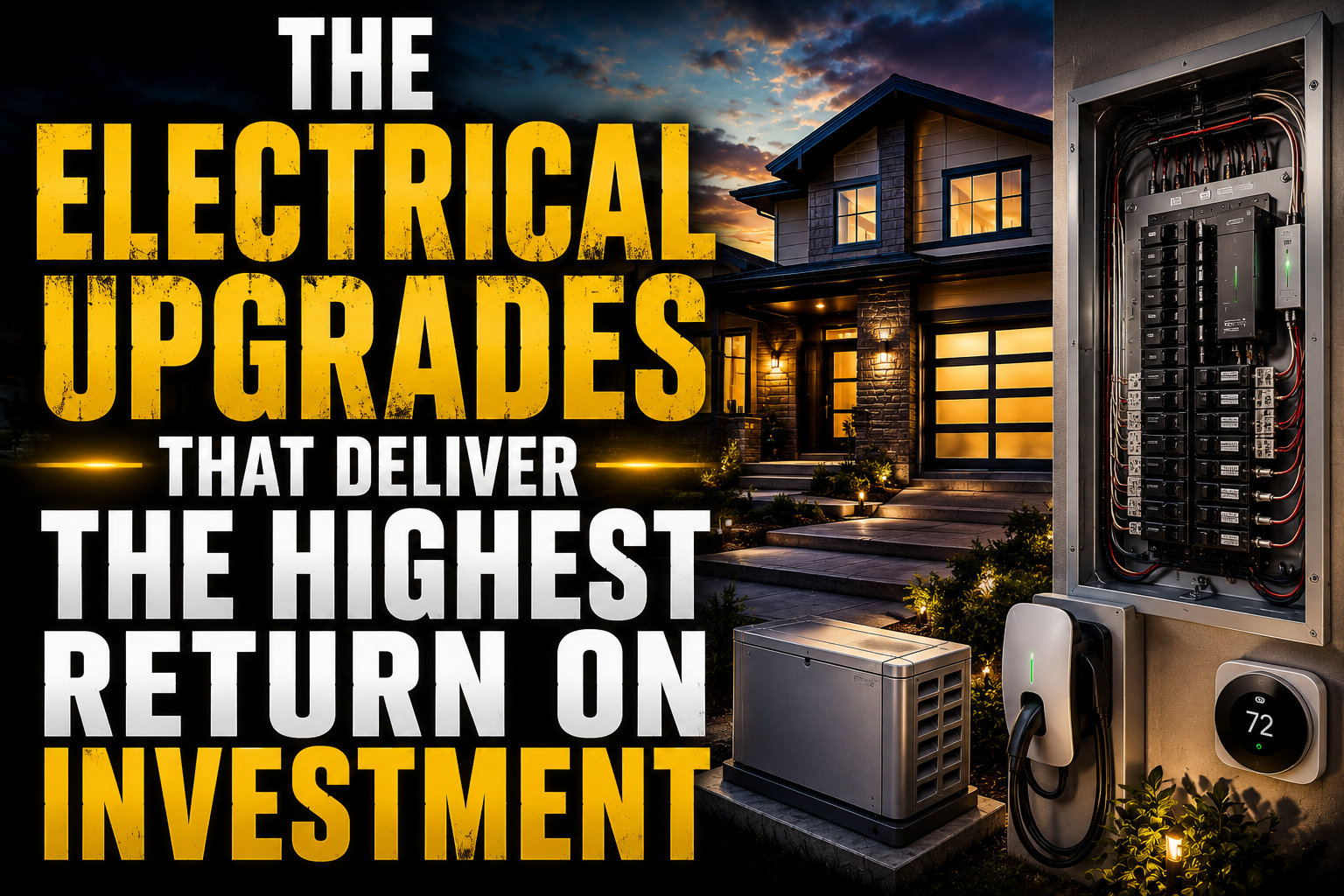
The Electrical Upgrades That Deliver the Highest Return on Investment for Beverly Hills Homeowners
Meta Description: Discover which residential electrical upgrades boost safety and property value most in Beverly Hills. Volta Electric explains where to invest first.
Introduction
Homeowners ask us a version of the same question almost every week: if I can only tackle one or two electrical projects this year, which ones actually move the needle? It’s a fair question, and it deserves a real answer rather than a sales pitch. Not every electrical project delivers the same value. Some upgrades genuinely transform the safety and market value of a home, while others are nice conveniences that matter less when it comes time to sell or insure the property.
As a licensed electrician Los Angeles homeowners have relied on for years, Volta Electric has watched certain residential electrical upgrades pay for themselves many times over, while others sit lower on the priority list no matter how appealing they look on paper. This article breaks down exactly which upgrades deliver the strongest return, why they matter so much in a market like Beverly Hills, and how to think about sequencing your electrical investments so each dollar works as hard as possible.
Why Electrical Upgrades Are Different from Other Home Improvements
Kitchen remodels and landscaping projects get all the attention in home improvement conversations, largely because they’re visible. Electrical upgrades live behind walls and inside panels, so they rarely get the credit they deserve, even though they often influence a sale, an insurance policy, or a safety inspection far more directly than a new backsplash ever will.
The return on an electrical upgrade isn’t always about resale value in the traditional sense. It’s also about avoided cost. A home with a failing panel or degraded wiring is a home heading toward an expensive emergency repair, an insurance dispute, or worse. When a residential electrician evaluates a property for upgrade priorities, the calculation includes safety risk, code compliance, appraisal impact, and how the upgrade positions the home for the technology homeowners increasingly expect, like EV charging and smart home integration.
The Electrical Panel Upgrade: The Foundation of Every Other Investment
If there’s one upgrade that consistently delivers the highest return, it’s the electrical panel upgrade. Everything else in a home’s electrical system depends on the panel having enough capacity and reliability to support it. A panel upgrade from a dated 100-amp service to modern 200-amp service, or higher for larger properties, unlocks nearly every other improvement a homeowner might want to make down the line.
Why Panels Top the List
An undersized or aging panel creates a ceiling on what a home can do electrically. You can install a beautiful EV charger, but if the panel doesn’t have available capacity, either the charger won’t function properly or it will trip breakers constantly. You can add a home theater, a wine cellar cooling system, or an outdoor kitchen, but each addition pushes an already strained panel closer to failure.
Appraisers and home inspectors also flag outdated panels regularly, particularly certain brands with documented safety issues. A flagged panel can stall escrow, trigger buyer renegotiation, or in some cases prevent a homeowner from securing insurance coverage altogether. Resolving this before listing a property, or simply before it becomes a problem, tends to be one of the more financially efficient moves a homeowner can make.
Panel Replacement vs. Panel Upgrade
It’s worth distinguishing between an electrical panel replacement, which swaps a failing or outdated panel for a new one at similar capacity, and a full upgrade, which increases amperage to support additional load. Many Beverly Hills homes need both simultaneously, since the panels old enough to need replacement are almost always undersized by today’s standards anyway. Handling them together, rather than as two separate projects, typically saves on labor and disruption.
Home Rewiring: Less Visible, More Valuable Than You’d Expect
Home rewiring services rarely top a homeowner’s wish list, mostly because the benefit isn’t something you can see or show off. But from a return-on-investment perspective, rewiring an older home ranks near the top for a specific reason: it removes risk that would otherwise sit hidden inside the walls indefinitely.
The Aluminum Wiring Problem
Certain decades of home construction relied on aluminum wiring instead of copper, and aluminum’s tendency to expand and contract more than copper creates loose connections over time. Loose connections generate heat, and heat inside a wall is never a good sign. Replacing aluminum wiring, or properly retrofitting the connections with approved hardware, removes a fire risk that many insurance companies specifically ask about during underwriting.
Knob-and-Tube and Cloth-Insulated Wiring
Some of the older, architecturally significant homes in Beverly Hills still have remnants of knob-and-tube wiring or cloth-insulated wiring from early twentieth-century construction. This type of wiring wasn’t designed for modern loads and often lacks a proper ground, creating both a safety issue and a code compliance issue. Wiring and rewiring services that fully modernize these systems tend to be one of the more expensive projects on this list, but they also remove one of the most significant liabilities a historic property can carry.
Where Rewiring Pays Off Fastest
Rewiring delivers its strongest return when it’s paired with other work already opening up walls, such as a kitchen or bathroom remodel. Homeowners who rewire proactively during a renovation avoid the far higher cost of opening walls a second time later. This is one of the clearest examples of sequencing electrical work intelligently rather than tackling it reactively.
EV Charger Installation: A Fast-Growing Value Driver
Few upgrades have shifted from novelty to necessity as quickly as EV charger installation. A few years ago, a home EV charger was a nice-to-have feature. Today, in a market like Beverly Hills where electric vehicle adoption runs well above the national average, buyers actively search for homes with charging infrastructure already installed.
Home EV Charger Installation
A properly installed home EV charger installation includes a dedicated 240-volt circuit sized correctly for the charger, ideally positioned close enough to the panel to minimize wiring costs while still being convenient for daily use. Homes with two or more vehicles increasingly need multiple charging stations, which changes the load calculation and sometimes triggers the need for a panel upgrade at the same time.
Commercial EV Charger Installation
For business owners, commercial EV charger installation carries its own return profile. Retail centers, office parks, and multi-family buildings that install charging stations see measurable increases in tenant retention and customer dwell time, particularly in areas where EV ownership is concentrated. The upfront electrical work, including panel capacity assessment and dedicated circuits for each station, is a meaningful investment, but one that increasingly differentiates a property in a competitive leasing market.
Why EV Charging Ranks High on the ROI List
Unlike some electrical upgrades that primarily protect against risk, EV charger installation actively adds a feature buyers and tenants are willing to pay for. That combination of safety-neutral, value-additive upgrade is relatively rare, which is part of why it consistently ranks near the top of return-on-investment conversations.
Generator Installation: Protecting Against a Growing Risk
Generator installation has moved up the priority list significantly over the past several years, largely due to Public Safety Power Shutoffs during fire season and the broader unpredictability of grid reliability across Los Angeles. A whole-home standby generator with automatic transfer switching keeps essential systems running during an outage without the homeowner needing to do anything manually.
The return here shows up in a few ways. There’s the obvious protection against spoiled food, disrupted work-from-home setups, and uncomfortable temperature swings during an outage. There’s also a growing expectation among buyers in higher-end markets that a home will have backup power, particularly for properties with wine storage, home offices, or medical equipment that depends on consistent electricity. A generator doesn’t just protect against inconvenience. It protects against real financial loss during an extended outage.
GFCI Outlet Installation and Electrical Outlet Upgrades
Compared to a panel upgrade or a generator, GFCI outlet installation looks like a small project, and in terms of cost, it is. But its return on investment is disproportionately high because it’s one of the few electrical upgrades that’s both inexpensive and specifically required by code in kitchens, bathrooms, garages, and outdoor spaces.
Homes without proper GFCI protection in wet locations represent a genuine shock hazard and a common inspection flag during a sale. Electrical outlet installation more broadly, including adding outlets in underserved areas like kitchen islands or home offices, tends to be a low-cost, high-satisfaction upgrade that homeowners notice in daily use far more than they’d expect from such a modest project.
Common Problems That Erode Value and Their Solutions
Certain electrical problems don’t just create risk, they actively erode a home’s value if left unresolved. Recognizing these early changes the entire cost equation.
- Overloaded Circuits and Recurring Breaker Trips: When a circuit trips repeatedly, it’s rarely a coincidence. It usually means the circuit is carrying more load than it was designed for, often because rooms have been repurposed over the years without updating the wiring to match. Our electrical troubleshooting process identifies exactly which circuits are overloaded and whether the fix is redistributing load, adding a new circuit, or upgrading the panel entirely.
- Warm Outlets and Discolored Switch Plates: A warm outlet or a switch plate with visible discoloration is a sign that heat is building up somewhere it shouldn’t. This is one of the more urgent issues we see, since it often points to a loose connection or an overloaded circuit that’s actively degrading. Left unaddressed, this is exactly the kind of issue that shows up on an inspection report and complicates a sale.
- Inconsistent Power to Smart Home Devices: Smart home systems that randomly disconnect or reboot are often blamed on Wi-Fi, when the actual cause is voltage inconsistency somewhere in the electrical system. This is a newer category of problem that didn’t exist a decade ago, and it’s becoming a more common reason homeowners call for electrical repair services.
Benefits of Prioritizing High-ROI Electrical Upgrades
Homeowners who approach electrical upgrades strategically, rather than reactively, tend to see a few consistent benefits. Insurance underwriting becomes smoother, since insurers increasingly ask specific questions about panel age, wiring type, and the presence of safety features like GFCI protection. Home appraisals reflect modern infrastructure more favorably, particularly in competitive markets where buyers compare properties closely. Day-to-day comfort improves as flickering lights, tripped breakers, and inconsistent smart home performance disappear. And perhaps most importantly, the homeowner gains real peace of mind knowing the system behind the walls matches the quality of everything visible in the home.
Cost and Investment Considerations
Pricing for these upgrades varies by scope, but a general hierarchy holds true across most projects. GFCI outlet installation and targeted outlet additions sit at the lower end of the cost spectrum, delivering strong value relative to their price. Panel upgrades and replacements represent a moderate to significant investment depending on amperage and whether sub-panels are involved, but they also unlock nearly every other upgrade on this list. EV charger installation costs depend heavily on the distance from the panel and whether existing capacity supports the new circuit. Generator installation and full home rewiring tend to represent the larger investments on this list, reflecting the scale of labor and materials involved, but both address risks that are expensive to leave unresolved.
The smartest approach for most homeowners is sequencing: address panel capacity first, then layer in rewiring, EV charging, and generator installation as budget allows, rather than trying to tackle everything simultaneously.
Expert Recommendations
Start with a comprehensive electrical assessment before committing to any single upgrade. A licensed electrician Los Angeles homeowners trust should evaluate the whole system, not just the symptom you called about, since panel capacity, wiring condition, and outlet placement are all connected. If you’re planning a renovation, address wiring and panel capacity before the finishing work begins, since opening walls a second time costs far more than doing it once. And if you’re planning to sell within the next few years, prioritize the upgrades most likely to appear on an inspection report, since resolving them proactively almost always costs less than negotiating a price reduction after the fact.
Local Relevance for Beverly Hills
Beverly Hills homes carry a particular mix of factors that make ROI-focused electrical planning especially valuable. The combination of high property values, architecturally diverse housing stock, and buyers who expect move-in-ready infrastructure means electrical upgrades here often deliver a stronger relative return than in markets where buyers are more tolerant of deferred maintenance.
A residential electrician working in this market needs to balance respect for a home’s original architecture with the practical reality that the electrical system underneath needs to support modern living. This same principle extends across the broader region, whether serving as the electrician Westlake Village homeowners call for a hillside property, handling a panel upgrade Pasadena craftsman home needs, managing EV charger installation Santa Monica requests for coastal properties, working as the electrician Glendale community relies on, addressing electrical repair Long Beach properties need after weather events, or serving as the electrician Torrance business owners trust for commercial upgrades. The underlying value equation stays consistent everywhere: the right upgrades, prioritized correctly, protect both safety and property value at the same time.
Future Trends and Industry Insights
The upgrades delivering the highest return today are shifting as technology evolves. Battery backup and energy storage systems are increasingly viewed alongside generators as a resilience investment, particularly when paired with solar inverters or hybrid solar inverters that let a home store its own power rather than relying entirely on the grid. Lithium batteries have become the standard for this kind of storage due to their efficiency and longer lifespan compared to older battery chemistries.
Outdoor electrical infrastructure is also becoming a bigger part of the value conversation, with solar street lights and solar water pumps offering efficient, low-maintenance solutions for larger properties that would otherwise need significant additional circuits run to remote areas of the grounds. As smart panels with circuit-level monitoring become more mainstream, homeowners will increasingly be able to see exactly where their electrical investment is paying off, turning what used to be a hidden system into something measurable and transparent.
Frequently Asked Questions
Which single electrical upgrade delivers the best return on investment?
For most homes, a panel upgrade delivers the strongest return because it unlocks every other improvement, from EV charging to home theater installations, while also resolving the safety and appraisal concerns tied to outdated panels.
Does an electrical panel upgrade actually increase home value?
Yes, particularly when the existing panel is a model with known reliability issues or insufficient amperage for modern use. Buyers and appraisers increasingly view modern electrical infrastructure as a baseline expectation rather than a luxury.
Is EV charger installation worth it if I don’t currently own an electric vehicle?
It depends on your timeline for selling. In markets with high EV adoption, having charging infrastructure already installed can be a meaningful selling point even for buyers who don’t currently own an EV but expect to eventually.
How do I know if my home needs rewiring or just a panel upgrade?
A licensed electrician can inspect your wiring type, condition, and connections to determine whether the panel alone is the limiting factor or whether the wiring itself poses a separate risk that needs addressing.
Are GFCI outlets really necessary if my home has never had an issue?
Yes. GFCI protection isn’t about whether a problem has occurred yet, it’s about preventing the specific type of shock hazard that occurs unpredictably in wet locations, and it’s required by current code in most residential wet areas.
How much value does a generator add to a home?
While it varies by market, a properly installed whole-home generator is increasingly viewed as a resilience feature that appeals to buyers, particularly in areas prone to planned power shutoffs or extreme weather events.
Should I upgrade my panel before or after a kitchen remodel?
Before, ideally. A remodel is the most efficient time to address panel capacity and add dedicated circuits for new appliances, since the walls and connections are already more accessible.
Can I finance electrical upgrades rather than paying upfront?
Many electrical contractors offer financing options for larger projects like panel upgrades or full home rewiring. It’s worth asking about financing during your initial consultation if cost timing is a concern.
Conclusion
Not every electrical project offers the same return, but the highest-value residential electrical upgrades share a common thread: they resolve real risk while simultaneously adding capability the modern home needs. Panel upgrades, thoughtful rewiring, EV charger installation, generator systems, and proper GFCI protection all sit near the top of that list for good reason. As a trusted electrician Los Angeles homeowners in Beverly Hills and beyond have relied on for years, Volta Electric approaches every project with an eye toward long-term value, not just the immediate fix.
Ready to Invest in the Right Electrical Upgrades?
Volta Electric provides licensed electrical contracting services throughout Beverly Hills and greater Los Angeles, including Santa Monica, Pasadena, Glendale, Long Beach, Torrance, and Westlake Village. From panel upgrades and home rewiring to EV charger installation, generator installation, and emergency electrical repair, our team helps homeowners prioritize the upgrades that protect safety and maximize property value. Contact Volta Electric today to schedule a comprehensive electrical assessment tailored to your home and your investment goals.